Galle / Sri Lanka When to visit
When should I visit Galle, Sri Lanka, for the best experience?
The short answer
December through March is the strongest period for exploring Galle's historic fort and nearby southern coastline, when the southwest coast generally enjoys drier weather and more favorable sea conditions.
The answer, with local context
Galle stands on Sri Lanka's southwestern coast, where its historic fort occupies a rocky promontory overlooking the Indian Ocean. The city's seasonal conditions follow the southwest coast's monsoon pattern rather than the weather experienced on Sri Lanka's eastern beaches.
Sri Lanka Tourism identifies December through February as the northeast-monsoon period, when the southwestern coast generally experiences its main beach season. March remains a useful month for coastal sightseeing, although transitional afternoon thunderstorms become more likely.
The southwest monsoon normally affects the region from May through September, bringing heavier rainfall and rougher seas. October and November form another transitional period, when substantial showers can occur across the island.
Galle's main attraction is its historic fortified town, established by the Portuguese in the 16th century and extensively developed under Dutch rule during the 18th century. UNESCO inscribed the Old Town of Galle and its Fortifications in 1988, under cultural criterion (iv).
The fort is rewarding outside the conventional beach season because its historic streets, churches and ramparts remain the principal attractions. However, walking exposed fortifications is more comfortable during cooler morning and late-afternoon hours.
Picture the place
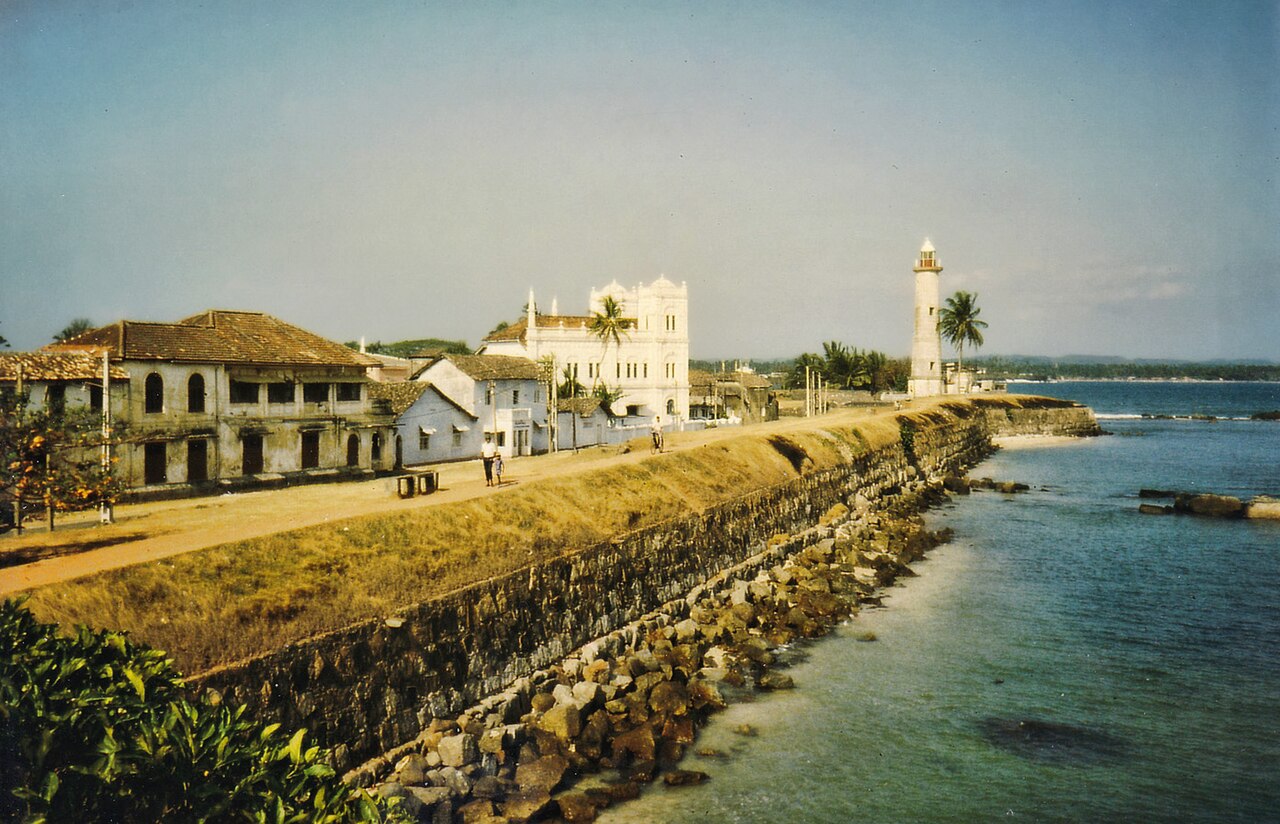
The fort's stone ramparts follow the coastline around tightly packed streets, colonial-era buildings, shaded verandas and courtyards. Beyond the walls, waves break against the rocky shore.
The easily missed detail
Galle's best sightseeing season and Sri Lanka's eastern-coast beach season are different. A traveler combining Galle with Trincomalee or Arugam Bay should account for the island's contrasting regional monsoons.
A practical rhythm
Morning — historic streets: Explore the fort's architectural landscape.
Afternoon — museums and cafes: Spend time inside the fort during the warmer hours.
Late afternoon — ramparts: Walk toward the lighthouse and coastal viewpoints.
What could complicate the plan
Heavy monsoon rain can make outdoor walks less comfortable, and high surf can make exposed coastal rocks dangerous. Sri Lanka's U.S. travel advisory is Level 2 — Exercise Increased Caution, dated October 14, 2025, citing civil unrest, terrorism and landmine risks in the country.
What to do next
identifies Galle's most important historic buildings, coastal landmarks and cultural experiences.
Sources
- Sri Lanka Tourism — national and regional monsoon seasons.
- UNESCO World Heritage Centre — Galle's inscription and architectural history.
- U.S. Department of State — national travel advisory.