Garden Route / South Africa Things to do
What are the most worthwhile things to do in Garden Route on a first visit?
The short answer
Hike to the Storms River Mouth suspension bridges, explore the Knysna Estuary, and walk through the indigenous forest around Wilderness, experiencing three different sections of Garden Route National Park.
The answer, with local context
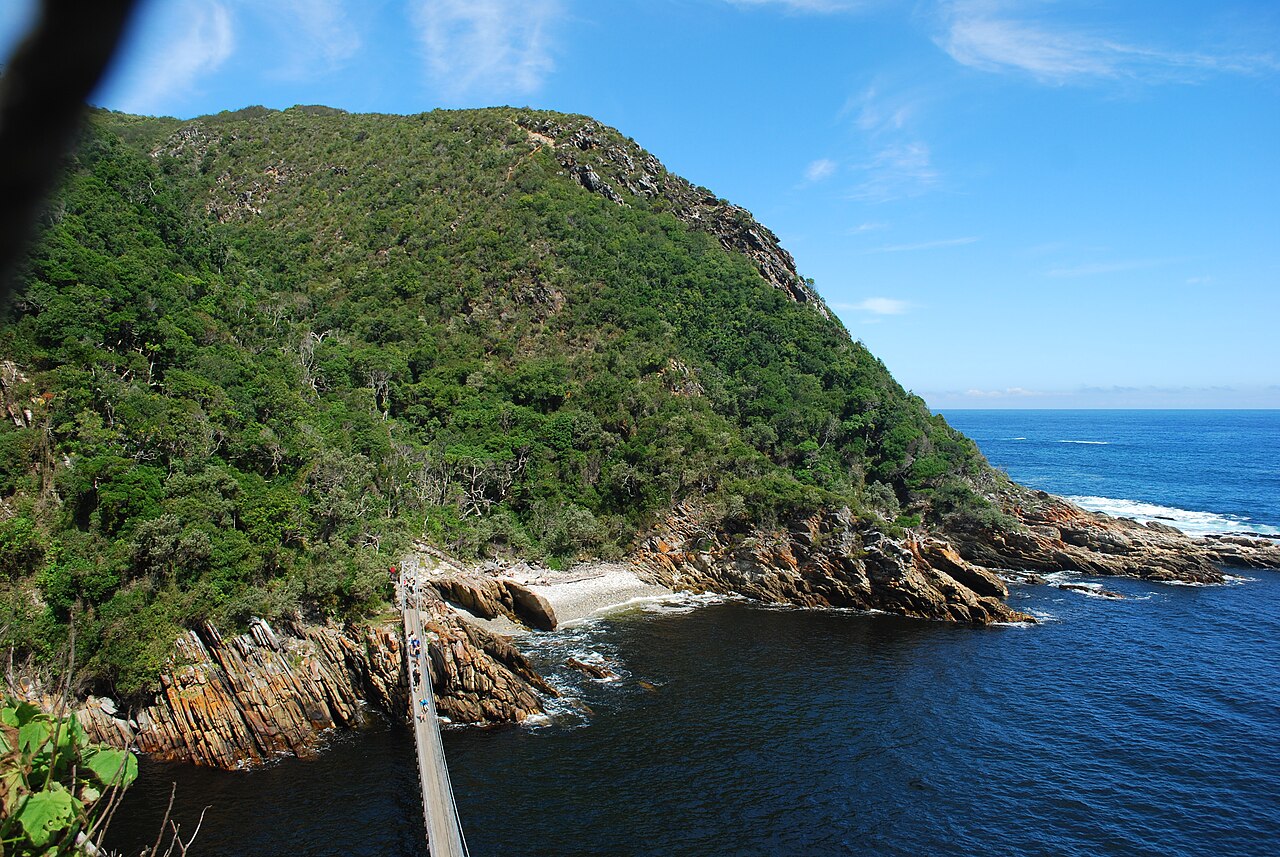
The Tsitsikamma section contains one of the region's best-known coastal walks. SANParks identifies the Mouth Trail as a 2-kilometer route, normally taking approximately one hour. It begins near Sandy Bay and follows a boardwalk through coastal forest toward the Storms River gorge. The route passes the suspension bridges, a cave associated with Khoisan heritage, and a jetty used for organized river activities.
The principal Storms River bridge spans 77 meters (253 feet). Originally constructed in 1969, it forms part of a group of three suspension bridges across the river-mouth landscape. SANParks began a substantial refurbishment project in 2026, involving the replacement or strengthening of bridge components. An official announcement dated September 2, 2026 described the main bridge as newly refurbished and included it among the attractions accessible during that year's National Parks Week.
Knysna offers a different landscape, centered on a tidal estuary connected to the Indian Ocean through two headlands known as the Heads. The Knysna Estuary Management Plan for 2025–2029 divides the waterway into recreational and conservation-use zones. Activities such as canoeing, sailing, and swimming are permitted in specified areas, while fishing and bait collection are subject to licensing and no-take restrictions.
For forest walking, the Wilderness section has several marked trails. The Half-collared and Giant Kingfisher route is approximately 7 kilometers (4.3 miles) return, with SANParks estimating 3–3½ hours. It follows the Touw River through indigenous forest and uses a pontoon crossing on part of the route. The shorter Brown-hooded Kingfisher Trail covers 5 kilometers (3.1 miles) return, with a suggested walking time of around three hours.
Another worthwhile forest stop is the Woodville Big Tree, an old yellowwood reached by a 2-kilometer circular trail that generally takes about 45 minutes. The route starts near the tree and passes through established indigenous woodland. These forest walks provide a substantially different experience from the rocky Storms River coastline.
Picture the place
Storms River Mouth combines dark forest, steep rock faces, suspension bridges, and turbulent coastal water. Knysna opens into a broad tidal lagoon, while Wilderness has river corridors sheltered beneath tall indigenous trees.
The easily missed detail
SANParks introduced paid access to the Plaatbos and Goesa forest trails near Storms River Village, with staffed gates operating 7 a.m.–6 p.m. from September through April and 8 a.m.–5 p.m. from May through August. The permit also covers the Tsitsikamma Big Tree. Those gates accept cards only, unlike an unrestricted public forest entrance.
A practical rhythm
First day — Wilderness: Walk a suitable kingfisher trail and explore the Touw River setting.
Second day — Knysna: Visit the Heads viewpoint and an authorized estuary activity.
Third day — Tsitsikamma: Walk the Mouth Trail and explore its suspension bridges.
What could complicate the plan
The Waterfall Trail at Storms River Mouth is approximately 6 kilometers return and includes rugged sections affected by tides; it is more demanding than the Mouth Trail. Storm damage has also led to temporary closures. SANParks' September 2026 announcement indicated that access to the main bridge had been restored following refurbishment, but this does not establish that every neighboring trail is open. Knysna's recreational waterways also have protected zones where some activities are prohibited.
What to do next
provides a seasonal comparison for hiking and coastal activities. introduces the oyster and seafood traditions associated with Knysna and the southern Cape.
Sources
- South African National Parks, Garden Route Hiking Trails — trail lengths, walking times, and principal features.
- South African National Parks, Storms River Bridge Reconstruction — original construction, bridge dimensions, and refurbishment.
- South African National Parks, September 2026 Parks Week Activities — bridge reopening status and park activities.
- South African National Parks, Knysna Estuary Management Plan — recreation zones, permitted activities, and protected waters.
- South African Department of Forestry, Fisheries and the Environment, Fisheries Regulations — permit requirements and recreational harvesting restrictions.
- Visit Knysna, Official Tourism Site — Knysna's estuary and coastal setting.