Garden Route / South Africa Food and drink
Where should I eat in Garden Route, and which local food or drink is worth trying?
The short answer
Knysna oysters are the Garden Route's most distinctive seafood specialty, with locally harvested wild oysters and separately cultivated Pacific oysters offering different products on restaurant menus.
The answer, with local context
Knysna's connection to oysters is genuine, but its history is more complicated than the town's branding suggests. The official tourism office identifies two principal varieties sold in the area: the wild coastal oyster, Striostrea margaritacea, and the cultivated Pacific oyster, Magallana gigas. Older tourism publications use the historical scientific names Crassostrea margaritacea and Crassostrea gigas. The former grows naturally along the southern African coastline, while Pacific oysters have also been cultivated in places such as Saldanha Bay and Gqeberha.
Knysna experimented with oyster farming in its lagoon during the 1940s, with more intensive cultivation developing in the 1970s. The official tourism site's historical account explains that commercial cultivation eventually proved economically and environmentally difficult. Permits were not renewed in 2010, and the cultivated oysters were removed from the lagoon. A restaurant serving “Knysna oysters” is therefore not necessarily serving oysters farmed inside the Knysna Estuary.
The town's oyster festival began as a Winter Festival in 1983, created to attract visitors during a quieter season. The event later adopted the oyster identity. For a future edition, the official Knysna tourism site and festival organizers are the appropriate sources for announced dates; the historical 1983 founding year is not a recurring festival schedule.
For a dining experience with a documented coastal connection, Knysna Tourism lists Freshline Fisheries for seafood meals, East Head Café for fish and chips, and Tapas & Oysters on Thesen Island for seafood near the waterfront. These are examples of establishments included in the local tourism directory rather than an independently ranked selection of the best restaurants.
The wider Garden Route also has a strong fish-and-chips tradition, with hake, kingklip, calamari, prawns, and mussels appearing in coastal restaurant menus. At Knysna, tourism listings distinguish wild coastal oysters from cultivated specimens by their shells and harvesting history. Wild oysters are generally harvested from natural intertidal populations by licensed collectors.
Picture the place
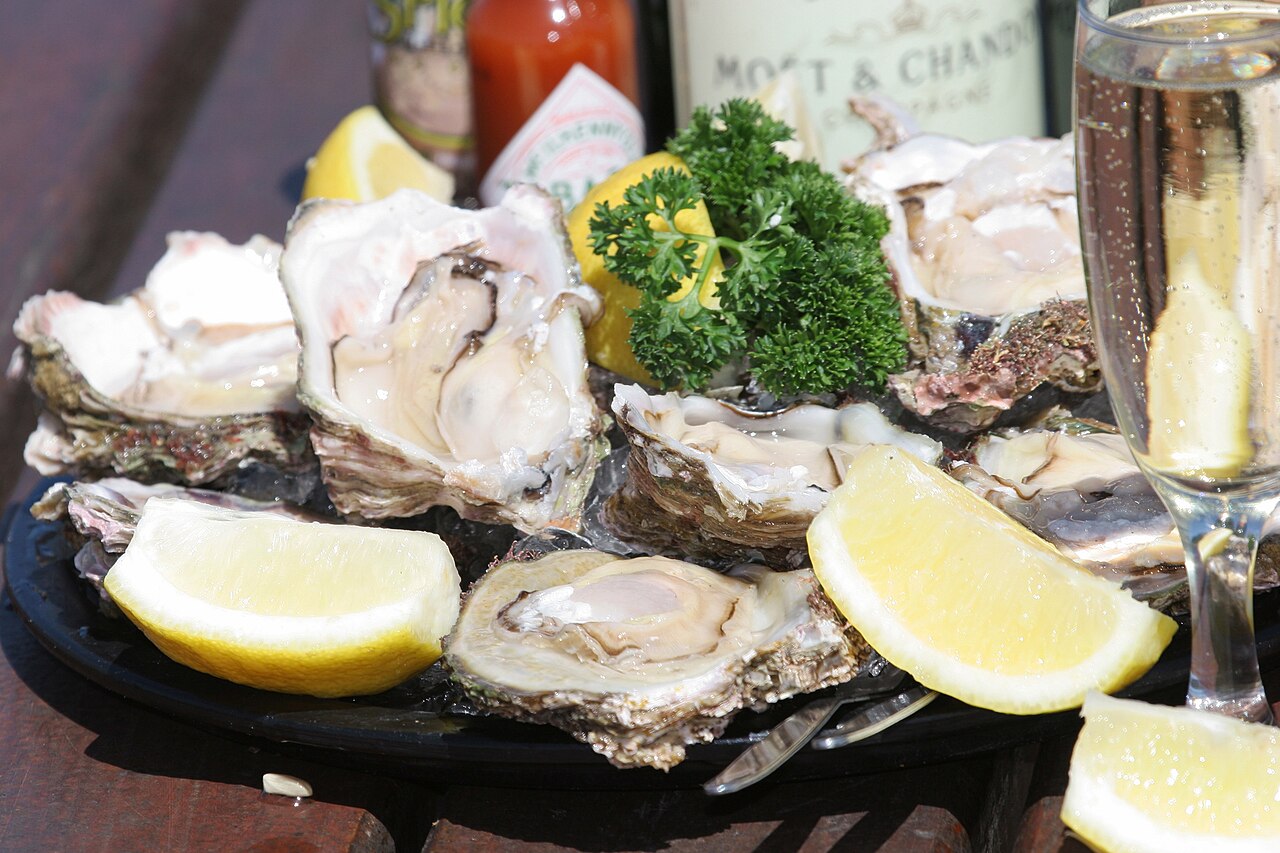
Wild coastal oysters have irregular shells and are often served on the half shell with lemon. Along the Knysna waterfront, restaurants overlook the estuary and the surrounding hills; farther toward the coast, rocky shorelines provide the habitat for naturally occurring oysters.
The easily missed detail
An oyster served in Knysna should not automatically be described as “harvested from the Knysna Lagoon.” Local oyster cultivation ended there following the 2010 permit decision. The distinction between a wild local coastal oyster and a cultivated Pacific oyster is useful for understanding a menu and asking about its origin.
A practical rhythm
Lunch — Knysna waterfront: Try identifiable wild or cultivated oysters at a seafood restaurant.
Afternoon — Thesen Island: Explore the waterfront dining area and its coastal food options.
Dinner — Southern Cape seafood: Choose fish and chips, line fish, calamari, or mussels at a restaurant with a clearly documented seafood menu.
What could complicate the plan
Oysters are shellfish, and raw consumption carries bacterial risks. The U.S. Centers for Disease Control and Prevention identifies raw oysters as a possible source of Vibrio infections and recommends avoiding raw or undercooked seafood, especially for people at increased risk of severe illness. Harvesting your own oysters is also restricted: South African fisheries rules require relevant permits, and the Southern Cape commercial oyster conditions prohibit collection from tidal lagoons, marine reserves, and national parks except where specifically authorized.
What to do next
provides a route through the Knysna Estuary and other national-park attractions. explains which months provide relatively warm conditions for combining coastal dining with outdoor sightseeing.
Sources
- Visit Knysna, Oysters and Their History — oyster species, cultivation history, and local harvesting traditions.
- Visit Knysna, Origins of the Oyster Festival — 1983 festival origin and 2010 permit history.
- Visit Knysna, Seafood Restaurants and Specialties — documented restaurant examples and seafood dishes.
- South African Department of Forestry, Fisheries and the Environment, Southern Cape Oyster Permit Conditions — protected-area harvesting restrictions.
- U.S. Centers for Disease Control and Prevention, Vibrio Prevention — raw-oyster and shellfish risks.