Germany country guide Places and experiences
What should a first-time traveler see in Germany beyond the obvious highlights?
The short answer
The Hanseatic north and the sandstone country on the Elbe — Germany holds 55 properties on the UNESCO World Heritage List, and Lübeck and Saxon Switzerland sit about as far from the Berlin–Munich axis as the country allows.
The answer, with local context
Fifty-five inscriptions is a very large number for one country, and it means the famous half-dozen are a small fraction of what carries the designation. Lübeck's old town, the Hanseatic League's former capital on the Trave, was inscribed in 1987 for its brick Gothic core; the Holstentor, the twin-towered land gate on Holstenplatz, is the surviving western entrance, with the Marienkirche and Petrikirche steeples and the old salt warehouses behind it. Bamberg's town followed in 1993, and the Upper Middle Rhine Valley — the gorge of castles and terraced vineyards between Bingen and Koblenz — in 2002.
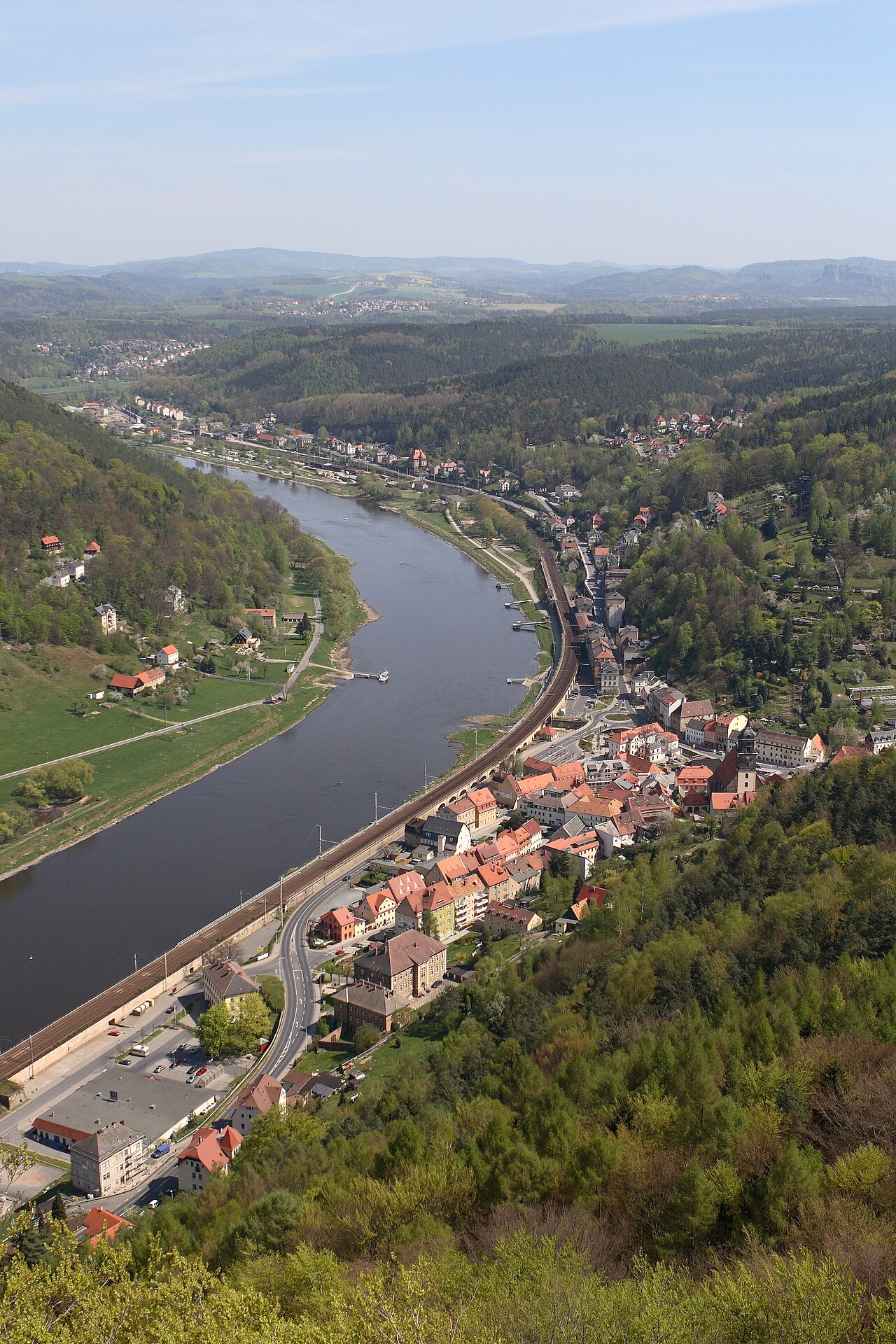
Saxony offers the landscape counterargument. Königstein Fortress stands on a tabletop of sandstone above the Elbe in Saxon Switzerland, and the view from it runs upstream over the eroded sandstone towers that give the region its name. This is hiking country rather than monument country, within reach of Dresden, and almost nothing about it resembles the Germany of city-break itineraries.
The spread matters for routing. Lübeck is on the Baltic, Saxon Switzerland is on the Czech border, the Rhine gorge is in the west. Germany is big enough that choosing two of these rather than all three is what turns a list into a trip.
Picture the place
From the ramparts at Königstein the Elbe comes around a bend below and the sandstone blocks stand up out of the forest in isolated towers, flat-topped like the fortress itself. It is a geology of plateaus and chimneys rather than peaks, which is why the trails here are stairs and ladders as often as paths.
The easily missed detail
A World Heritage inscription can be taken away, and Germany is the country it happened to. The Dresden Elbe Valley was removed from the World Heritage List in 2009 after a four-lane bridge was built through the inscribed landscape — one of only a handful of delistings in the Convention's history. It is worth knowing when you stand in Saxon Switzerland looking down the same river: the valley you are looking at is part of a cultural landscape whose protection was contested and, downstream, lost.
A practical rhythm
- North — Lübeck's brick Gothic core, inscribed in 1987, with the Holstentor as the set-piece arrival.
- East — Königstein Fortress and the sandstone trails of Saxon Switzerland above the Elbe.
- West — The Upper Middle Rhine Valley, inscribed in 2002, for castles and terraced vineyards.
What could complicate the plan
Distance between these regions is the main obstacle, and several of them are reached by regional rather than high-speed rail. Border formalities apply at every entry point: the Schengen short-stay rule allows a maximum of 90 days within any 180-day period, counted across the whole area rather than per country. The US Department of State advises travelers to exercise increased caution in Germany due to terrorism. And Saxon Switzerland's trails include ladders and narrow sandstone staircases, which rules some routes out for anyone uneasy with exposure.
What to do next
The Germany when-to-visit answer in this group has the Reichstag dome's closure calendar, which decides whether Berlin is worth building a trip around in a given month; the Germany food answer covers what German beer law and the EU designations actually require.
Sources
- UNESCO World Heritage Centre, Germany — count of 55 inscribed properties
- UNESCO World Heritage Committee — inscription years for Lübeck, Bamberg and the Upper Middle Rhine Valley, and the 2009 removal of the Dresden Elbe Valley from the World Heritage List
- European Commission, Migration and Home Affairs — Schengen 90/180 short-stay rule
- US Department of State, Germany travel advisory — advisory wording