Golden Circle / Iceland When to visit
When should I visit Golden Circle, Iceland, for the best experience?
The short answer
September — the loop keeps its long days and full access, the tour-bus peak has broken, and Iceland's own fee system is at its simplest: three parking charges, no queues worth the name.
The answer, with local context
Understand first what you are paying and when. The Golden Circle's three sights themselves charge no entry fee — Þingvellir National Park, the Geysir geothermal area and Gullfoss are all open ground, reached around the clock — but parking is now charged at all three: Þingvellir's service fee is 1,000 ISK per car for the whole day, valid across all its car parks (P1–P5) and payable at the machines or online at checkit.is; Geysir and Gullfoss each charge roughly 1,000 ISK per car, paid through the Parka app, with plate-recognition cameras and late-payment surcharges if you drive off unpaid. Budget about 3,000 ISK (around $24) for a full loop's parking, and know the system's politics: Iceland's government has drafted a per-person "nature pass" for the Circle (proposed 4,500 ISK per adult in summer, 3,000 ISK in winter, valid a year) that would replace the parking fees on state land from May 1, 2027 — a proposal, not yet law, but September 2026 still runs on the simple parking regime.
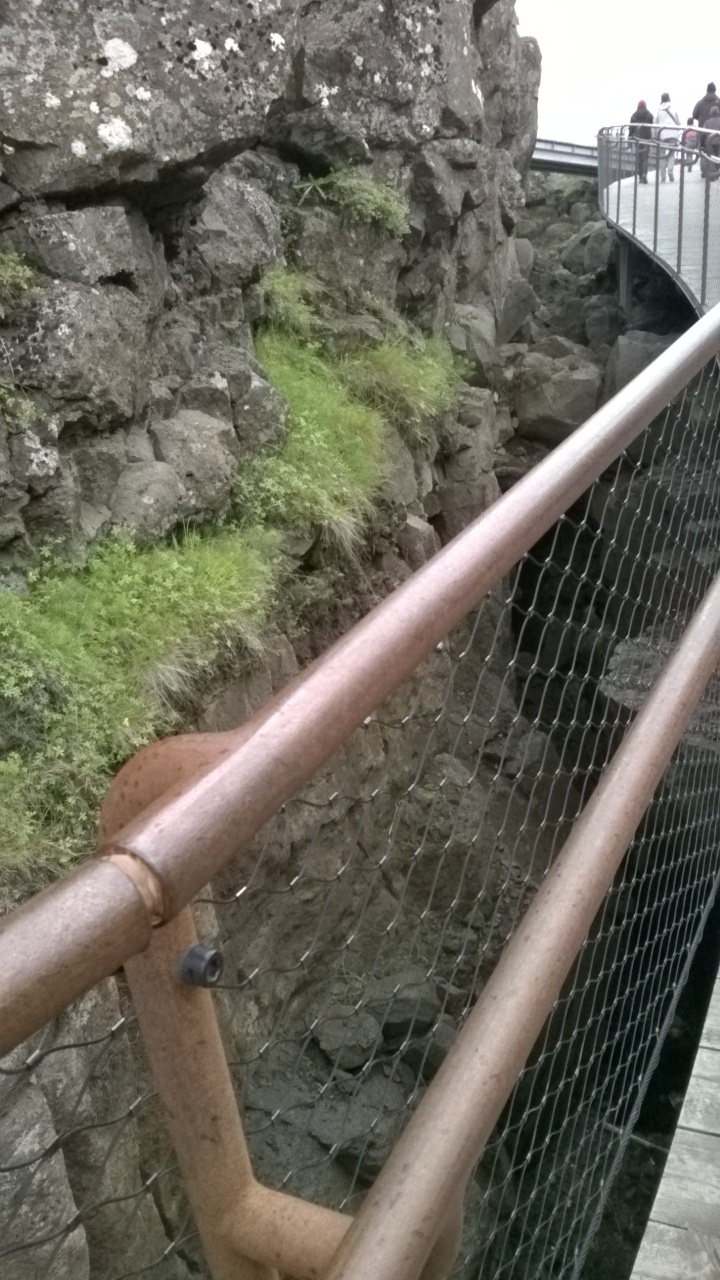
September threads the year's needles. Daylight still runs 12–14 hours in the month's first half — enough for the full 190-mile (300 km) round trip from Reykjavík with every walk done in light — while the June–July high season (which brings the cruise-ship and coach peak, when Gullfoss's platforms can queue) has drained away with the schools' return. The sites themselves are at full strength: Strokkur erupts every 5–10 minutes regardless of season, Gullfoss carries late-summer glacial flow at near its mightiest toward its 105-foot (32 m) double drop, and Þingvellir's rift valley takes its first autumn colors in the birch scrub. Weather runs 41–54°F (5–12°C) with the year's first real storms possible — the Icelandic pattern, not a disqualification — and by mid-September the aurora season has begun, so a clear evening after the loop can end over Þingvallavatn under the lights.
The alternatives frame the choice. June gives the midnight sun and the driest trails but the maximum crowd at every railing, and December–February compresses the loop into 4–7 hours of daylight with ice on the paths at Gullfoss (the park fits crampon-friendly walkways, and the falls half-freeze magnificently) — a specialist's version. Spring (April–May) is the quietest bargain but the waterfalls run brown with melt and Geysir's ground can be sodden. September is the Circle as Icelanders do it themselves: full light, full flow, room at the rail.
Picture the place
Gullfoss in September rain-sun: the Hvítá pours over the two steps in full glacial milk, a rainbow stands in the canyon spray, and the upper platform holds six people instead of sixty.
The easily missed detail
Drive the loop counter-clockwise to the crowd, not with it. Nearly every coach and most rentals run Reykjavík → Þingvellir → Geysir → Gullfoss, arriving at each sight in the same mid-morning-to-noon wave. Starting at Gullfoss by 8:30 a.m. (or running the whole loop after 4 p.m. in the long light) puts you an hour against the flow all day — the same three sights, a different population. The parking fees do not care which direction you drive.
A practical rhythm
- First half of September — The light is still generous (12+ hours) and the school-holiday fleets have gone home
- Counter-clockwise and early — Gullfoss at breakfast-time, Geysir by late morning, Þingvellir for the long afternoon
- Apps before asphalt — Parka installed and a card loaded before you leave Reykjavík; Þingvellir payable at its machines or checkit.is
What could complicate the plan
The fee ground is shifting: a proposed national nature pass (May 2027 in draft) may restructure charges, individual lots adjust their tariffs, and Kerið crater on the loop's south leg separately charges about 700 ISK per person at its gate (a private landowner fee). September weather can close the loop's exposed stretches briefly in high wind — check road.is (the Icelandic Road and Coastal Administration) the morning you drive. And after mid-September the daylight shrinks by nearly an hour a week: the same plan in late October is a different, darker trip.
What to do next
Pick an early-September day, download Parka, drive out by 8 a.m. counter-clockwise, and keep the evening free for a possible aurora over the lake at Þingvellir.
Sources
- Þingvellir National Park (thingvellir.is) — park entry free; the 1,000 ISK daily parking/service fee covering all car parks, payable at machines or via checkit.is
- Icelandic Road and Coastal Administration (road.is) — driving conditions and closures on the loop's roads
- Environment Agency of Iceland / Althingi draft legislation — the proposed per-person nature pass for major attractions, drafted to begin May 1, 2027
- Icelandic Meteorological Office — September daylight and temperature norms for the southwest