Greece country guide Places and experiences
What should a first-time traveler see in Greece beyond the obvious highlights?
The short answer
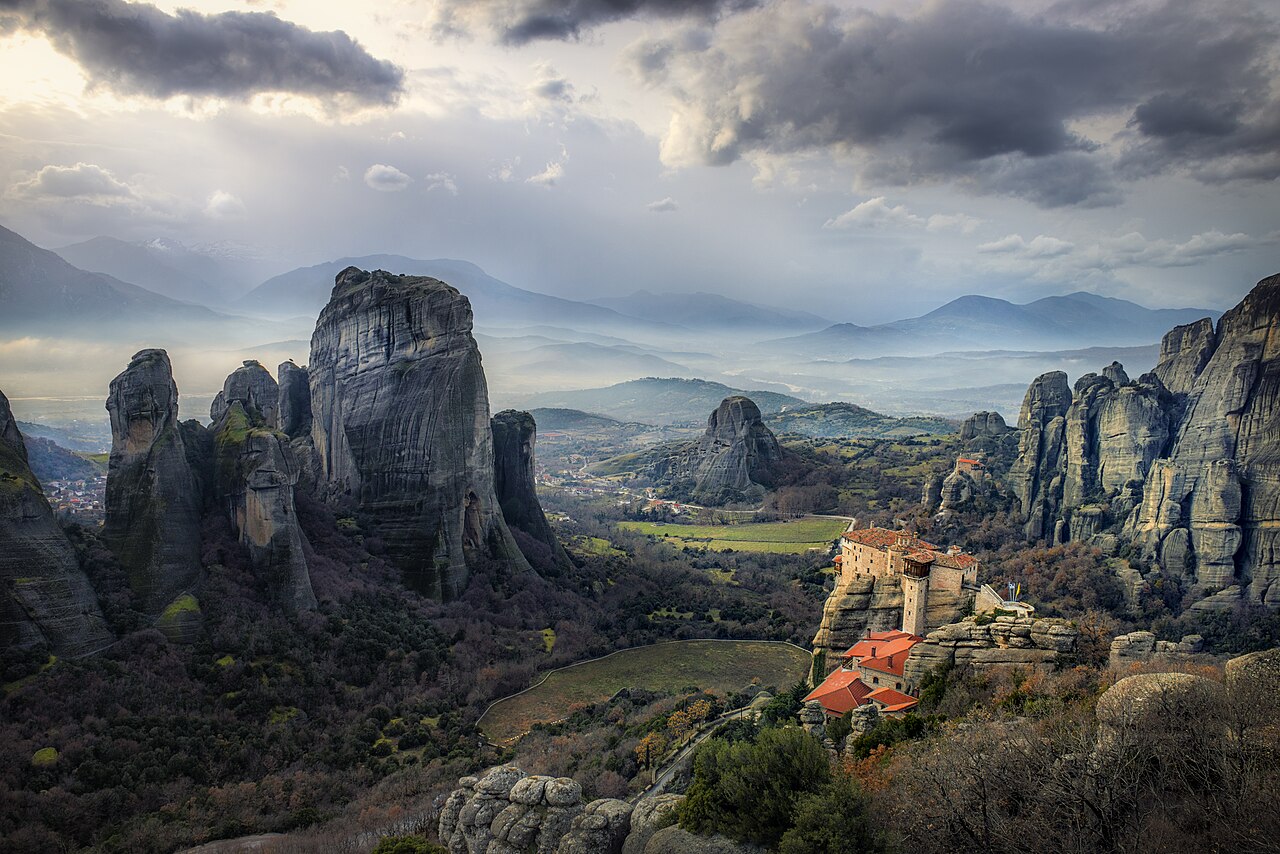
Meteora on the mainland and a working Cycladic port like Naxos — Greece has 20 properties on the UNESCO World Heritage List, and the monasteries balanced on Thessaly's sandstone pillars are one of the few inscribed for both their culture and their landscape.
The answer, with local context
Twenty inscriptions is a lot for a country of Greece's size, and most visitors see two or three of them. Meteora, in Thessaly, is the one that most changes a traveler's idea of the country: Greek Orthodox monasteries built on top of near-vertical sandstone pillars, reached now by stairs cut into the rock rather than by the windlasses and rope baskets that once served them. It is six to seven hours' drive north of Athens, or a train journey to Kalambaka, and it belongs to a different Greece from the islands.
The islands themselves reward being specific. Naxos, the largest of the Cyclades, has a working harbor at Chora rather than a resort frontage, with the Portara — the marble gateway of an unfinished temple on the Palatia peninsula — standing at the harbor mouth. Choosing a large, inhabited island over a famous small one changes the trip: there is agriculture, there are inland villages, and the ferry is a service rather than an excursion.
The useful principle for a first trip is to put one mainland region against one island group. Greece is not a single coastline, and a week spent moving between islands by ferry is a week spent mostly on boats.
Picture the place
At Meteora the rock towers stand straight out of the plain with forest at their feet and the monastery walls built flush with the cliff edges, so the masonry and the sandstone appear continuous. In winter cloud sits below the summits and the monasteries float clear of it, which is where the name — from the Greek for suspended in air — comes from.
The easily missed detail
Greece's archaeological sites and monasteries sit under a legal protection regime that governs visitor behavior as much as conservation. The Acropolis, for instance, has been administered as an archaeological site since 1833 and is protected under Law No 3028/2002, with a 2007 Presidential Decree declaring a no-fly zone over it. The same statutory framework covers protected sites nationally, so drone photography at Greek heritage sites is a legal question rather than a courtesy one — worth knowing before carrying one to Meteora.
A practical rhythm
- Mainland — Meteora in Thessaly, reached by road or by train to Kalambaka.
- Islands — A large inhabited island such as Naxos, where the harbor at Chora works year-round.
- Pacing — One mainland region and one island group, rather than an island-hopping loop.
What could complicate the plan
Monasteries at Meteora observe dress codes and their own opening days, and the stairs are steep and numerous. Border formalities apply wherever you land, including regional airports and island ports: the Schengen short-stay rule allows a maximum of 90 days within any 180-day period, counted across the whole area. The US Department of State places Greece at Level 1, exercise normal precautions, which is the lowest advisory level and reflects a country where the practical risks are logistical — ferry schedules, summer heat and road distances.
What to do next
The Greece when-to-visit answer in this group has the Acropolis Museum's seasonal hours and free-admission dates; the Greece food answer covers feta's protected status and the Mediterranean diet's UNESCO listing.
Sources
- UNESCO World Heritage Centre, Greece — 20 inscribed properties, including Meteora
- UNESCO World Heritage Centre, Acropolis, Athens — archaeological site status since 1833, Law No 3028/2002, 2007 no-fly decree
- European Commission, Migration and Home Affairs — Schengen 90/180 short-stay rule
- US Department of State, Greece travel advisory — advisory level