Havana / Cuba When to visit
When should I visit Havana, Cuba, for the best experience?
The short answer
Mid-December to mid-April — the dry half of Havana's year, with highs near 79°F (26°C) in January, nights around 65°F (18°C), and the Atlantic hurricane season safely behind you.
The answer, with local context
Havana's calendar splits cleanly in two. The dry months run roughly November through April, when February and March often deliver less than an inch and a half of rain between them. From May the pattern reverses: June and October each average close to 7 inches, and the city's annual total lands near 47 inches. August is the hard month — highs of 89°F (32°C) and nights that barely drop below 76°F (24°C), in a city where most of the sightseeing happens on foot over stone.
The Atlantic hurricane season runs June 1 to November 30 as defined by the National Hurricane Center, and Cuba sits squarely in the track corridor. Late August through October is the statistical heart of it. That overlap with the wettest weeks is the single strongest argument for a winter trip rather than a summer one.
Light matters here more than the latitude suggests. Havana sits at about 23°N, so late December gives roughly 10 hours 45 minutes of daylight and late June close to 13 hours 30 minutes. In January the sun is low enough through the morning that the narrow streets of the old city stay shaded until mid-morning, which is exactly when the walking is best.
Two official positions are worth knowing before you fix dates. The State Department places Cuba at Level 2: Exercise Increased Caution country-wide, on a page dated May 7, 2025. The CDC has a Level 2 travel health notice for a chikungunya outbreak in Cuba, posted September 26, 2025, alongside its standing Level 1 global dengue notice. Both point the same way as the climate does: the drier, cooler months are also the months with fewer mosquitoes.
Picture the place
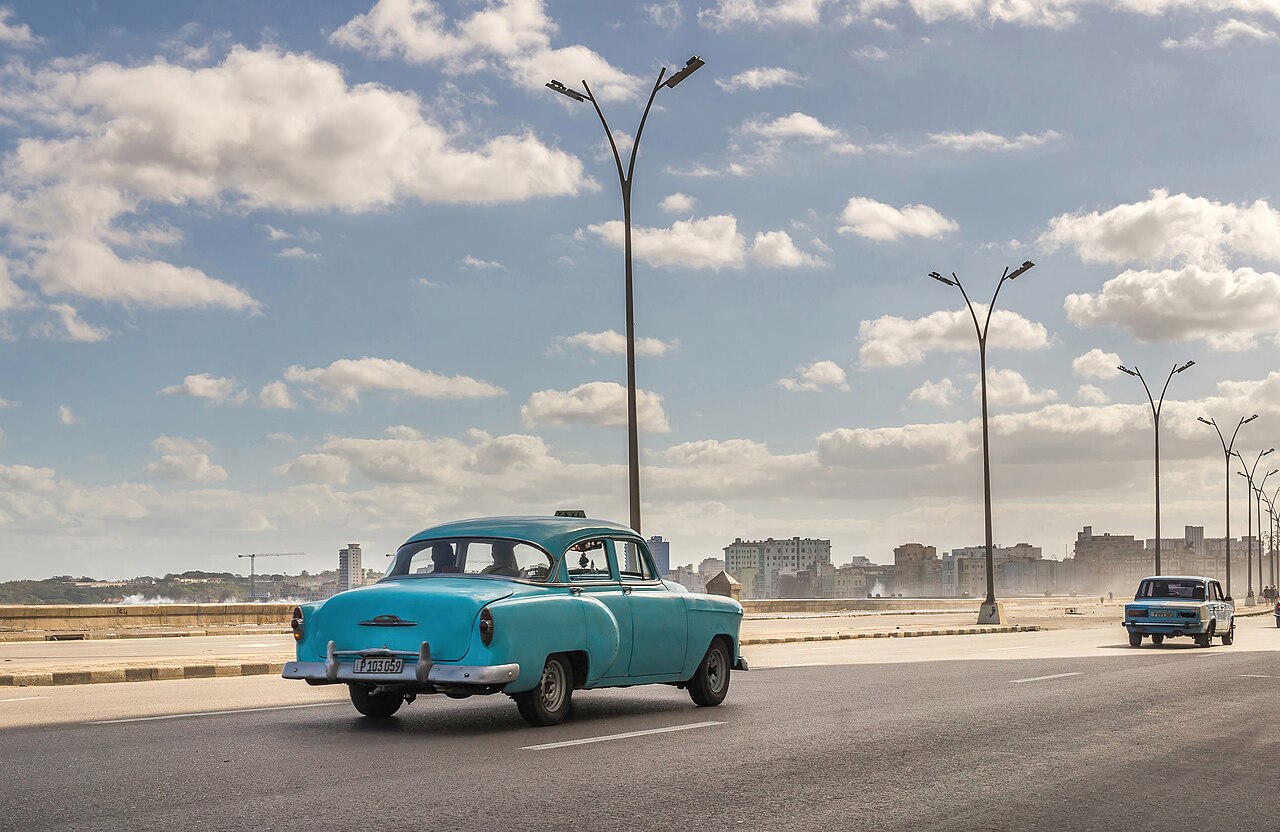
In January the sea breeze comes over the seawall with real force and the air off the water is cool enough for a jacket after dark, while the limestone of the old plazas holds the day's heat into the evening. The low winter sun strikes the north-facing facades along the waterfront for most of the afternoon, which is why that stretch looks its best from about three o'clock.
The easily missed detail
Old Havana is not a single monument but a World Heritage property called Old Havana and its Fortification System, inscribed in 1982 under cultural criteria (iv) and (v) as reference 204. The listing bundles the colonial core with the harbor forts on the far side of the channel. That matters for timing: the fortifications are on the opposite bank from the old city, so a day that includes both needs a harbor crossing built into it rather than tacked on at the end.
A practical rhythm
- December to April — Dry, breezy, and cool enough for long walking days; the busiest and most expensive stretch of the year for flights and rooms.
- May and late October — Shoulder weeks with rain arriving in short heavy bursts rather than all-day drizzle, and noticeably thinner crowds.
- August to early October — Hottest, wettest, and inside the peak of the hurricane season; worth avoiding unless the dates are fixed for you.
What could complicate the plan
US travel to Cuba is governed by sanctions law, not by the weather. Treasury's Office of Foreign Assets Control authorizes 12 categories of travel-related transactions under 31 CFR 515.560(a), and tourism is not among them, so a US traveler must qualify under a category and keep records. OFAC also withdrew the general authorization for attending or organizing professional meetings in Cuba with effect from September 30, 2026. Separately, US-issued credit and debit cards are generally unusable in Cuba as a consequence of the same sanctions, so cash planning is part of the trip.
What to do next
Once the dates are set, move on to the Havana things-to-do question in this group for the layout of the old city and its forts, and to the food and drink question for how the private-restaurant rules shape where you eat.
Sources
- UNESCO World Heritage Centre, Old Havana and its Fortification System — official property name, inscription year 1982, criteria (iv)(v), reference 204
- NOAA National Hurricane Center — Atlantic hurricane season dates
- US Department of State, Cuba Travel Advisory — Level 2 advisory and its stated date
- CDC Travelers' Health, Cuba — Level 2 chikungunya notice dated September 26, 2025 and Level 1 global dengue notice
- US Treasury, Office of Foreign Assets Control FAQ 695 — 12 general travel authorizations under 31 CFR 515.560(a)
- Instituto de Meteorología de Cuba — monthly temperature and rainfall normals for Havana