Hoi An / Vietnam Things to do
What are the most worthwhile things to do in Hoi An on a first visit?
The short answer
Walk Hoi An Ancient Town, see the Japanese Covered Bridge, visit Tra Que and make time for An Bang Beach; these give you architecture, rural life and the coast on a first visit.
The answer, with local context
The historic core is the most important first stop. UNESCO inscribed Hoi An Ancient Town in 1999 for its preserved trading-port architecture and urban plan, shaped by exchanges among Vietnamese and foreign merchant communities. It contains a large concentration of traditional timber buildings, assembly halls and narrow streets — UNESCO counts 1,107 surviving timber-frame buildings inside the inscribed town, which is why the architecture reads as a continuous fabric rather than a scattering of show houses. The Japanese Covered Bridge is a distinctive town landmark; the Thu Bon River explains why a substantial trade settlement developed here in the first place.
Move beyond the central lanes for contrast. Tra Que, a farming area associated with culinary herbs and vegetables, is reached from the town on a short countryside outing. The rural canals and Cam Thanh coconut-palm waterways offer another landscape; any basket-boat excursion should be arranged with an operator who observes local water-safety rules. An Bang Beach makes sense as a separate coastal break instead of assuming Hoi An is itself a beachfront old town.
A visit can also use Hoi An’s tailors and craft workshops, although the merits and turnaround time of any particular business should be judged separately. The town’s trading heritage is visible in the domestic architecture and commercial streets, not just in souvenir stalls. Allow at least one unhurried evening along the old-town waterfront after the busiest daytime groups have thinned.
Picture the place
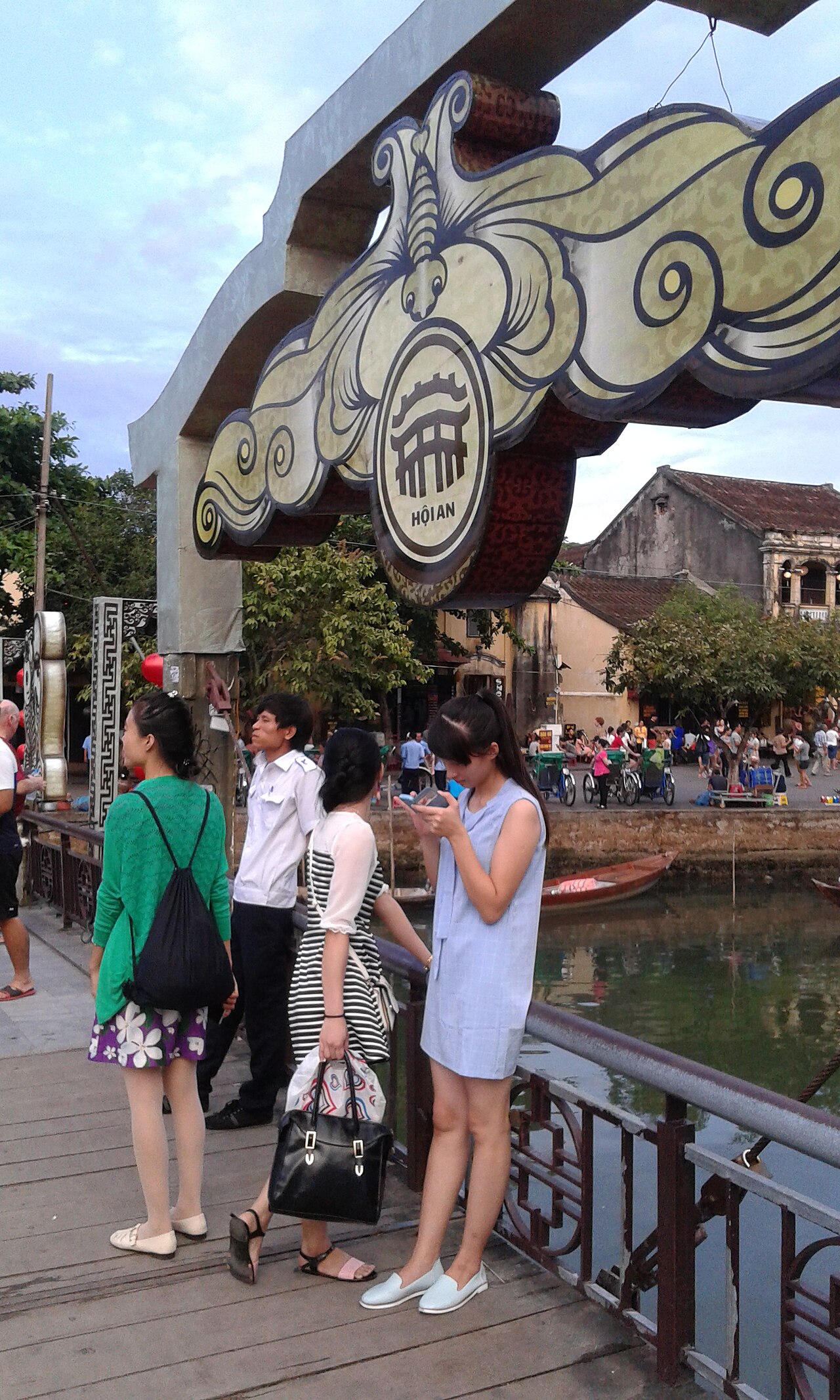
The old town has low roofs and yellow façades beside a river; just outside it, vegetable plots and palm-fringed waterways create a less built-up scene.
The easily missed detail
The old quarter’s UNESCO boundary and the wider modern town are different things. Tra Que, Cam Thanh and An Bang are complementary excursions, not monuments inside the protected historic core.
A practical rhythm
- First morning — Explore the bridge, merchant streets and appropriate cultural buildings.
- Second day — Take a countryside trip to Tra Que or the Cam Thanh coconut-waterway landscape.
- Unhurried close — Make time for An Bang Beach and an evening return to the riverfront.
What could complicate the plan
Historic buildings may charge separate admission or participate in old-town ticket systems, and restoration can affect specific landmarks. Boats operate only when river and weather conditions allow; autumn floods can block low streets. Arrival needs its own line in the plan: Vietnam's national tourism authority states that the country's e-visa has been open to citizens of all countries and territories since 15 August 2023, is valid for up to 90 days and permits multiple entries. Hoi An has no airport, so the flight lands at Da Nang and the last 30 kilometers are a road transfer.
What to do next
helps select months for walking; tells you which dishes are strongly associated with the historic port.
Sources
- UNESCO World Heritage Centre, Hoi An Ancient Town — 1999 inscription and the 1,107 surviving timber-frame buildings inside the property
- Vietnam National Authority of Tourism — historic town, activities, local dishes
- Vietnam National Authority of Tourism, official e-visa guide — the e-visa open to all nationalities since 15 August 2023, valid up to 90 days with multiple entries
- U.S. State Department — visa and arrival rules