Hoi An / Vietnam Food and drink
Where should I eat in Hoi An, and which local food or drink is worth trying?
The short answer
Eat cao lau noodles, white-rose dumplings and Hoi An chicken rice in the old-town food district, then look for mi Quang and local herb dishes in markets and neighborhood restaurants.
The answer, with local context
Cao lau is one of the town’s most identifiable dishes, featuring firm noodles typically served with pork, herbs, greens and crisp components. It is not interchangeable with pho from other parts of Vietnam. White-rose dumplings, known locally as bánh bao bánh vạc, are delicate rice-flour dumplings commonly filled with shrimp or pork. Cơm gà Hội An, or Hoi An chicken rice, brings seasoned shredded chicken and rice together with local herbs. The Vietnam National Authority of Tourism highlights these foods among the distinctive flavors of the old town.
Other central Vietnamese preparations deserve space: mì Quảng is a regional noodle dish with a relatively small quantity of broth, while bánh xèo is a savory fried pancake often eaten with greens and wrappers. Town markets and casual eateries around the old quarter can offer a combination of these dishes. National tourism information has identified the White Rose Restaurant on Hai Ba Trung Street and the long-established Com Ga Ba Buoi on Phan Chu Trinh Street as examples of specialty venues, but the current operating status and menu should be checked before making a reservation.
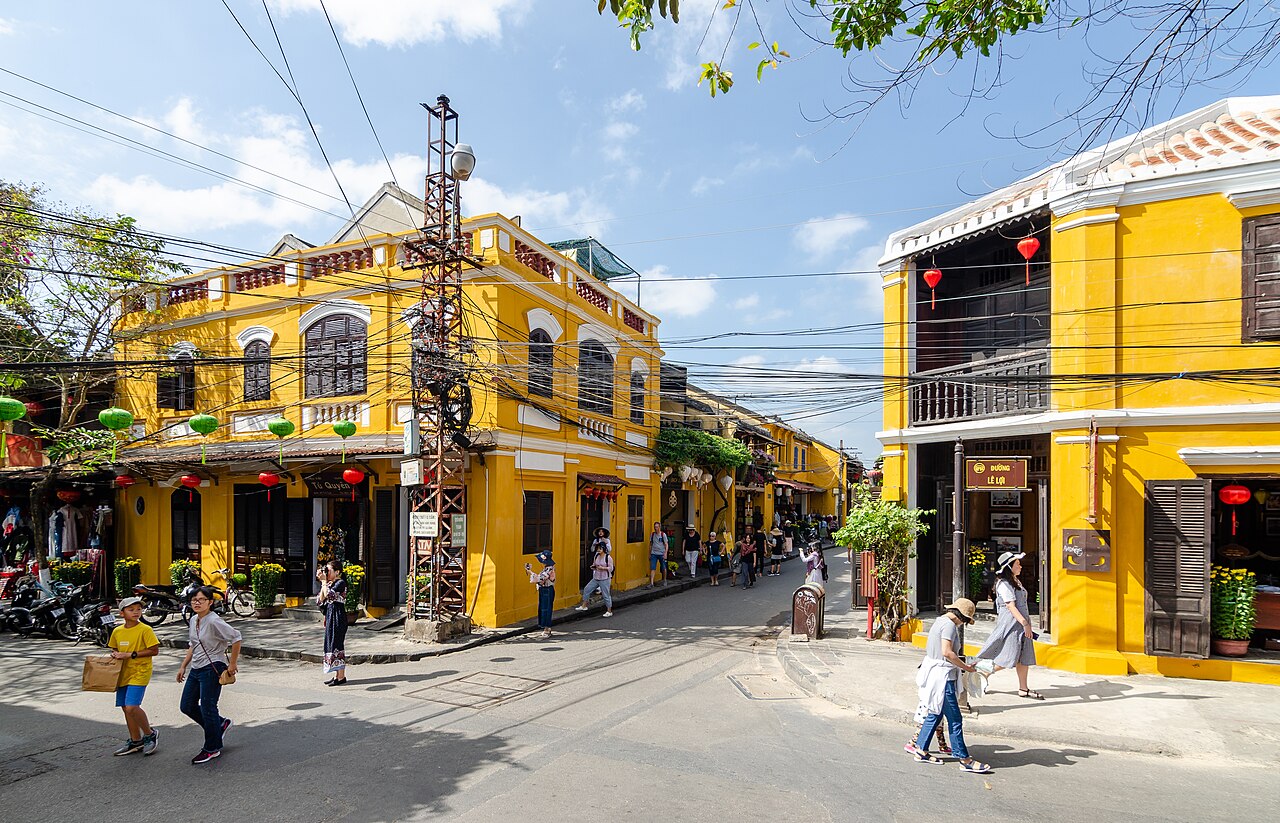
Food links naturally with the surroundings. The herb-growing village of Tra Que helps explain why fresh greens appear with so many local meals. The trading-port history recognized in Hoi An’s 1999 UNESCO inscription also gives context for the culinary influences that meet in the town. It is possible to spend a day on architecture and still make food part of the cultural interpretation.
Picture the place
A plate of firm cao lau noodles has a different texture from translucent white-rose dumplings; both are commonly brightened by the herbs that feature throughout Hoi An’s food scene.
The easily missed detail
The names point to separate specialties, not generic substitutes for one another. White-rose dumplings and cao lau are especially tied to Hoi An’s identity, while mi Quang represents the wider central region.
A practical rhythm
- Morning — Visit a market for produce and a casual breakfast before sightseeing.
- Lunch — Compare cao lau with Hoi An chicken rice at a dedicated local eatery.
- Evening — Try white-rose dumplings, and add mi Quang or bánh xèo if you have another meal.
What could complicate the plan
Ask about pork, shrimp and shellfish fillings explicitly: the appearance of a dumpling or noodle dish does not identify all ingredients. Popular shops may sell out, change locations or be closed outside posted hours, and old-town restaurant listings may become outdated.
What to do next
explains the walkable sights around the food district, while helps choose dates with fewer weather disruptions.
Sources
- UNESCO World Heritage Centre — 1999 inscription, town fabric and river port
- Vietnam National Authority of Tourism — historic town, activities, local dishes
- Vietnam National Authority of Tourism — Cao Lau, White Rose and chicken rice
- U.S. State Department — visa and arrival rules