Indonesia country guide Food and drink
What local dishes should I try in Indonesia, and where should I look for them?
The short answer
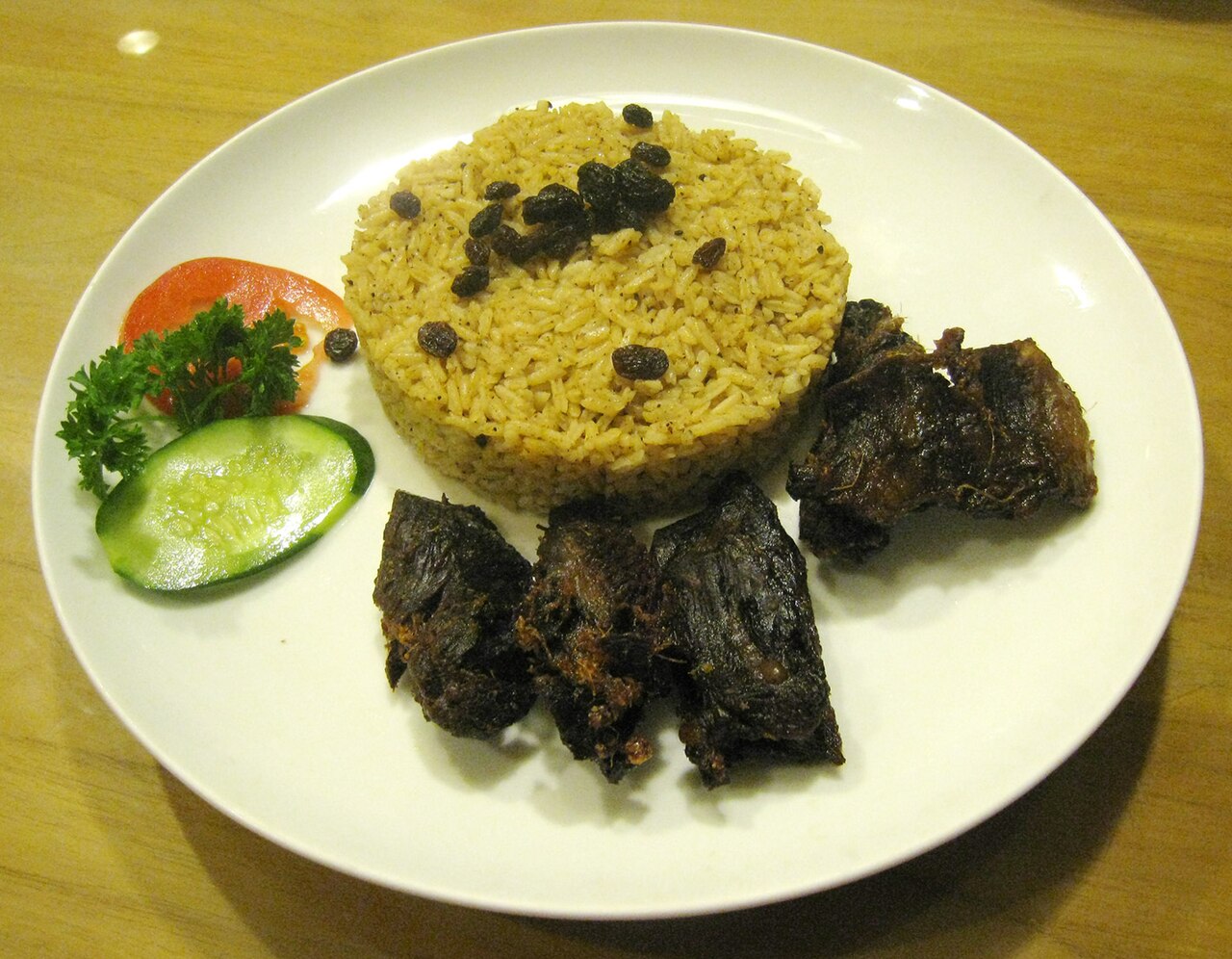
Eat by island, and treat rice as the variable rather than the constant — nasi kebuli in Central Jakarta, spiced rice with raisins served with fried goat, is a Betawi dish carrying Indian and Middle Eastern influence that exists nowhere else in the archipelago in that form.
The answer, with local context
Indonesia's cuisine is not one cuisine, and the reason is the geography: more than 3,000 miles of islands, each with its own trade history. Jakarta's own Betawi tradition is a product of the port — nasi kebuli, found in restaurants on streets such as Jalan Sabang in Central Jakarta, is spiced rice with raisins served with fried goat meat, and it reads as a Betawi dish with Indian and Middle Eastern ancestry rather than as a Javanese one. Move to Central Java and the register shifts sweeter; move to Sumatra and it shifts toward the slow-cooked, chili-heavy Minangkabau repertoire; move to Bali and pork re-enters a menu that is largely absent from it elsewhere in a Muslim-majority country.
Bali is where food and landscape are most directly linked, because the island's rice is grown inside a protected system. The inscribed subak cultural landscape covers 19,519.90 hectares, with five component sites including the supreme water temple of Pura Ulun Danu Batur with Lake Batur and the Catur Angga Batukaru terraces, and what is protected is not only the terraces but the ritual governance of how water is shared between farming cooperatives — the Tri Hita Karana philosophy, the three causes of goodness. Eating Balinese rice in sight of those terraces is eating from a system UNESCO lists on cultural grounds.
Timing shapes what is on the plate. Denpasar's rainfall swings from 27.6 millimeters in July to 350.7 millimeters in January, and the island's agricultural calendar follows that curve even though its temperature does not — monthly means stay between 79°F (26.3°C) and 83°F (28.2°C) all year.
Picture the place
A plate of nasi kebuli arrives as a mound of pale, visibly spiced rice with the dark fried goat set against it, closer in appearance to a Gulf pilaf than to anything Javanese. The restaurants that serve it in Central Jakarta are everyday neighborhood places, not showpieces.
The easily missed detail
Bali is the exception that explains Indonesian food. Because the island is Hindu rather than Muslim, pork dishes are a normal part of its cooking and genuinely hard to find elsewhere in the country — which also means that a dish a traveler first meets in Bali may be unavailable on the next island. Planning food by region rather than by dish avoids that disappointment, and it is the same principle that makes the subak system worth understanding: the rice, the water temples and the ritual calendar are one thing, not three.
A practical rhythm
- Jakarta — Betawi cooking, including nasi kebuli on streets such as Jalan Sabang in the center of the city.
- Bali — Rice and pork dishes, eaten near the inscribed subak terraces of Catur Angga Batukaru or the Pakerisan watershed.
- Dry months, July and August — The easiest weeks for market and inland eating, at 1.1 and 1.4 inches of rain respectively.
What could complicate the plan
Dietary geography is not optional information: pork is normal in Bali and largely absent in the Muslim-majority remainder of the country, and alcohol availability varies the same way. Entry formalities also apply before any of it: a tourist visa is required, obtained either as an electronic visa at evisa.imigrasi.go.id within 90 days of arrival, with a booked return flight, or as a visa on arrival, and an electronic arrival card must be completed within 72 hours of arrival in the All Indonesia app or online, free of charge. Indonesia is listed among the destinations in the CDC's Global Measles travel health notice at Level 1 — Practice Usual Precautions, dated 28 May 2025. Anyone entering Bali also pays the IDR 150,000 per person tourist levy.
What to do next
The Indonesia places-and-experiences question points at the islands where those regional kitchens sit; the when-to-visit question has the rainfall figures that decide which markets will be comfortable.
Sources
- Wikimedia Commons file description, Nasi Kebuli Jakarta — dish composition, Betawi origin with Indian and Middle Eastern influence, Jalan Sabang location
- ICOMOS evaluation for the Cultural Landscape of Bali Province, via UNESCO World Heritage Centre — subak component sites, inscribed area, Tri Hita Karana and ritual water governance
- Japan Meteorological Agency, Tokyo Climate Center, Denpasar/Ngurah Rai normals — monthly temperature and precipitation normals
- US Department of State, Indonesia travel advisory and country information — visa routes, arrival card, Bali tourist levy
- US Centers for Disease Control and Prevention, Travel Health Notices — Global Measles notice level and date