Jaipur / India When to visit
When should I visit Jaipur, India, for the best experience?
The short answer
November through February is the most comfortable season for Jaipur’s outdoor forts and walled-city streets, avoiding much of the late-spring heat and the heaviest monsoon rainfall.
The answer, with local context
Jaipur is in Rajasthan, where the hot season builds ahead of the southwest monsoon. The India Meteorological Department’s Jaipur regional climate summary indicates that roughly 88% of annual precipitation occurs from June through September, with long-term monthly rainfall around 221 millimeters in July and 195 millimeters in August. Those wet-month figures help explain why early or late winter is more practical for long outdoor visits than planning extensive walking around the monsoon. Late spring can be intensely hot even when rain is limited.
The historic city itself deserves a cool-weather visit. Jaipur City was inscribed on UNESCO’s World Heritage List in 2019, in recognition of its planned urban form, public spaces and architectural traditions. It was founded in 1727 under Sawai Jai Singh II, and the distinctive walled-city grid remains central to experiencing the place. This is a setting for walking markets and observing buildings rather than only taking a car between isolated monuments.
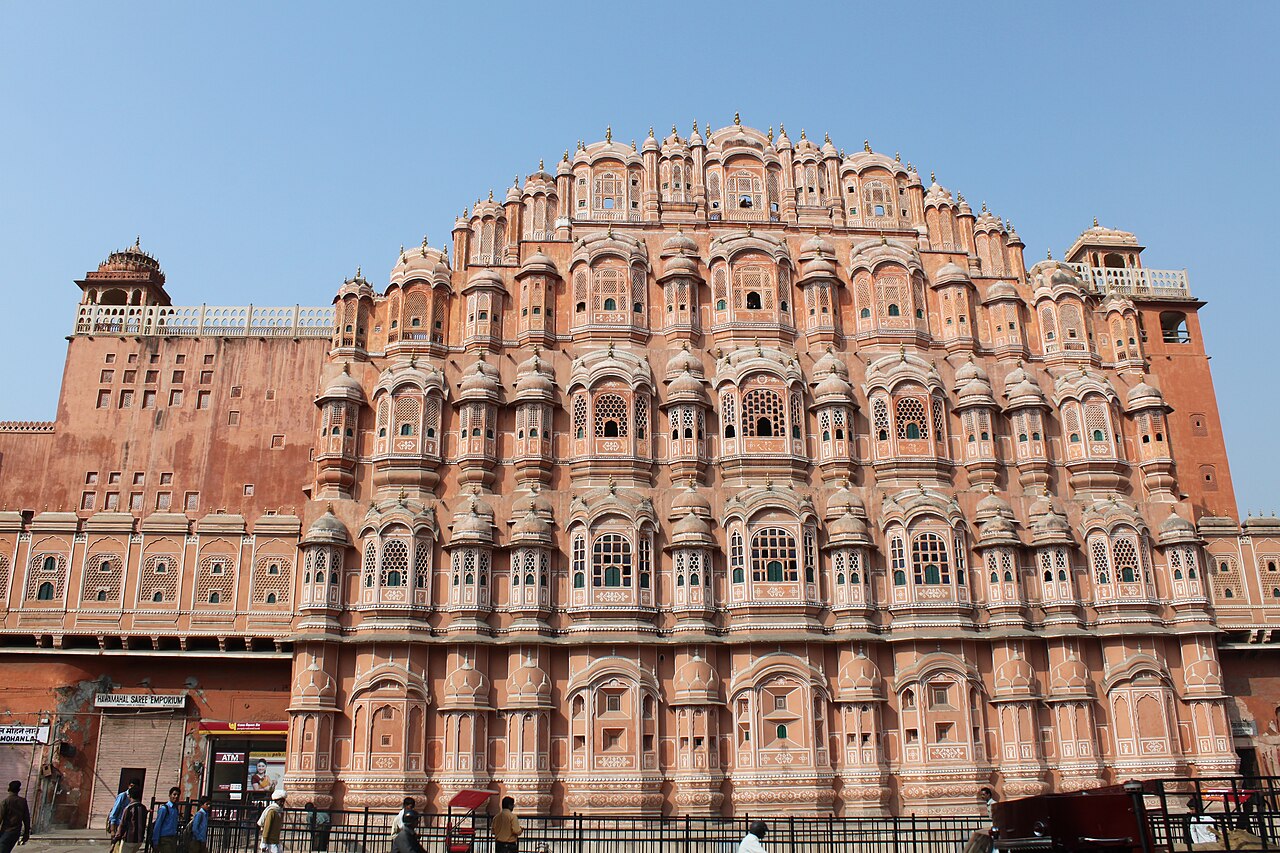
For nearby excursions, Amber Fort lies outside the walled city, while Hawa Mahal and the City Palace sit within the core visitor circuit. The Jantar Mantar astronomical complex is a separate UNESCO World Heritage property, inscribed in 2010. A winter itinerary is easier to structure around a morning at Amber and an afternoon in the old city, as long as site opening hours are checked for the intended day.
Picture the place
In low winter sunlight the pink and terracotta-colored façades in the walled city show their details clearly, while Amber’s stone walls rise above the hills outside town.
The easily missed detail
Jaipur’s UNESCO-listed planned city and the separately inscribed Jantar Mantar are two different heritage designations. That is why a city walk and a visit to the astronomical instruments both belong in the itinerary.
A practical rhythm
- Cool morning — Explore Amber Fort or one of the larger outdoor heritage complexes.
- Midday — Move to a museum, lunch stop or shaded market route inside the walled city.
- Late afternoon — Walk the Hawa Mahal/City Palace area while leaving time for street congestion.
What could complicate the plan
Winter can still bring cool mornings and busy holiday periods. Monsoon rains may interfere with longer walking plans, and hot-season conditions increase dehydration risk. Entry tickets and opening arrangements differ by monument.
What to do next
identifies Jaipur’s strongest first-visit stops; explores regional dishes to try along the route.
Sources
- UNESCO World Heritage Centre — Jaipur City 2019 inscription
- India Meteorological Department, Jaipur — June-September rainfall and monsoon distribution
- Rajasthan Tourism, cuisine — ghevar, ker sangri and regional foods
- Rajasthan Tourism — monuments and city tourism
- U.S. State Department — entry considerations