Kathmandu / Nepal When to visit
When should I visit Kathmandu, Nepal, for the best experience?
The short answer
October and November are strong months for visiting Kathmandu’s historic squares and hilltop shrines, with comparatively settled post-monsoon conditions; March and April are another useful walking season.
The answer, with local context
Kathmandu lies in a high valley, so a city visit is not the same as trekking the Himalayas. The monsoon concentrates rain during the summer months, while autumn often brings drier conditions for walking between courtyards, markets and shrines. Spring is another familiar sightseeing period, though haze can limit distant mountain visibility. Nepal’s Department of Hydrology and Meteorology publishes official climate observations and normals; avoid substituting temperatures from mountain trekking regions for conditions in Kathmandu itself.
The city’s heritage warrants several walks rather than one monument stop. UNESCO inscribed the Kathmandu Valley in 1979 as a serial cultural property with seven monument zones, listed under criteria (iii), (iv) and (vi). The inscription covers those zones rather than the whole valley floor, so a lane two blocks from a listed square is simply a lane. Within Kathmandu city, major components include Hanuman Dhoka/Kathmandu Durbar Square, Swayambhu, Boudhanath and Pashupatinath. The remaining monument zones are Patan Durbar Square, Bhaktapur Durbar Square and Changu Narayan, which are elsewhere in the valley and cannot all be described as locations inside Kathmandu municipality.
The Nepal Tourism Board identifies the market district around Asan and visitor hub Thamel as important parts of the city experience. These streets help connect the monumental areas with everyday Kathmandu. The 2015 earthquake damaged multiple historic structures and led to long-term restoration, so a particular shrine or building may have restricted access even when the surrounding square is open.
Picture the place
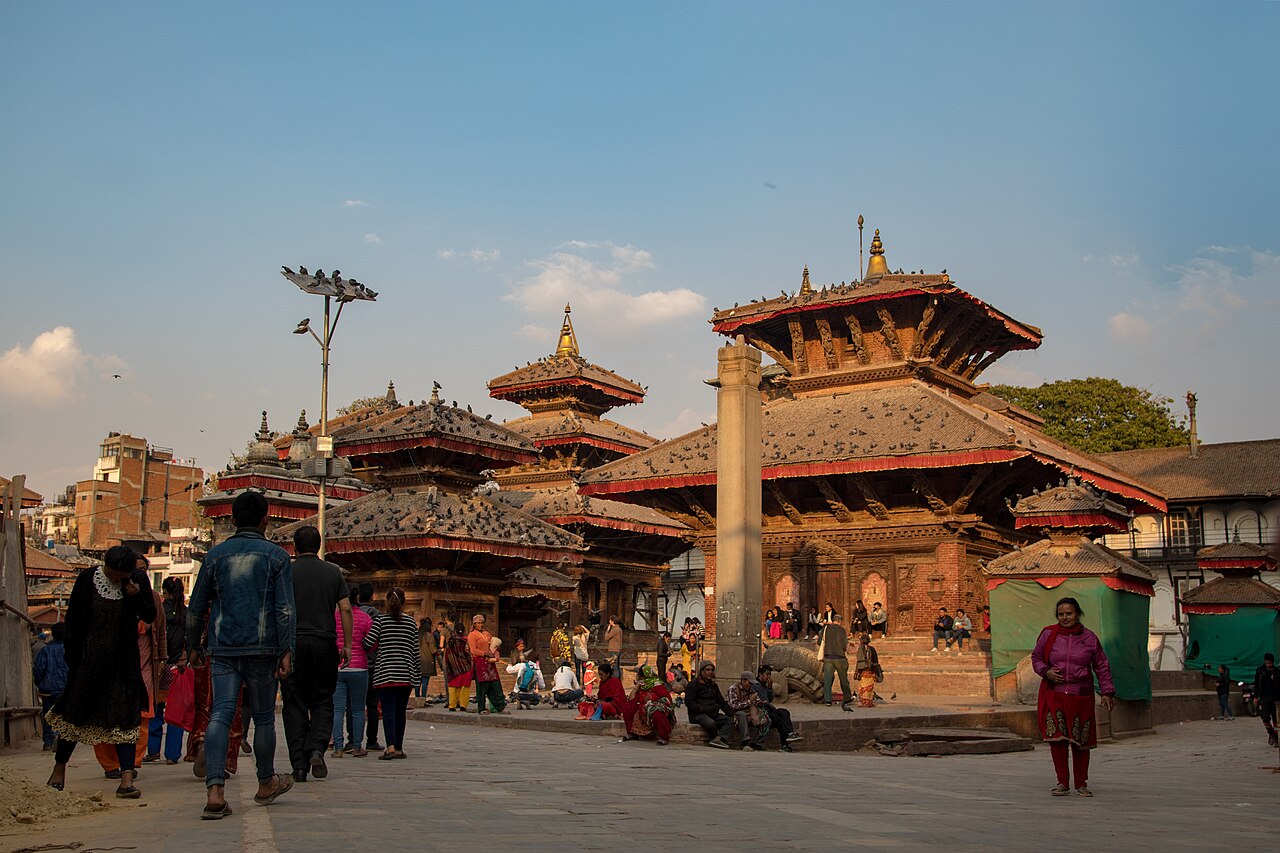
In the old city, temple roofs rise above courtyards and markets; at Boudhanath, the white stupa and painted eyes form a broad circular gathering point rather than a narrow street landmark.
The easily missed detail
The UNESCO property is the Kathmandu Valley, not just Kathmandu Durbar Square. It contains seven distinct zones, including important towns outside the city limits.
A practical rhythm
- Morning — Explore Kathmandu Durbar Square and adjoining historic streets before traffic and heat increase.
- Afternoon — Visit Boudhanath or Swayambhu with time to observe respectful circulation around the shrine.
- Another day — Reserve a separate valley outing for Patan, Bhaktapur or Changu Narayan.
What could complicate the plan
Heritage restoration, religious access restrictions and crowded roads can affect visits. Non-Hindus are not permitted inside Pashupatinath’s main temple sanctuary, although other parts of the site may be visible from authorized areas. Nepal's published tourist visa-on-arrival fees are US$30 for 15 days, US$50 for 30 days and US$125 for 90 days, and nationals of a short list of countries — among them Afghanistan, Iraq, Syria and Zimbabwe — must obtain a visa in advance from a Nepalese mission instead of at the airport.
What to do next
explains how to choose among the seven heritage zones, and connects local food with Kathmandu’s neighborhoods.
Sources
- UNESCO World Heritage Centre — Kathmandu Valley 1979, seven zones
- Nepal Tourism Board, Kathmandu — specific Kathmandu monuments and neighborhoods
- Nepal Tourism Board, culture — dal bhat, momo, Newar cuisine
- Nepal Department of Hydrology and Meteorology — national official climate normals program
- Embassy of Nepal, tourist visa information — visa-on-arrival fees of US$30 for 15 days, US$50 for 30 days and US$125 for 90 days, and the nationalities excluded from visa on arrival
- U.S. State Department — entry and travel conditions