Kerala Backwaters / India When to visit
When should I visit Kerala Backwaters, India, for the best experience?
The short answer
December through February is generally the most comfortable season for an Alappuzha or Kumarakom backwaters trip, after the main southwest monsoon and before the hotter, more humid late spring.
The answer, with local context
The Kerala Backwaters are a network of lakes, rivers, canals and lagoons rather than a single lake resort. For a first visit, the best-known central portion is the Vembanad Lake region, connecting Alappuzha and Kumarakom. Farther south, Ashtamudi Lake serves the Kollam area; Valiyaparamba represents a separate northern network. These locations should not be collapsed into one place called “the backwaters,” because houseboat departure points, distances and local environments differ.
India’s Meteorological Department recognizes around June 1 as the normal onset of the southwest monsoon over Kerala, with substantial rain in June through September. Additional rain can occur in the later October–November season. The drier winter window generally makes boat transfers, outdoor village walks and open-deck time more pleasant. During the wetter months the canals can still be lush, but heavy rain may restrict visibility and boat operations. Do not assume a rainy day is unsafe in all waterways or a sunny day is safe on every channel: water conditions and vessel standards matter separately.
Kumarakom is associated with Vembanad Lake, wetland village life and a bird sanctuary covering roughly 14 acres on the former Baker Estate. Vembanad's standing gives the season a second meaning: the Vembanad-Kol Wetland was designated a Ramsar Wetland of International Importance on 19 August 2002 and covers 151,250 hectares fed by 10 rivers, so the water level found in February is the product of a monsoon that fell far inland months earlier. Alappuzha is the familiar starting point for many houseboat journeys, while quieter local canoe excursions can reveal a closer look at narrow canals. A first trip should decide between a large houseboat and a small guided canoe; the larger vessel cannot always enter narrow village channels.
Picture the place
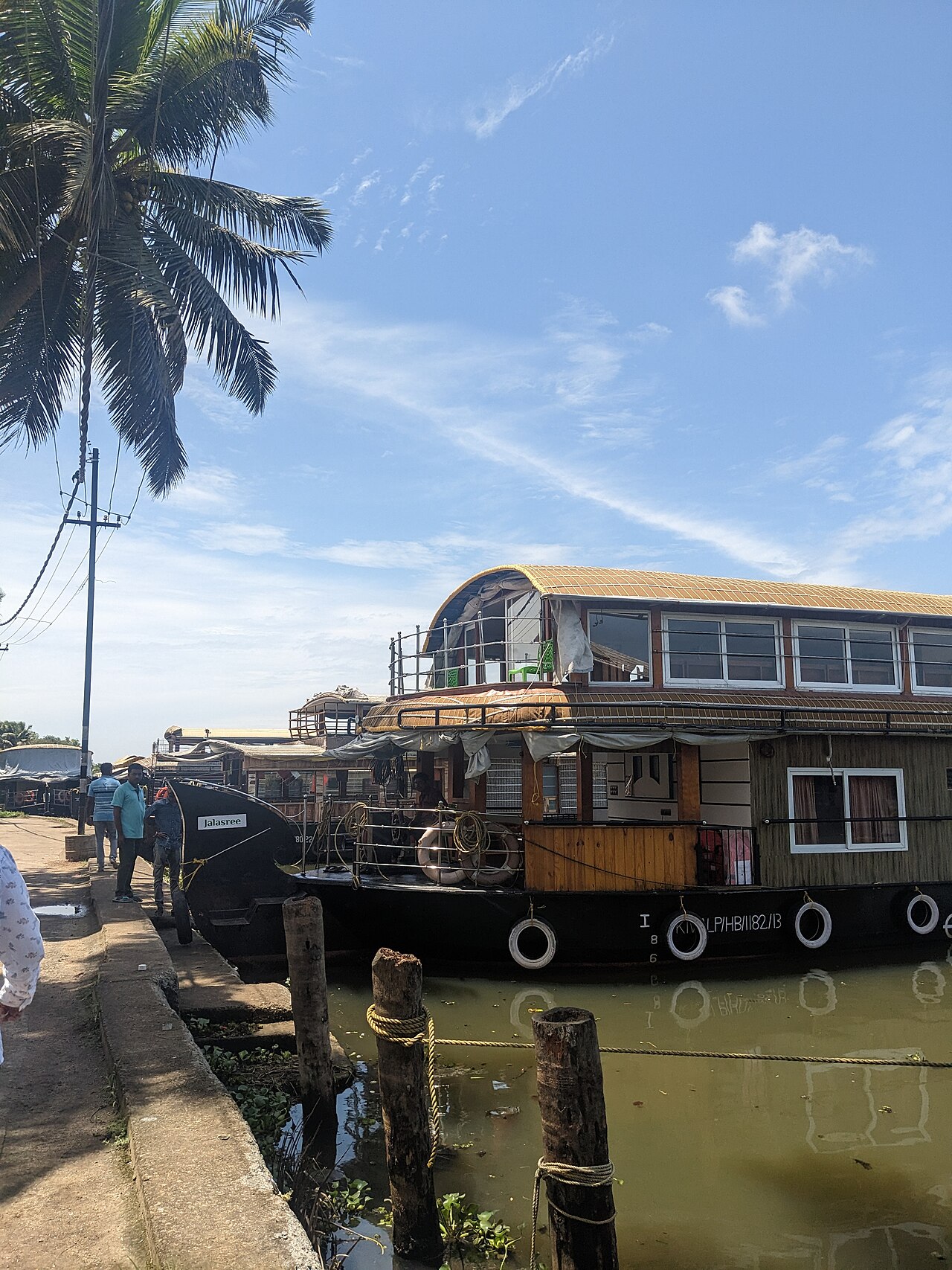
Water meets low green banks, coconut palms and canalside houses, while a traditional houseboat moves slowly through the broader stretches of the lagoon system.
The easily missed detail
The Kerala Backwaters are not a single climate or one bookable attraction. Choosing Alappuzha, Kumarakom, Ashtamudi or Valiyaparamba determines both the water route and what can be visited on land.
A practical rhythm
- Morning — Start from Alappuzha or Kumarakom for a permitted boat or canoe excursion.
- Midday — Pause in a canalside village or have a planned meal on the vessel rather than expecting restaurants at every landing.
- Late afternoon — Return before darkness when using unfamiliar minor canals, and spend time on the lake edge.
What could complicate the plan
June–September monsoon rainfall and possible October–November rain can alter boating plans. Choose properly licensed and equipped boats, and confirm life jackets, boarding arrangements and night-navigation rules. An overnight houseboat is a different service from a short daytime canal excursion.
What to do next
compares worthwhile experiences within the waterway network; identifies food strongly linked to the region.
Sources
- Kerala Tourism — Alappuzha, Kumarakom and coastal waterways
- Kerala Tourism, Kumarakom — Vembanad, bird sanctuary, local food
- Kerala Responsible Tourism Mission — local fish, home kitchens, village foods
- India Meteorological Department — southwest monsoon onset in Kerala
- Ramsar Sites Information Service, Vembanad-Kol Wetland — designation on 19 August 2002, the 151,250-hectare site and the 10 rivers that feed it
- U.S. State Department — national entry rules