Kyrgyzstan country guide Places and experiences
What should a first-time traveler see in Kyrgyzstan beyond the obvious highlights?
The short answer
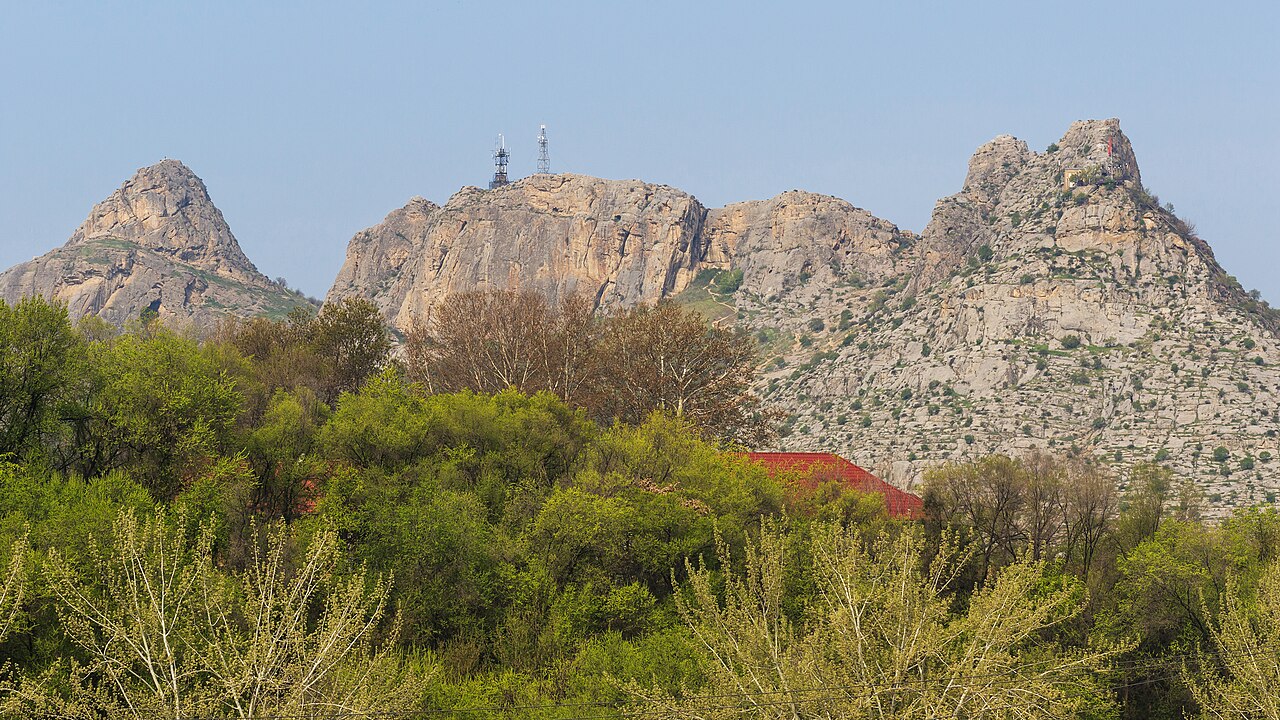
Sulaiman-Too Sacred Mountain at Osh carries 101 indexed petroglyph sites and 17 places of worship still in use — a mountain of 5 peaks inscribed by UNESCO under criteria (iii) and (vi) for multi-millennial mountain worship that Islam absorbed rather than replaced.
The answer, with local context
UNESCO's description is unusually specific about what survives on the mountain. Several caves hold petroglyphs; 101 petroglyph sites have been indexed so far; there are 2 mosques of 16th-century origin, largely reconstructed; and 17 places of worship remain in active use alongside many that are not. Criterion (iii) was awarded for the richness of that material evidence of cult practices from pre-Islamic and post-Islamic times, and criterion (vi) for the strength of the mountain-worship traditions that Islam took in.
That is one of only 3 properties Kyrgyzstan has inscribed on the World Heritage List, with a further 3 sites on its Tentative List. Two of those 3 inscriptions are shared with neighbours rather than held alone: the Silk Roads: the Routes Network of Chang'an-Tianshan Corridor runs through the country as a transnational property, and the Western Tien-Shan was inscribed in 2016 under decision 40COM 8B.9, shared with Kazakhstan and Uzbekistan.
The natural counterpart deserves its own visit. Issyk-Kul's Ramsar information sheet records the lake at an elevation of 1,609 m and describes it as the second largest saline lake in the world, with the endangered White-headed Duck (Oxyura leucocephala) among its notable species. A saline lake of that rank at that altitude is a genuinely unusual landform, not a scenic variation on a mountain lake.
Picture the place
5 peaks above a city, with caves cut into them and 101 separate rock-art sites catalogued across the slopes — and, on the same mountain, 17 shrines and mosques where people are still praying rather than visiting.
The easily missed detail
Criterion (vi) is the one that reframes Sulaiman-Too. It recognizes association with living traditions and beliefs rather than fabric, and it was applied here because mountain worship was absorbed into Islam instead of being displaced by it. That means the 17 active places of worship are not a survival on the margins of a monument — they are the reason the monument is inscribed. Visit accordingly.
A practical rhythm
- Osh — Sulaiman-Too's petroglyph sites and reconstructed 16th-century mosques are concentrated on one mountain inside the country's second city.
- The corridor — The Silk Roads property crosses the country as a route network rather than sitting in one place.
- Issyk-Kul — The world's second largest saline lake at 1,609 m, with an endangered duck species on its listing.
What could complicate the plan
Border zones restrict a surprising amount of the country. The State Department rates the region within approximately 30 kilometers of the border with Tajikistan at Level 2, Exercise Increased Caution, advises limiting travel in Batken province, records that border areas in Batken are closed to foreigners, and notes that permit restrictions are enforced along the Chinese and Tajik borders. Its own employees need prior authorization from the US Embassy in Bishkek to travel to Batken. Several of the country's most remote mountain areas sit inside those zones.
What to do next
The Kyrgyzstan food question in this group covers the bread tradition the country shares with 4 neighbours, and the pastoral economy behind it.
Sources
- UNESCO World Heritage Centre, Sulaiman-Too Sacred Mountain (property 1230) — inscription year and decision code
- Ramsar Sites Information Service, Issyk-kul State Nature Reserve with Issyk-kul Lake — elevation, saline lake ranking, White-headed Duck
- US Department of State, Kyrgyzstan country information — Tajik border advisory zone, Batken restrictions, border permit enforcement, embassy authorization