Lyon / France Food and drink
Where should I eat in Lyon, and which local food or drink is worth trying?
The short answer
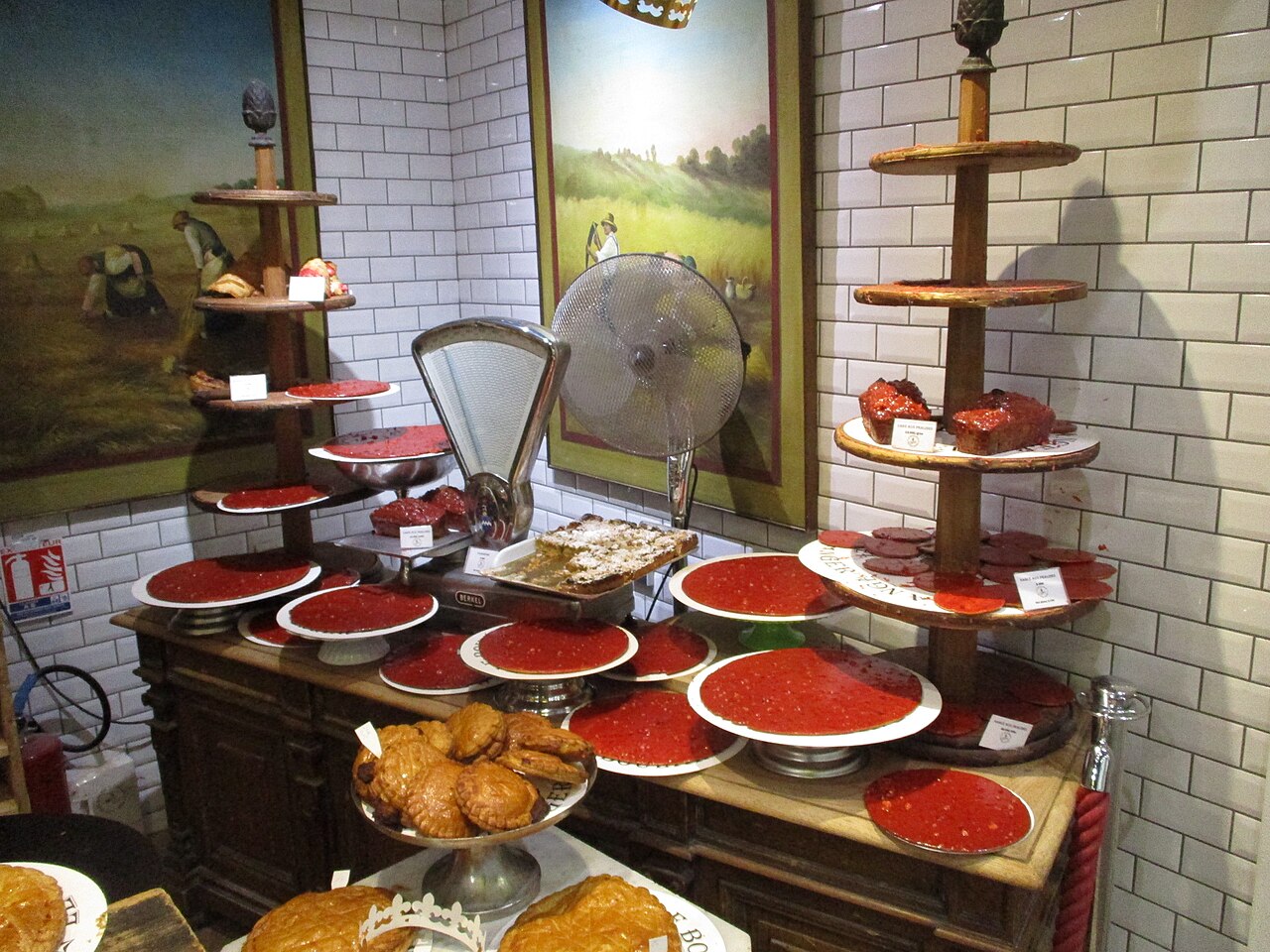
A certified bouchon for the classics (quenelles, cervelle de canut, tablier de sapeur), the Halles Paul Bocuse for the pantry, and a pink praline tart to finish — Lyon's title as France's gastronomy capital is a working system, not a slogan.
The answer, with local context
The title has a date: the critic Curnonsky named Lyon France's gastronomic capital in 1935, and the city has been defending it with institutions ever since. The bouchon is the first institution — the small, checkered-tablecloth tavern that fed the canuts (silk workers), originally at the mâchon, the workers' hearty early-morning meal of offal and Beaujolais after a shift. Today's genuine articles carry the "Authentiques Bouchons Lyonnais" label, a certification the bouchons' own association has run since 2012 — about twenty houses hold it (Daniel et Denise, Le Garet, Chez Hugon and Café Comptoir Abel among the defended names). Order the canon: salade lyonnaise (frisée, lardons, croutons, poached egg); cervelle de canut, the "silk-worker's brains" that is really herbed fromage blanc beaten with shallot and vinegar; quenelles de brochet — pike dumplings poached and gratinéed in sauce Nantua (crayfish butter sauce), the city's signature plate; tablier de sapeur, crumbed marinated tripe; andouillette with mustard; and cardoons (cardons à la moelle) in winter, a Lyonnais vegetable obsession. Portions are silk-worker sized: one course is a decision, three is a commitment.
The second institution is the pantry: Les Halles de Lyon — renamed for Paul Bocuse in 2006, in its present hall since 1971 — is France's most famous covered market, sixty-odd stalls carrying the region in edible form: Saint-Marcellin and Saint-Félicien cheeses at the Mère Richard counter (the legendary affineuse Renée Richard, whose family still runs it), Bresse chickens with their blue feet (the only French chicken AOP), charcuterie from Bobosse and Sibilia, quenelles to cook at home, and the pâtisserie counters' pink praline tarts. Eat at the hall's counters (oysters and a Mâcon blanc at noon is the local power breakfast) and shop for the train home. The third institution is Bocuse's shadow: Paul Bocuse (1926–2018) held three Michelin stars at his Auberge du Pont de Collonges from 1965 until the guide's posthumous revision — the longest run in France — and his city keeps the brasseries (Le Nord, Le Sud, L'Est, L'Ouest, one per compass point), the Bocuse d'Or world chef championship (held in Lyon every two years since 1987) and a bench of starred successors (Mère Brazier, taken on by Mathieu Viannay, two stars — the original Eugénie Brazier was the first chef anywhere to hold two three-star restaurants at once, in 1933).
Sweet Lyon is pink: crushed pink pralines (almonds candied scarlet in the Saint-Étienne tradition) folded into the tarte aux pralines and the brioche à la praline of Saint-Genis, sold at every pâtisserie worth its salt — Jocteur and Pralus (whose Praluline, baked in Roanne since 1955, is the cult loaf) lead the devotees. Carnival brings bugnes, Lyon's crisp angel-wing fritters. Drink: the city jokes that it has three rivers — the Rhône, the Saône and the Beaujolais — and the bouchon's pot lyonnais (a 46cl bottle, its thick base a silk-era measure) pours Beaujolais from the north or Côtes du Rhône from the south; the Coteaux du Lyonnais is the small home appellation. Coffee finishes at a comptoir; the day may well have started at the mâchon, which a handful of bouchons still serve at 9 a.m. to the faithful.
Picture the place
A bouchon at noon: red-checked cloths, the pot lyonnais sweating gently, a quenelle arriving under its crayfish sauce like a small blimp coming in to land, and the patronne already asking about dessert.
The easily missed detail
The mâchon is Lyon's edible early shift: a full cooked breakfast of tripe, charcuterie, cheese and wine, eaten around 9 a.m. — the canuts' meal after the looms, preserved today by a brotherhood (the Francs-Mâchons, founded 1964) and served by a few bouchons to those who book it. It is the most Lyonnais meal in the city and the one visitors almost never schedule. Ask your bouchon the day before; arrive hungry in a way dinner never requires.
A practical rhythm
- Bouchon for the canon — Choose from the certified list, book, and order quenelles plus one offal dish: the certificate exists to protect exactly this meal
- Halles in the morning — graze the counters at 11 a.m. (oysters, cheese, a glass) and buy the praline tart for the afternoon
- One splurge — A Bocuse brasserie for the classic room or a starred table (Mère Brazier) for the modern line: Lyon rewards both registers
What could complicate the plan
Lyon's protected label is also its bottleneck: about 20 houses hold the authentic-bouchon certification in a city that draws far more diners than those rooms seat, so the certified addresses fill at weekends and the overflow lands in imitations with the same checked cloths. The silk-workers' breakfast is not on any menu — it is a 9 a.m. sitting that a handful of bouchons cook only for people who asked the day before, so an unannounced attempt simply fails. Portion size is a real planning problem rather than a joke, because one bouchon course commits the whole afternoon. And if the trip pairs the city with the vineyards north or south of it, the limit at the wheel is 0.5 g of alcohol per liter of blood, 0.25 mg per liter of breath, falling to 0.2 g for drivers inside their probationary period — while the 46 cl pot lyonnais is refilled without being asked.
What to do next
Reserve a certified bouchon for the first night, a Halles grazing morning for the second day, and the splurge for the last evening.
Sources
- Association Les Bouchons Lyonnais — the "Authentiques Bouchons Lyonnais" certification (since 2012) and the certified houses
- Les Halles de Lyon — the market (present hall 1971, renamed 2006), its stallholders including Mère Richard and the Bresse poultry AOP counters
- Bocuse d'Or / SIRHA Lyon — the world chef championship held in Lyon every two years since 1987
- INAO — the Bresse chicken AOP and the Beaujolais and Côtes du Rhône appellations framing Lyon's table
- Service-public.fr (Direction de l'information legale et administrative, France) — (retrieved November 5, 2026)