Malaysia country guide When to visit
When is the best time to visit Malaysia for Penang?
The short answer
George Town's heritage core is walkable year-round, and the months to target are the drier mid-year ones — the inscribed zone is only 109.38 hectares, so Penang's main attraction is a walking site rather than a weather-dependent one.
The answer, with local context
Start with what you are actually visiting. George Town was inscribed on the World Heritage List on 7 July 2008, jointly with Melaka, under the name Melaka and George Town, Historic Cities of the Straits of Malacca, and under criteria (ii), (iii) and (iv). George Town World Heritage Incorporated, the site's management agency, gives the core zone as 109.38 hectares and the buffer zone as 150.04 hectares, containing 5,013 buildings — including shophouses that are still lived in — and 37 places of worship, mainly mosques, Chinese temples, Indian temples and churches. Three successive European colonial powers held the port across almost 500 years.
That density is the timing argument. A core zone of just over a square kilometer holding five thousand buildings is a site you cross on foot in a morning, so what matters is not the season but the hour — and whether the afternoon rain catches you between arcades. The shophouse form helps: the five-foot way, the covered walkway that runs in front of the ground floor, is continuous along much of the core zone.
Nationally, the Malaysian Meteorological Department divides Malaysia's year into a northeast monsoon, a southwest monsoon and two inter-monsoon periods, and the country's weather is regional rather than national. Penang sits on the Strait of Malacca side of the peninsula, sheltered by Sumatra from the open Indian Ocean and on the opposite coast from the peninsula's northeast monsoon exposure. For comparison on the same side of the peninsula, Kuala Lumpur's climatological normals put June at 141.5 mm of rain — 5.6 inches — against 356.5 mm, or 14.0 inches, in November. Mid-year is the drier half on the west coast.
Picture the place
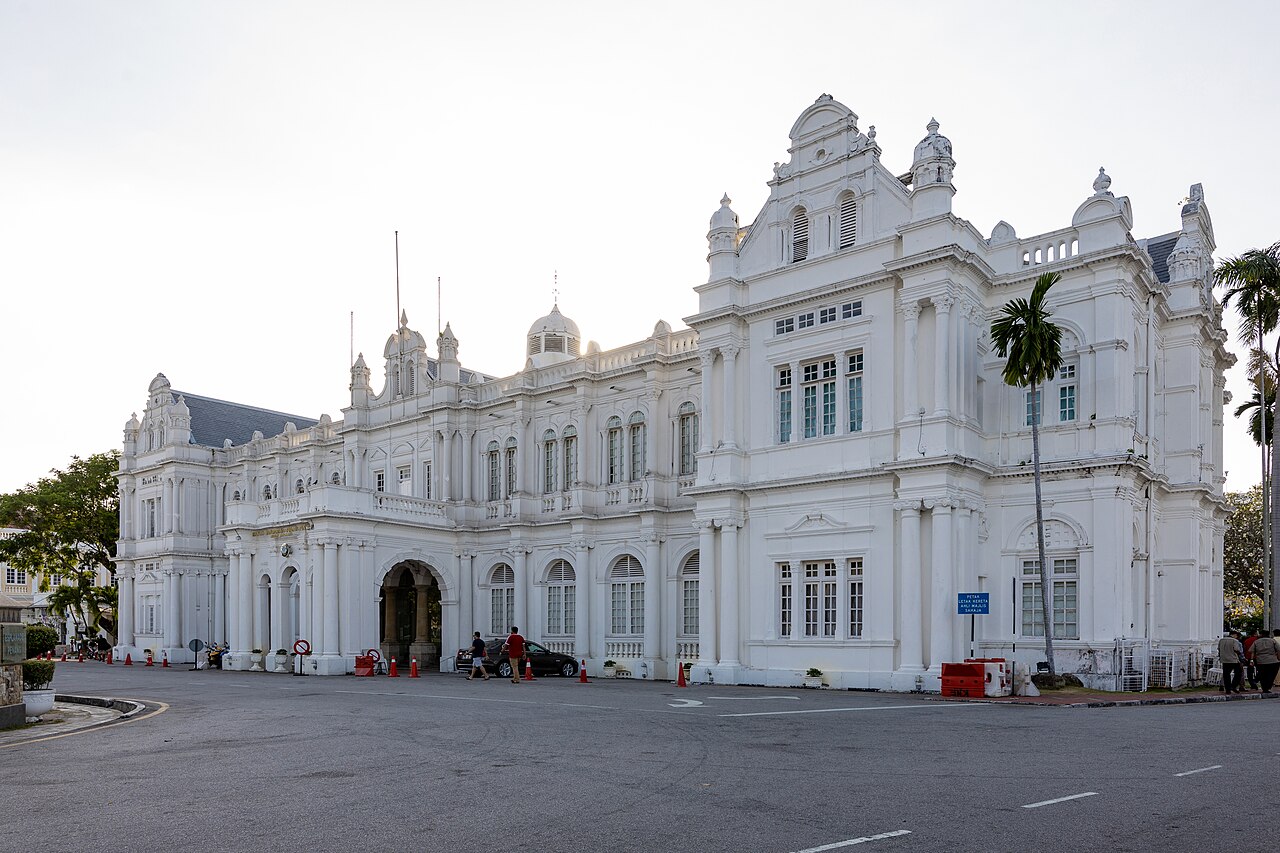
The core zone is low-rise and continuous: two- and three-story shophouses in unbroken terraces, with the covered five-foot way running in front of them and clan temples and mosques set into the same street wall. The 37 places of worship inside the inscribed zones are not isolated monuments but doors in a working streetscape.
The easily missed detail
Penang's heritage zone is residential, not curated. GTWHI counts 5,013 buildings across the core and buffer zones and notes that the shophouses are still occupied. That changes how you plan a day: much of what you walk past is housing, so the site has a weekday rhythm and a weekend one, and early morning is when the streets belong to residents rather than visitors.
A practical rhythm
- Morning — The core zone, all 109.38 hectares of it, before the heat builds.
- Afternoon — Under the five-foot way or indoors, in the drier mid-year months as much as the wet ones.
- Late day — The buffer zone, 150.04 hectares beyond the core, where the street grid loosens.
What could complicate the plan
Entry is straightforward and the details matter. The State Department sets out that a US passport must be valid for at least six months beyond arrival with one blank page, that no visa is needed for tourism stays of 90 days or less, that a social visit pass is stamped at the border, and that all travelers must complete the Malaysian Digital Arrival Card. Travelers entering or leaving Sabah and Sarawak must show a passport even on domestic flights — relevant if Penang is one leg of a trip that also includes Borneo.
What to do next
The Malaysia places question in this chapter covers the country's other five World Heritage properties, and the trip-planning question deals with moving between the peninsula and Borneo.
Sources
- George Town World Heritage Incorporated — inscription date, criteria, core and buffer zone areas, building and place-of-worship counts, colonial span
- UNESCO World Heritage Committee decision 32 COM 8B.25 — property name, criteria and inscription year
- Japan Meteorological Agency, Tokyo Climate Center, climatological normals for Kuala Lumpur (WMO station 48647) — west-coast peninsular rainfall comparison
- US Department of State, Malaysia country information — entry requirements and the Borneo passport rule
- Malaysian Meteorological Department — the monsoon and inter-monsoon division of Malaysia's year