Mali country guide Food and drink
What local dishes should I try in Mali, and where should I look for them?
The short answer
River fish and rice from the Niger's inland delta — Ramsar's listing for that wetland names tigerfish (Hydrocynus brevis), elongate tigerfish (Hydrocynus forskahlii) and Nile perch (Lates niloticus) among its fish, and records fisheries as important to local livelihoods.
The answer, with local context
Mali's cooking follows the water and the rainfall gradient. The meteorological agency classifies the Sudanian south as tropical savanna receiving 31.5 to 47.2 inches (800 to 1,200 mm) of rain a year, and the intensity of that rainfall is real: Kita in the southwest recorded 4.66 inches (118.3 mm) in a single day in 2025, the highest daily total nationally. That southern belt is the cereal and groundnut country; the drier center is millet and livestock; the river that runs between them supplies the fish.
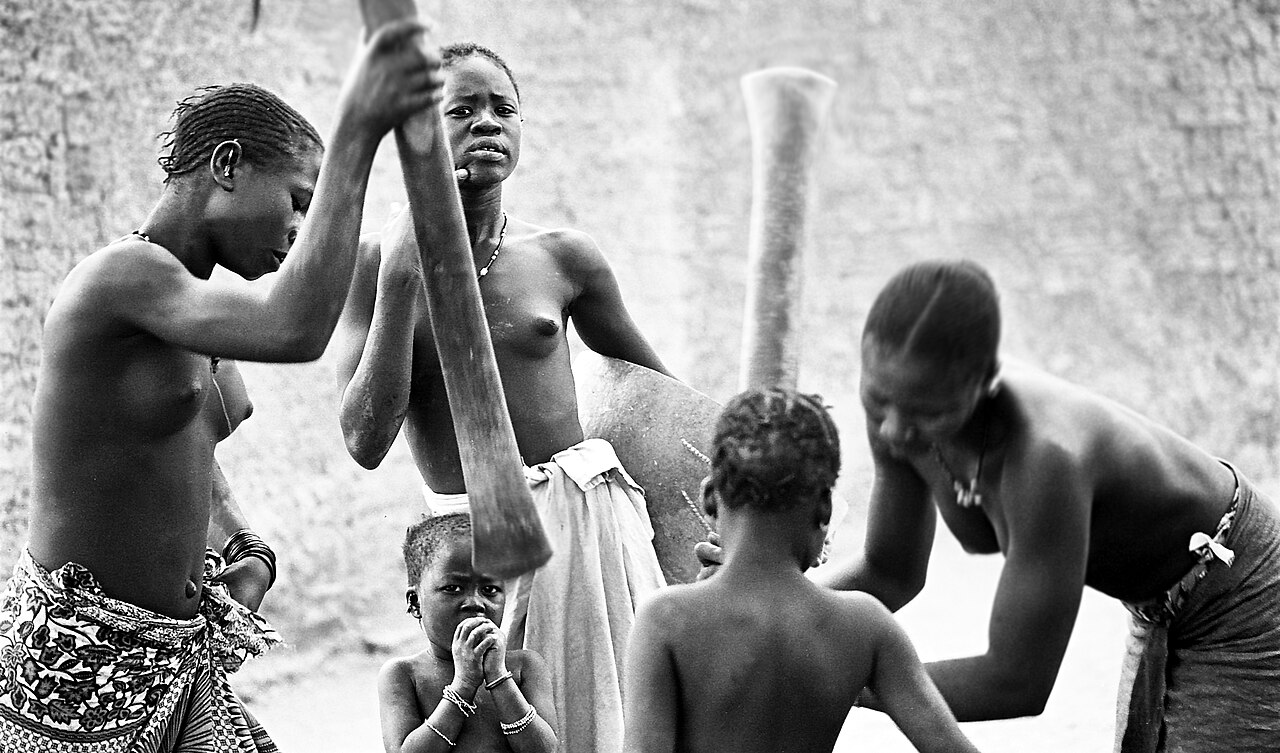
On the plate, that becomes a short and distinctive repertoire. Tigadèguèna — groundnut sauce, usually with lamb or chicken over rice — is the dish most often called the national one. Riz au gras, rice cooked in a seasoned tomato and meat broth, is the party and Friday dish. Capitaine, the Nile perch of the Niger, is grilled whole over charcoal and served with onion sauce and fried plantain, and it is unmistakably a river dish rather than a sea one. Tô, a stiff millet or sorghum paste, is eaten with okra or baobab-leaf sauce in the drier regions. Fonio, a fine ancient grain, is steamed like couscous. Bissap, from hibiscus, and ginger juice are the everyday cold drinks, and green tea is brewed and poured in three rounds.
Where to look is a question of markets rather than restaurants: in Bamako, Ségou, Mopti and the river towns, the cooked-food economy runs out of market stalls and street kitchens, with fish arriving from the delta in the morning.
Picture the place
In the river towns the capitaine comes to the grill whole and scored, and the charcoal smoke from the fish stalls sits along the waterfront in the evening when the day's heat finally drops.
The easily missed detail
Buying anything old in a Malian market carries a legal consequence travelers rarely anticipate. The FCDO states that cultural or archaeological objects require an export permit from the Ministry of Arts and Culture, obtainable from the director of the National Museum, and that customs rules on goods leaving Mali are strict, with anything potentially prohibited, taxable or dutiable to be declared. A market where food, textiles and antiquities are sold side by side is a place to keep that distinction clear.
A practical rhythm
- Morning — Delta fish reach the river-town markets early; the capitaine on an evening grill was landed that morning.
- Midday — Tigadèguèna and riz au gras are the main-meal dishes, cooked in quantity at market kitchens.
- Evening — Three rounds of green tea, poured from a height, finish a meal and take their time.
What could complicate the plan
The FCDO advises against all travel to Mali, and the customs rules above are enforced on departure rather than on arrival. Overfishing in the inland delta is listed by Ramsar as a threat driving resource depletion and conflict between local populations, so supply of river fish is neither stable nor uncontested. Street food runs on cash and on market hours, not restaurant hours.
What to do next
See the Mali places answer in this group for the inland delta's designation and scale, and the when-to-visit answer for the months when river travel and road access work best.
Sources
- Ramsar Sites Information Service, Delta Intérieur du Niger — named fish species, importance of fisheries to livelihoods, overfishing as a listed threat
- Agence Nationale de la Météorologie du Mali, État du climat 2025 — Sudanian zone rainfall range and the 2025 record daily total at Kita
- UK Foreign, Commonwealth and Development Office — customs rules and the export permit requirement for cultural and archaeological objects