Mauritius country guide Places and experiences
What should a first-time traveler see in Mauritius beyond the obvious highlights?
The short answer
Explore Port Louis, the Black River Gorges highlands, Mahébourg and the island’s north or east coast, alongside Le Morne; each introduces a different chapter of Mauritius’s history or natural geography.
The answer, with local context
Begin in Port Louis rather than treating the capital as an airport-transfer point. Aapravasi Ghat, inscribed on UNESCO’s World Heritage List in 2006, documents the arrival and history of indentured laborers after the abolition of slavery in the British Empire. UNESCO lists it under criterion (vi) on a site of only 0.164 hectares — 1,640 square meters of steps, hospital block and sheds — through which almost half a million indentured laborers passed between 1834 and 1920, bound for Mauritian sugar estates or onward to other colonies. That is distinct from Le Morne Cultural Landscape, inscribed in 2008 and tied to the resistance of people escaping enslavement. Seeing both helps explain why the country’s two World Heritage sites cannot be reduced to picturesque colonial buildings.
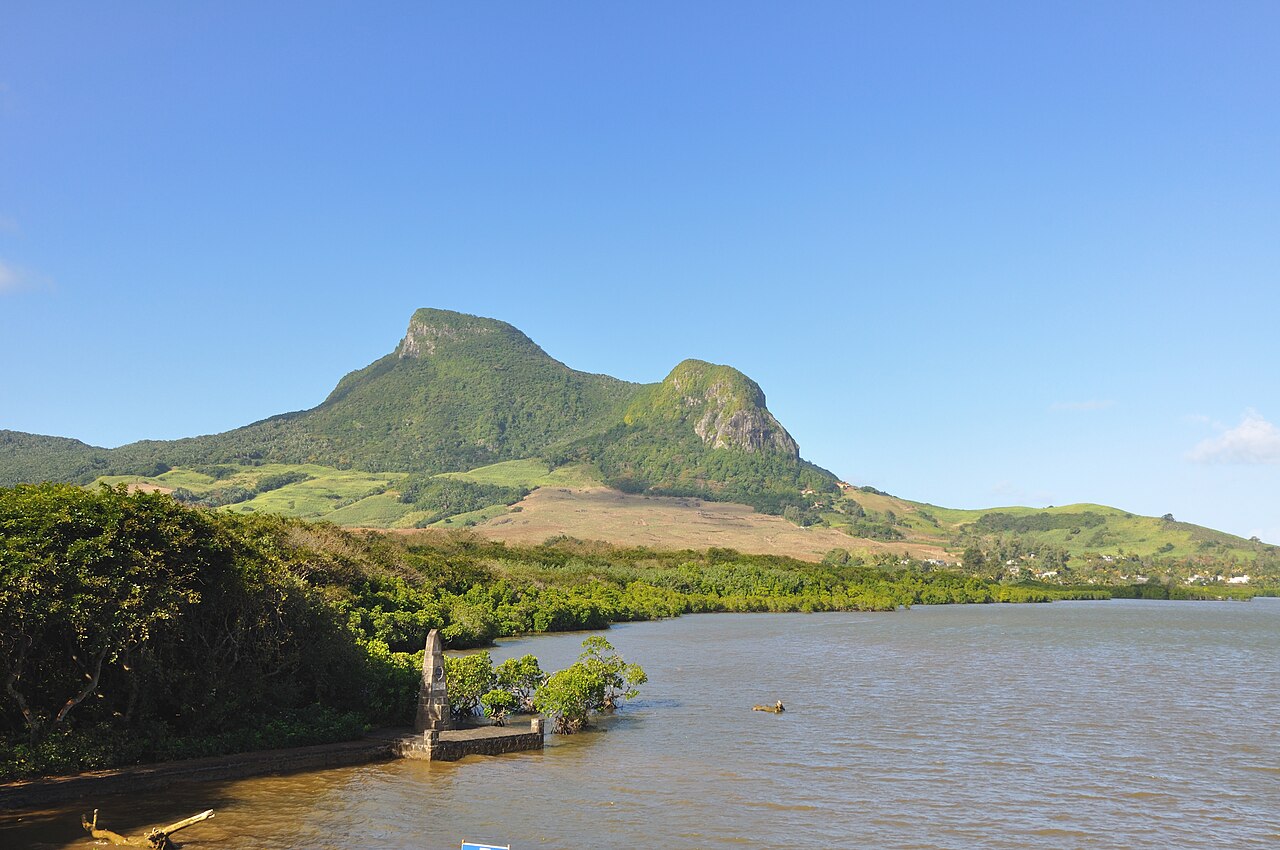
Next move to the southwest interior. Black River Gorges contains forested highland terrain unlike the lagoon coast, and Chamarel offers a different upland setting near the southwest tourism circuit. On the southeast coast, Mahébourg is an old port town near Blue Bay; a visit there pairs local streets and lagoon scenery. The far north around Grand Baie and Trou-aux-Biches has another character again, combining established tourism centers and protected beach settings.
Island geography matters. The government describes Mauritius as the main island of roughly 1,864 square kilometers, lying about 2,000 kilometers east of the African coast, with an almost continuous coral reef interrupted by stretches of steep southern rock. Rodrigues is not another district reached by the same coastal drive: it is a separate island, and a journey there adds another transfer. That distinction is important when someone asks for a national itinerary but has only a few nights.
Picture the place
An afternoon in central Port Louis means built heritage and busy streets; a day among the Black River highlands trades the low lagoon horizon for forested slopes and ridges.
The easily missed detail
The paired UNESCO histories of Le Morne and Aapravasi Ghat illuminate different, connected experiences of forced and indentured labor. Visiting only the famous beaches misses both narratives.
A practical rhythm
- Capital and heritage — Set aside a separate visit for Port Louis and the Aapravasi Ghat area.
- Highland day — Explore the Black River/Chamarel corridor from a southwest or west-coast base.
- Coastal town — Pair Mahébourg and Blue Bay for a southeast day instead of visiting only resort beaches.
What could complicate the plan
Entrance arrangements for specific heritage interiors and nature areas can differ from access to their surrounding streets or scenery. Rodrigues deserves separate flights and accommodation, and the east and south coasts can be exposed to wind and surf.
What to do next
Read to attach Mauritian food experiences to these stops, then for a first-trip route.
Sources
- UNESCO World Heritage Centre, Le Morne Cultural Landscape — Le Morne inscription, landscape, historical values
- UNESCO World Heritage Centre, Aapravasi Ghat — criterion (vi), the 0.164-hectare site of 1,640 square metres, and the 1834–1920 indenture period with almost half a million arrivals
- Mauritius Meteorological Services — seasons, rain and temperature
- Mauritius government — island geography and cuisine
- U.S. State Department — U.S.-passport tourist stay