Meteora / Greece When to visit
When should I visit Meteora, Greece, for the best experience?
The short answer
Late September into October — the monasteries are still on their full summer timetable to October 31, the Thessalian heat has broken, the vine leaves on the plain turn, and the day-trip crowds that define July are gone.
The answer, with local context
Meteora's calendar is set by the monasteries themselves, and it divides the year cleanly. From April 1 to October 31 the six active houses keep summer hours — most opening around 9:00–9:30 and closing between 15:00 and 17:00 — while from November the winter timetable shortens the day (the Great Meteoron, for example, publishes 9:30–14:00 in winter and closes Tuesday, Wednesday and Thursday), and the Great Meteoron shuts entirely from February 1 to 28. Entry is €5 per monastery, cash at the door, with no combined ticket — a published regime that rewards the long summer season, when a single day can hold four houses. Late September sits at the season's sweet end: the full timetable, mornings cool enough for the stair climbs (Holy Trinity's ~140 steps, the Great Meteoron's long ascent), and light that stays golden on the conglomerate pillars from mid-afternoon.
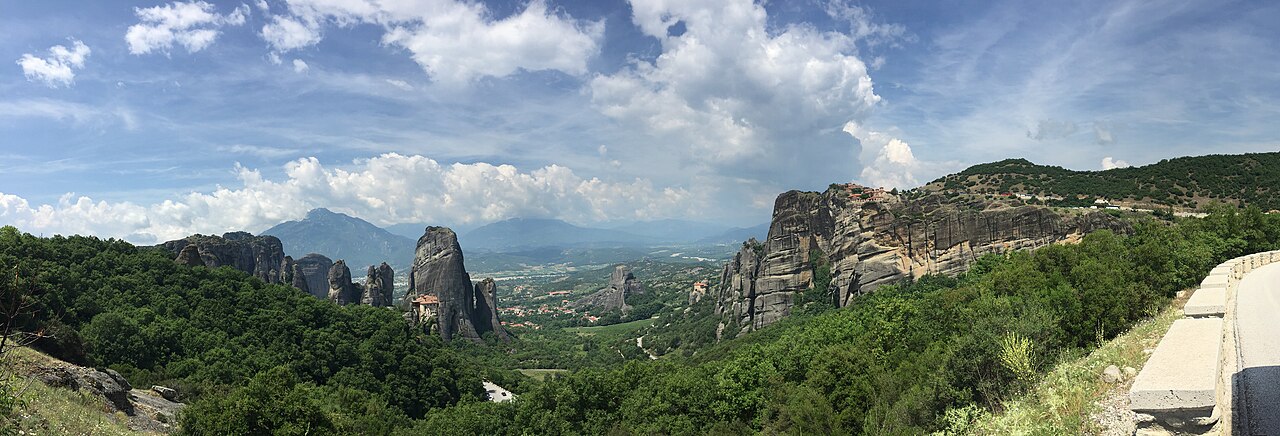
The landscape argues for the same weeks. The pillars rise from the Peneas plain northwest of Kalabaka, their conglomerate towers formed some 60 million years ago; autumn colors the plane trees along the river and the vineyards around Kastraki village amber and rust, mist fills the valley floor on still mornings and burns off to leave the monasteries floating — the effect the monks chose the name for (meteora, "suspended in the air"). Temperatures run 64–79°F (18–26°C) in late September against the 95°F (35°C) July days when the tour coaches from Athens fill every viewpoint by 11. Rain returns slowly; the monasteries' stone courtyards stay dry most days.
The alternatives each trade something away. May–June offers the same full schedule with wildflowers and longer evenings but hotter stair climbs by the month's end; Orthodox Easter (April 12 in 2026) fills the monasteries with pilgrims and liturgy — moving, and impractical for sightseeing; and winter's short days bring the possibility of snow on the pillars, Meteora's rarest and most beautiful dress, at the price of half the visiting hours and regular closures. Aim for the autumn window, and mind one trap in it: the Great Meteoron closes September 30–October 1 each year (and August 5–7), so hold either side of those two days.
Picture the place
A September dawn from the main viewpoint: mist level with the pillars' waists, six stone crowns riding above it, and the plain's vineyard grid emerging gold as the sun clears Pindus.
The easily missed detail
The best light at Meteora is not sunset — it is the twenty minutes after a rain shower clears in autumn, when the wet conglomerate darkens to pewter, the pillars steam, and the valley's plane trees drip gold. The locals' viewpoint for it is the Psaropetra pull-off on the upper road, which faces west across the whole complex; tour buses use it at sunset and ignore it at every other hour. Build one flexible afternoon around the weather radar: shower, clearing sky, Psaropetra. The monks named the place for suspension; weather is what suspends it.
A practical rhythm
- Arrive on a weekday — Each monastery closes one weekday (never all on the same day), but Saturdays and Sundays are the only days all six open; weekday mornings are emptiest
- Climb in the cool hours — Monastery stairs before 11 and after 3:30 in the warm months; viewpoints fill the midday
- Stay the night — Sleeping in Kastraki or Kalabaka is the single biggest upgrade: dawn and dusk at the pillars belong to overnighters
What could complicate the plan
The timetable is the monasteries' own and it moves: feast days override the weekly pattern (each house celebrates its patron), the Great Meteoron adds its fixed annual closures, and winter hours shorten sharply from November 1. The dress code is enforced at every door — shoulders covered, men in long trousers, women in a skirt below the knee (wrap skirts are provided at the entrances) — and entry is cash-only; a pocket of €5 notes is equipment, not trivia. Rain on the conglomerate makes the cut steps slick; the houses may close approaches in storms.
What to do next
Book two late-September nights in Kastraki, check the current board of closing days on arrival, and put the Great Meteoron first on any day it is open.
Sources
- Holy Monastery of the Great Meteoron (meteoromonastery.gr) — the house's own visiting page: summer hours 9:30–15:00 to October 31, winter 9:30–14:00, Tuesday closure (Tue–Thu in winter) and the fixed closures of February 1–28, August 5–7 and September 30–October 1
- UNESCO World Heritage List — Meteora (inscribed 1988, mixed cultural and natural property); the pillars' geology and the 24 monasteries of the 14th–16th centuries
- The Meteora monasteries' published visitor information — €5 entry per monastery, cash at the door, no combined ticket; the dress code enforced at entrances
- Hellenic National Meteorological Service — the Thessaly plain's September temperature pattern