Montevideo / Uruguay When to visit
When should I visit Montevideo, Uruguay, for the best experience?
The short answer
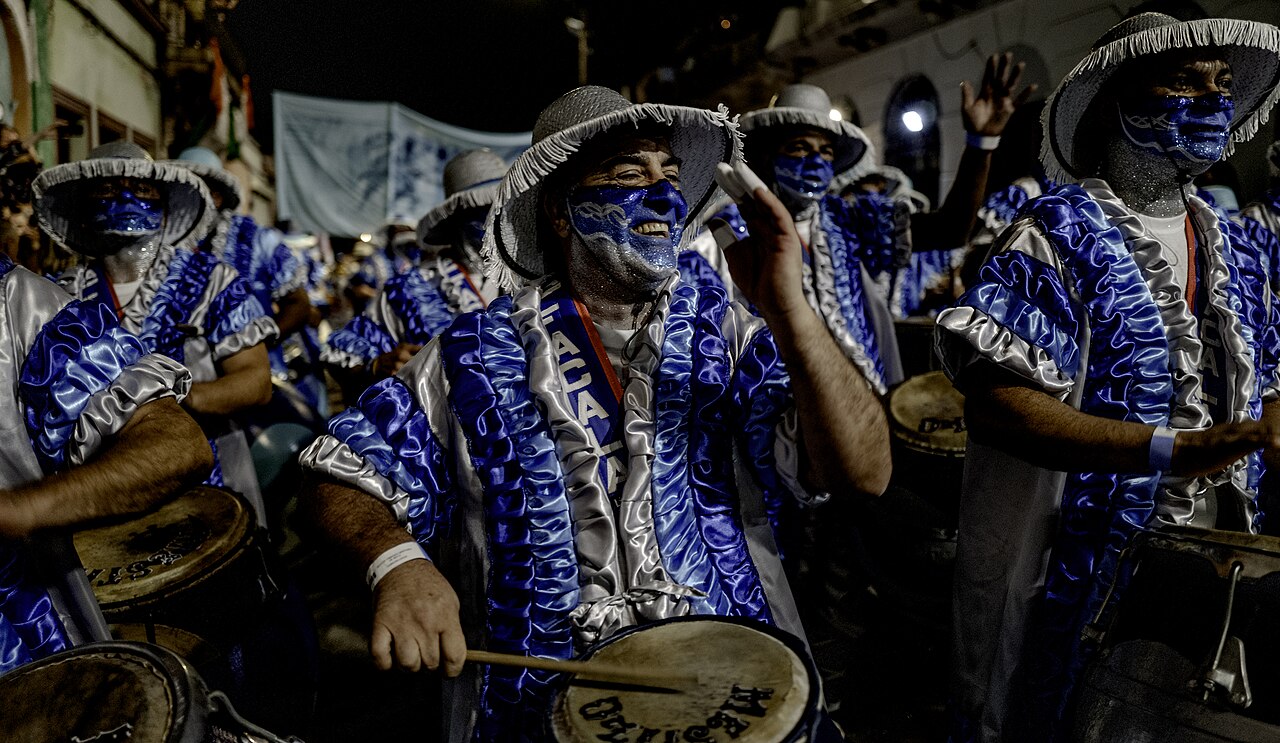
December through March, the southern summer, when the Río de la Plata coast is at its warmest and candombe — inscribed by UNESCO in 2009 — is on the street every Sunday rather than only on festival days.
The answer, with local context
Uruguay publishes its rainfall as observed annual totals rather than long-run normals, and the national statistics institute reproduces them station by station. The 2025 edition of the Anuario Estadístico Nacional, the 102nd, lists 19 stations with figures supplied by INUMET. At Prado, 2023 ended at 35.1 inches (891.1 mm) and 2024 at 39.4 inches (1,001.9 mm). At Carrasco the same two years came in at 29.8 inches (756.3 mm) and 36.9 inches (937.9 mm).
Read month by month, those tables show how little the city's rain respects a season. In 2024 Prado took 9.2 inches (233.7 mm) in March and 9.0 inches (227.9 mm) in April, then just 0.35 inches (9.0 mm) in July. In 2023 the heaviest month at Carrasco was August, at 6.8 inches (173.6 mm), in midwinter. A single year is not a climate, which is why these are worth reading as a warning against assuming a dry month exists rather than as a forecast.
The cultural calendar is steadier than the rain. UNESCO's inscription of candombe and its socio-cultural space describes the drum call as a practice held every Sunday and on many holidays, carried through three Montevideo neighborhoods — Sur, Palermo and Cordón — each with its own beat on the piano, the largest and deepest of the drums. That is a weekly fixture, not an annual one, which makes a Sunday evening the single most reliable thing to plan a Montevideo trip around.
Indoors, the Teatro Solís runs a full year: the Intendencia de Montevideo reports an annual average of 600 performances and 160,000 spectators, plus 40,000 people on guided tours and 15,000 visitors on Heritage Day.
The easily missed detail
Uruguay's harvest season gives late summer a second anchor. The Ministry of Tourism records the National Vendimia Festival at Las Piedras, in Canelones just north of Montevideo, on 11 and 12 March, with roughly 50 wineries and vineyards across the country open to visitors. Canelones is close enough to the capital to be a day trip rather than a separate journey.
A practical rhythm
- Sunday, late afternoon — The candombe llamada forms around communal fires where drums are tuned before the march; UNESCO describes spectators watching from balconies.
- Weekday evening — The Teatro Solís programs across its three halls, from the 1,144-seat Sala Principal down to the 150-seat Sala Delmira Agustini.
- Mid-March day trip — Las Piedras for the Vendimia on 11 and 12 March, then back to the city the same evening.
What could complicate the plan
There is no dry month to aim for: the station tables show heavy months landing in March, April and August in different years. Festival dates published in a 2022 ministry notice are a pattern, not a guarantee for a given year. The Teatro Solís was closed from November 1998 until 25 August 2004 after a costume-store fire led the city to judge the structure unsafe, a reminder that a single venue can drop out of a city's calendar for years at a time.
What to do next
The Montevideo things-to-do question in this group goes inside the Teatro Solís and into the candombe neighborhoods; the food question covers Tannat and the wine country north of the city.
Sources
- Instituto Nacional de Estadística (Uruguay), Anuario Estadístico Nacional 2025, chapter 1.2 Clima — monthly and annual precipitation totals by station for 2023 and 2024, station list, INUMET as data source
- UNESCO Intangible Cultural Heritage, Candombe and its socio-cultural space: a community practice — 2009 inscription, decision 4.COM 13.74, the three neighborhoods, weekly timing, the piano drum
- Intendencia de Montevideo, Teatro Solís institutional dossier — annual performance and audience figures, hall capacities, 1998 closure and 2004 reopening
- Ministerio de Turismo (Uruguay), Vendimia 2022 — National Vendimia Festival dates and location, number of wineries open to visitors