Oaxaca / Mexico When to visit
When should I visit Oaxaca, Mexico, for the best experience?
The short answer
The second half of November through March, after the Atlantic hurricane season closes on November 30 and while Monte Albán's 8:00 to 17:00 opening gives a full day on an unshaded hilltop.
The answer, with local context
Oaxaca's calendar is shaped at one end by the weather systems and at the other by the opening hours of the one site nobody skips. NOAA's National Hurricane Center sets the Atlantic basin hurricane season from June 1 to November 30 — a window that governs the Gulf and Caribbean rather than Oaxaca's Pacific side, but which overlaps the months when the state's roads and mountain passes are wettest and when travel between the Valles Centrales and the coast is least reliable.
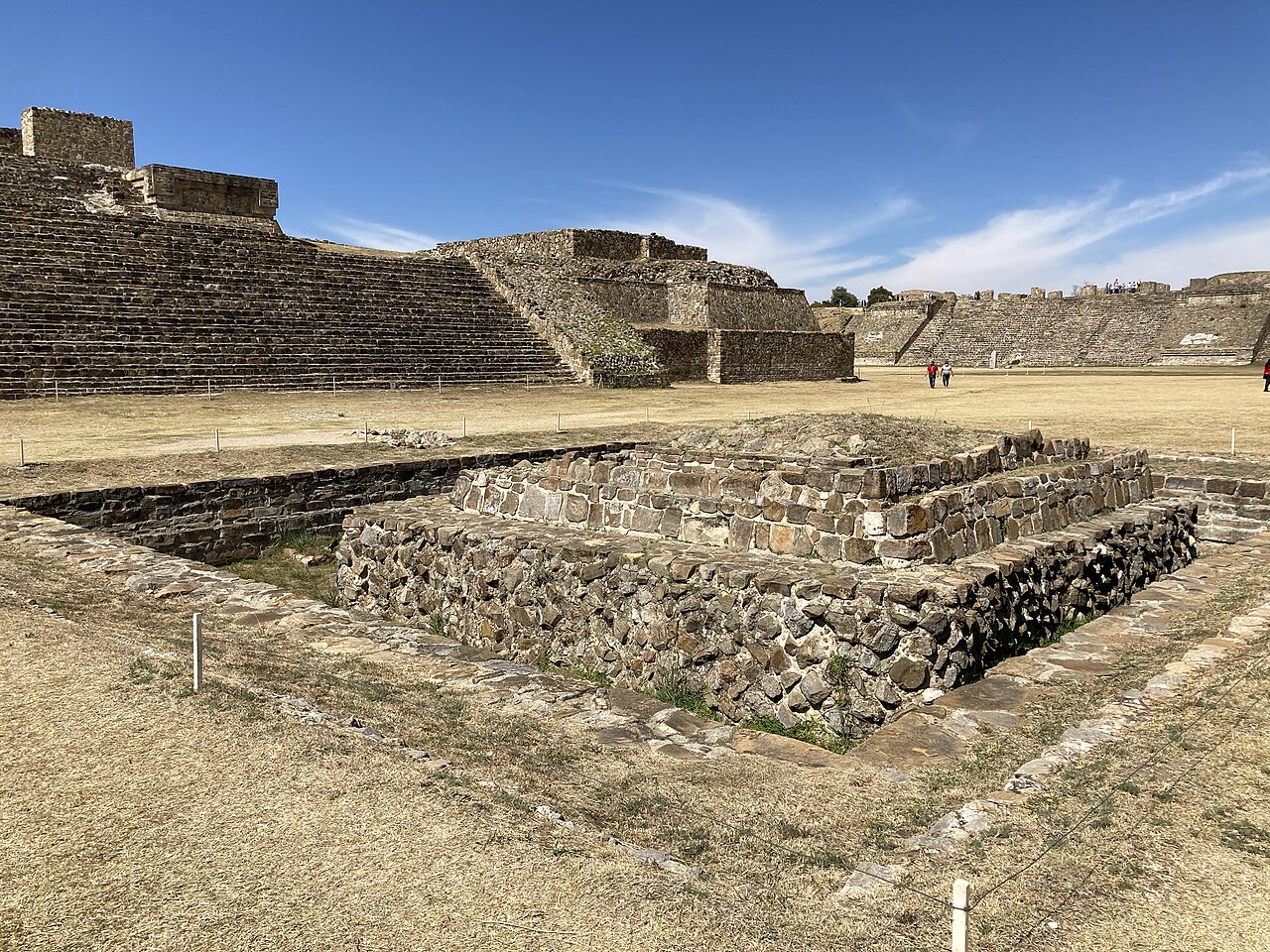
Monte Albán runs Monday to Sunday, 8:00 to 17:00, with last entry at 16:00, according to the National Institute of Anthropology and History. That nine-hour day sounds generous until you stand on the site: the Gran Plaza is a leveled mountaintop with almost no shade, and the last admission at 16:00 means the final hour is also the coolest and best-lit one. Between December and February you can walk the plaza at midday without the climb becoming punishing.
The city and the ruins are not two separate designations but one. UNESCO inscribed the Historic Centre of Oaxaca and Archaeological Site of Monte Albán together in 1987, under reference 415, through decision 11COM VIIA at the 11th session of the World Heritage Committee. The property is cited under four cultural criteria — (i), (ii), (iii) and (iv) — which is an unusually broad citation and reflects a listing that covers both a Zapotec capital and a colonial grid city.
Picture the place
Monte Albán sits on a ridge above the valley floor, so the light arrives on the plaza before it reaches the city below — in the dry months the valley holds haze until mid-morning while the platforms are already in full sun.
The easily missed detail
Because the inscription is a single property spanning two places, the historic center's streets carry the same World Heritage status as the archaeological zone on the ridge above them. That is why conservation controls on the city's facades, and the rhythm of restoration scaffolding through the dry season, are tighter than a visitor expects of a working provincial capital.
A practical rhythm
- Early — Monte Albán's 8:00 opening is the one hour of the day when the Gran Plaza is both cool and empty.
- Afternoon — 16:00 is the published last entry, so a late arrival buys a short visit, not a cheap one.
- Evening — The historic center, inscribed under the same 1987 listing, is walkable after dark in a way a hilltop site is not.
What could complicate the plan
The US Department of State's country-wide advisory for Mexico is Level 2: Exercise Increased Caution, in an advisory dated May 29, 2026, and it carries state-by-state detail that differs sharply from the national headline — read the Oaxaca entry rather than the summary. Hurricane-season months also coincide with the period when mountain roads between the valleys and the Pacific coast are most prone to landslides. Monte Albán's hours are published as a daily schedule, not a guarantee that every structure on the site will be open on the day you arrive.
What to do next
The Oaxaca things-to-do answer in this group has the Monte Albán admission figures and site rules; the food answer covers mezcal's protected status and the UNESCO recognition of Mexican cuisine.
Sources
- NOAA National Hurricane Center — Atlantic hurricane season dates
- Instituto Nacional de Antropología e Historia, Monte Albán — daily opening hours and last entry
- UNESCO World Heritage Centre — official property name and cultural criteria
- UNESCO World Heritage Centre, property documents — inscription year and committee decision reference
- US Department of State — advisory level and date