Osaka / Japan Things to do
What are the most worthwhile things to do in Osaka on a first visit?
The short answer
Osaka Castle, the Mozu-Furuichi tomb mounds and the Dotonbori canal district — one reconstructed keep with a museum inside it, one UNESCO World Heritage property that most visitors never realize is in the prefecture, and the street grid the city is best known for.
The answer, with local context
Start with the one that is easiest to get wrong. Two official sources publish different figures for the castle's main keep. The Osaka Castle Museum's own English leaflet, marked as issued on April 1, 2019, gives hours of 09:00 to 17:00 with last admission at 16:30 and adult admission of 600 yen, while noting that hours are sometimes extended. The Osaka Convention and Tourism Bureau's page for the Osaka Castle Main Keep gives 09:00 to 18:00, with last admission 30 minutes before closing, and adult individual admission of 1,200 yen. Both agree the building is shut from December 28 to January 1. Treat the earlier closing and the lower price as the floor and check at the gate.
The second is the surprise. Osaka Prefecture holds a World Heritage property, the Mozu-Furuichi Kofun Group: Mounded Tombs of Ancient Japan, inscribed in 2019 under criteria (iii) and (iv) by Decision 43 COM 8B.18 at the World Heritage Committee's 43rd session in Baku. These are burial mounds, many of them keyhole-shaped, distributed across Sakai, Habikino and Fujiidera on the southern side of the metropolitan area. They are not viewed the way a castle is viewed — the largest are too big to take in from the ground, ringed by moats and tree cover — which is precisely what makes the encounter different from anything else on an Osaka itinerary.
Dotonbori is the third, and it is a walking destination rather than a ticketed one. The canal cuts east to west through Namba in Chuo ward, and the concentration of signage, theatres and eating places along it is the reason the area reads as Osaka's front door.
Picture the place
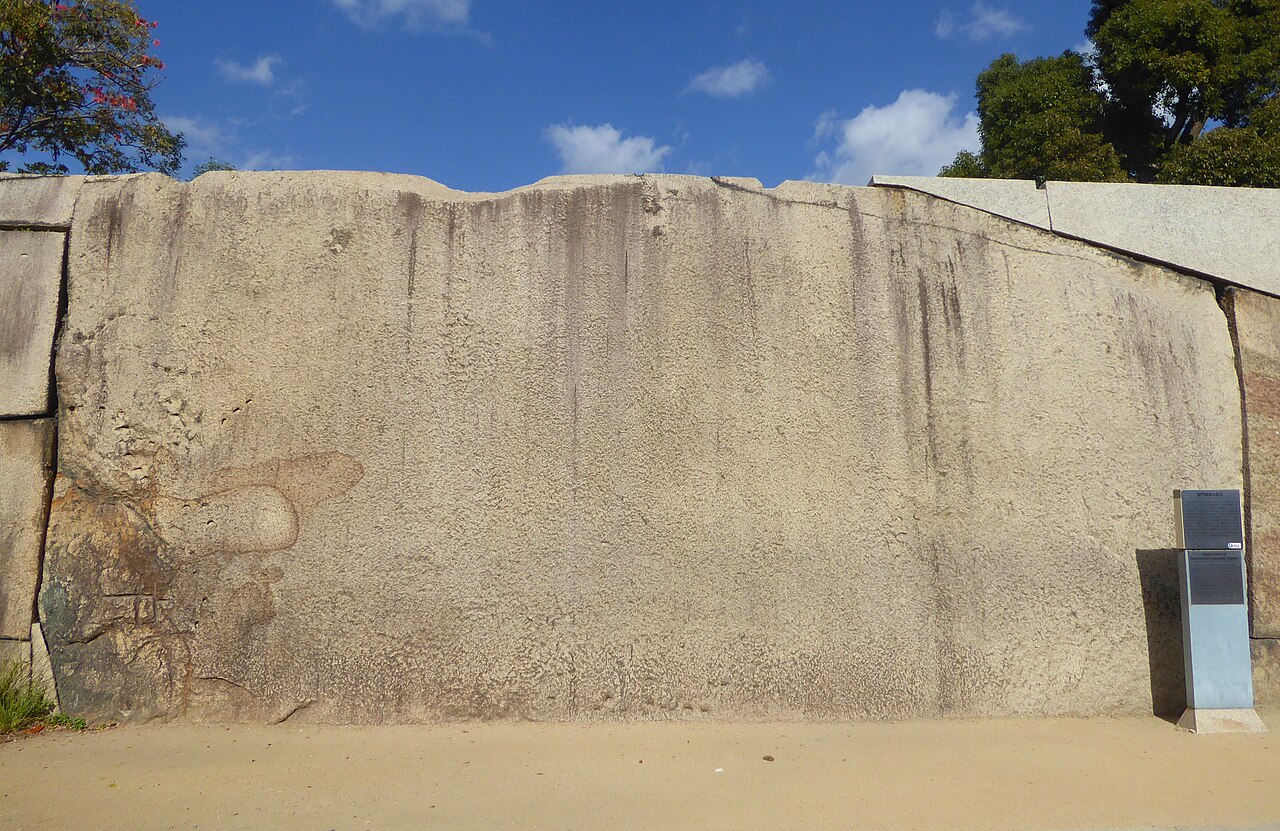
The Takoishi, or Octopus Stone, on the northern side of the castle's Sakuramon-masugata square is the largest single stone in the whole fortification, set into the wall at a scale that makes the masonry around it look like gravel.
The easily missed detail
The castle's keep is a twentieth-century reconstruction housing a museum, not an original structure, and the admission charge buys the museum rather than the grounds. Osaka Castle Park itself is open ground you can walk without a ticket, which means an early-morning or late-evening visit to the walls and moats costs nothing and is possible outside the keep's published hours.
A practical rhythm
- Early — Walk the castle moats and the Nishinomaru side before the keep opens at 09:00; the stonework is the part that is genuinely sixteenth and seventeenth century.
- Midday — Take the southern line out to the Mozu side of the prefecture, where the tomb mounds sit among ordinary suburb, and allow for the fact that there is no single viewing platform for all of them.
- Evening — Dotonbori and the Namba grid, where the canal frontage is at its most legible after dark.
What could complicate the plan
The keep's ticket window and the museum close well before the park does, and the December 28 to January 1 shutdown removes the interior entirely over New Year. The tomb group is a serial property spread across three municipalities, so visiting more than one cluster in a day means committing to local trains rather than treating it as a single stop. Conflicting published admission prices mean you should carry enough cash to cover the higher figure.
What to do next
The Osaka food question in this group covers Dotonbori and Kuromon Ichiba as places to eat rather than places to look at.
Sources
- UNESCO World Heritage Centre, Mozu-Furuichi Kofun Group — official property name and inscription criteria
- UNESCO World Heritage Committee — inscription year, decision number and session
- Osaka Castle Museum official leaflet — hours, last admission, adult price, annual closure
- Osaka Convention and Tourism Bureau, Osaka Castle Main Keep — conflicting hours and adult admission