Oslo / Norway Food and drink
Where should I eat in Oslo, and which local food or drink is worth trying?
The short answer
Waffles with brown cheese for the national snack, a New Nordic tasting menu in Bjørvika for the splurge, and the Mathallen food hall and Grünerløkka's cafés for everything between — Oslo eats best when it eats Norwegian on purpose.
The answer, with local context
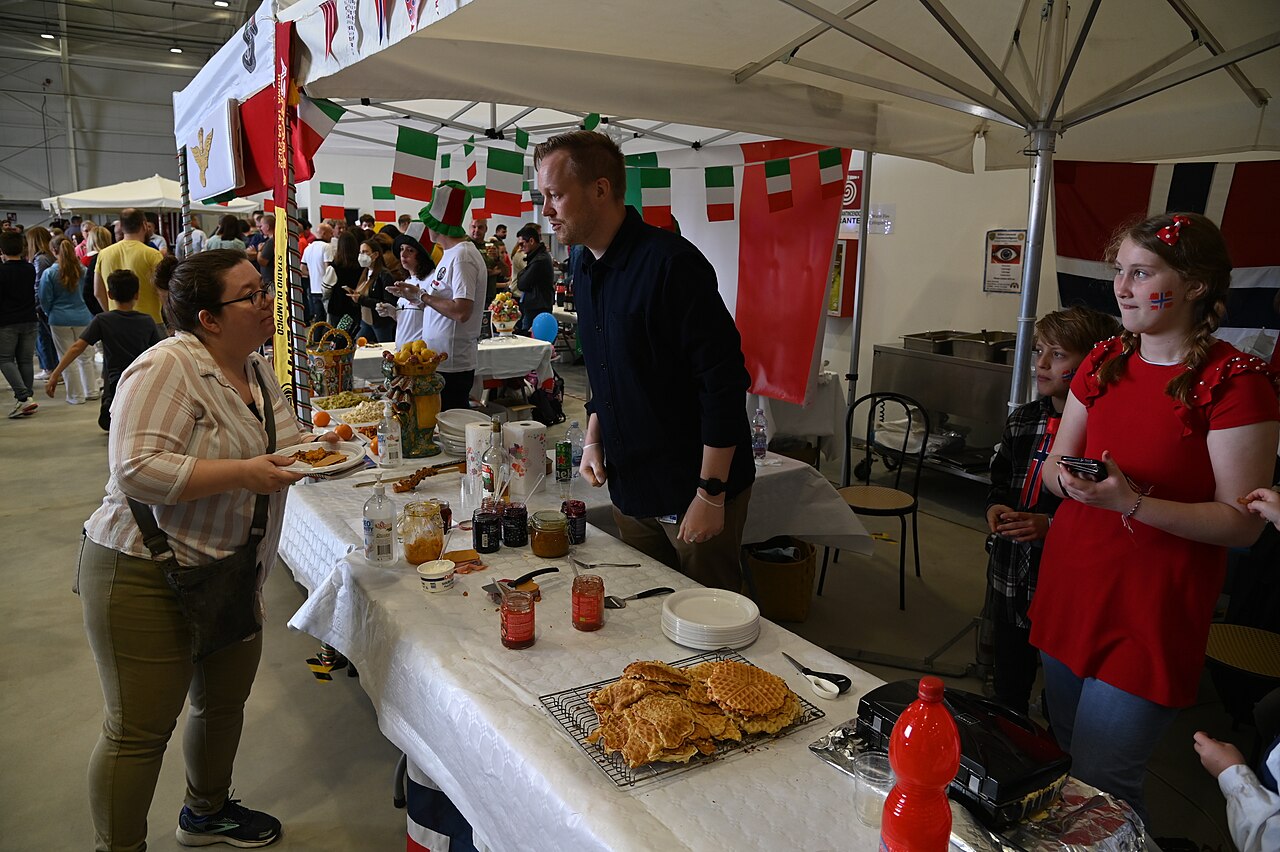
The first taste is not a meal but a test: the vaffel, the heart-shaped Norwegian waffle, eaten with brunost — brown cheese, made by boiling whey until its sugars caramelise — or with sour cream and strawberry jam, at a harbor kiosk or a museum café. Brunost (the classic is Gudbrandsdalsost, from the Gudbrandsdal valley) is the flavour Norway exports to itself: sweet, fudgy, faintly tangy, sliced with the ostehøvel — the cheese slicer Norway invented (Thor Bjørklund, patented 1925, made in Ringebu to this day). Master the waffle and the rest of the table opens. The traditional canon behind it: gravlaks (cured salmon) and the fjord's fish; reindeer and game from the interior in autumn; fårikål — lamb and cabbage stewed with black peppercorns, voted Norway's national dish in a 2014 national poll and celebrated with its own day in late September; rakfisk, the fermented trout of the Valdres valleys, for the brave in winter; and the cloudberry (multe), the Arctic's golden berry, over cream at Christmas and whenever a menu can get it.
For the city's full register, book one serious dinner. Oslo's flagship is Maaemo — three Michelin stars, Esben Holmboe Bang's New Nordic tasting menu, relocated to Bjørvika in 2020 — with the next tier (Kontrast among them) reinterpreting the same larder: langoustines, Røros butter, preserved berries, ferments at every course. The everyday city eats in its halls and neighborhoods: Mathallen (opened 2012 in the Vulkan quarter) gathers the country's producers under one roof — Sámi reindeer, fjord fishmongers, small cheesemakers — and Oslo Street Food downtown runs the global stalls; Grünerløkka, the old workers' quarter turned café district, does the city's weekend brunches, and the harbor strip of Aker Brygge and Tjuvholmen sells the fjord view with its fish restaurants. Budget honesty belongs in any Oslo answer: this is among Europe's most expensive dining cities, and a Mathallen lunch plus one booked dinner beats three mediocre mid-priced meals.
The drinks carry two national obsessions. Coffee first: Norwegians drink among the most coffee per head on earth, and Oslo is a specialty capital — Tim Wendelboe's roastery-café in Grünerløkka is a pilgrimage address, and Fuglen (pouring since 1963) doubles as a vintage-design shop. Then akevitt (aquavit): the caraway-and-herb potato spirit, of which the prestige bottle is Linie — matured in sherry casks on ships that cross the equator (the "line") twice, a sea voyage printed on every label since the practice began in the 19th century — poured with the Christmas table and with rakfisk, and increasingly well stocked in Oslo's cocktail bars. Beer completes it: the local Ringnes brewery and a strong craft scene (Nøgne Ø's Grimstad exports among them) fill the Grünerløkka taps. Eat the waffle, book the dinner, cross the line in a glass: that is Oslo's table in order.
Picture the place
A Mathallen lunchtime: copper counters, a fishmonger's iced fjord catch, a cheesemonger unwrapping a wheel of brunost for a queue of office workers treating Tuesday properly.
The easily missed detail
The cheese slicer is the souvenir. Norway's ostehøvel — the little plane that shaves brunost and every firm cheese — was invented by a Lillehammer carpenter, Thor Bjørklund, in 1925, and is still produced in Ringebu; every Norwegian kitchen has one, and no Oslo gift lands better at home. Buy it where the locals do (the kitchen shops on Bogstadveien or the museum stores), buy a block of Gudbrandsdalsost beside it, and the waffle test can be re-sat in your own kitchen. The second sleeper: kvikk lunsj, the foil-wrapped chocolate wafer that is Norway's hiking sacrament — the waffle's traveling companion.
A practical rhythm
- Waffle before museum — Brunost first, at a harbor kiosk; it calibrates the whole cuisine in five minutes
- One booked dinner — Maaemo-tier tables reserve weeks ahead; the food halls carry the rest of the trip
- Coffee as itinerary — Plan Grünerløkka as a café crawl: Wendelboe, Fuglen, and the vintage shops between
What could complicate the plan
Cost is the real constraint here, and it bites hardest in the middle of the market: Oslo is among the most expensive cities in Europe to eat in, so the plan that works is 1 booked dinner plus halls and kiosks, while 3 ordinary restaurant meals a day spend the same money for much less. The top of the table is a diary problem rather than a budget one, because the city's 3-star room releases its seats weeks out and they go at once. Two of the traditional dishes are calendar-bound: the lamb-and-cabbage stew has its own day in late September and belongs to autumn menus, and the fermented trout of the Valdres valleys is a winter item, so a July visitor who came for either will not find it.
What to do next
Take the waffle test on arrival, book the serious dinner tonight for later in the stay, and eat tomorrow's lunch at Mathallen.
Sources
- Michelin Guide — Maaemo, Oslo (three stars; Esben Holmboe Bang; Bjørvika since 2020)
- TINE / Norwegian dairy cooperatives — brunost and Gudbrandsdalsost: caramelised whey cheese and its production
- Mathallen Oslo — the Vulkan food hall (opened 2012) and its Norwegian producers
- Arcus / Linie Aquavit — the equator-crossing cask maturation of Linie akevitt
- MatPrat (Norwegian food information office) — fårikål, voted Norway's national dish in 2014, and the traditional table