Philippines country guide When to visit
When is the best time to visit Philippines for Palawan?
The short answer
Late January through early April — the back half of the national dry season, and the window in which Palawan's headline site, the Puerto Princesa Underground River, is most reliably reachable under its cap of 900 visitors a day.
The answer, with local context
PAGASA, the Philippine weather service, splits the year nationally into a rainy season from June to November and a dry season from December to May, with the dry half dividing again into a cool dry period from December to February and a hot dry period from March to May. The national mean annual temperature is 79.9°F (26.6°C); January is the coolest month at 77.9°F (25.5°C) and May the warmest at 82.9°F (28.3°C). Humidity runs from 71 percent in March to 85 percent in September, which is the clearest single indicator of how different the two halves of the year feel. Typhoons generally form near the Marianas and Caroline Islands and track northwest, a pattern that spares Mindanao most of them and leaves the central and northern archipelago exposed.
Palawan sits on the western edge of the country, a long thin island facing the South China Sea, and its visitor season follows the national dry months closely. The practical constraint is not weather but access. The Puerto Princesa Underground River enforces what the city calls a no permit, no entry policy, holding daily numbers to 900 to protect the bats and swiftlets that roost in the cave. Tours are scheduled between 8:00 a.m. and 4:00 p.m., deliberately timed around the hours when those colonies leave and return. In the dry months that quota fills; in the wet months boat transfers to the cave mouth are the thing that fails.
Palawan's other World Heritage property reinforces the same calendar. Tubbataha Reefs Natural Park, inscribed in 1993 at the Committee's 17th session and extended in 2009, lies far offshore in the Sulu Sea and is reached only by liveaboard, which is viable in the calm months and not outside them.
Picture the place
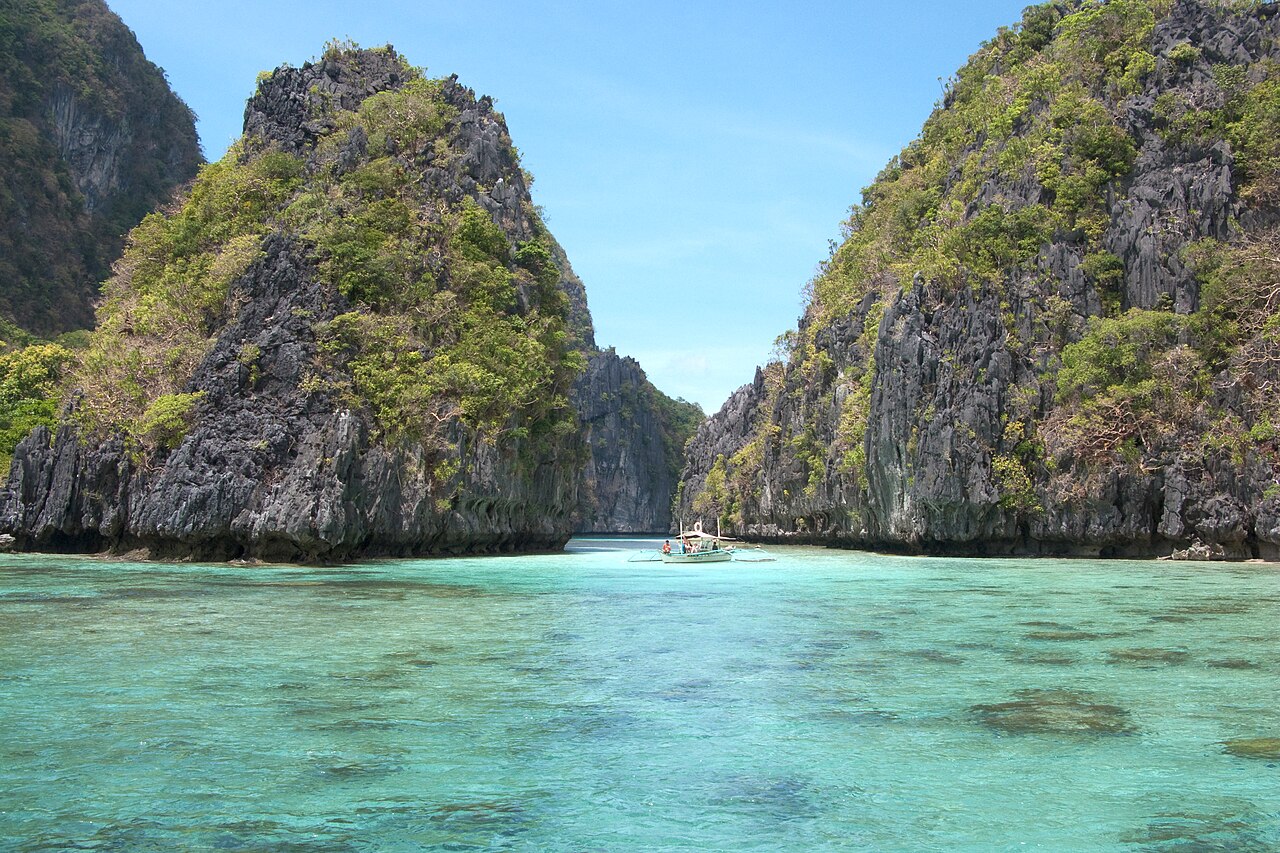
The limestone of Bacuit Bay rises straight out of the water in towers with forest clinging to their tops, and in the dry season the sea between them goes flat enough that the karst reflects almost whole.
The easily missed detail
The 900-a-day ceiling is not a soft target. Because the permit and the time slot are issued together and the window is only eight hours wide, a traveler who arrives in Puerto Princesa without a reservation during February or March can find every slot gone for the length of their stay. The quota exists for the cave's wildlife, not for crowd comfort, so it does not flex with demand.
A practical rhythm
- December to February — Coolest and driest nationally; the most comfortable walking and boating conditions in Palawan.
- March to May — Still dry but hot, with national means climbing toward 82.9°F (28.3°C) in May and humidity at its annual low in March.
- June to November — The rainy season, when boat transfers and island-hopping are the first things cancelled.
What could complicate the plan
The US Department of State places the Philippines at Level 2, Exercise Increased Caution, in an advisory issued May 8, 2025, with higher levels applied elsewhere in the country; Palawan is not named in those carve-outs. Sea conditions, not rainfall, usually decide whether a Palawan day happens, and the cave tour depends on a boat leg from Sabang. Domestic flight schedules into Puerto Princesa and El Nido thin out in the wet months.
What to do next
The Philippines trip-planning question in this group covers entry rules for US citizens and where the Underground River booking office actually is.
Sources
- PAGASA, Climate of the Philippines — seasons, mean temperatures, humidity range, typhoon tracks
- Puerto Princesa Underground River, official city site — daily visitor cap, permit policy, tour hours and the reason for the timing
- UNESCO World Heritage Centre, Tubbataha Reefs Natural Park — property name, inscription year, session and 2009 extension
- US Department of State, Philippines travel advisory — advisory level and issue date