Quebec City / Canada When to visit
When should I visit Quebec City, Canada, for the best experience?
The short answer
Mid-September to early October gives Quebec City its best balance — highs around 66°F (19°C), the old town's stone streets free of peak crowds, and the full summer program of tours still running.
The answer, with local context
Quebec City's year splits into extremes, and the shoulder seasons dodge both of them. September averages a high of 66°F (19°C) and October 52°F (11°C), cool enough for climbing between the Upper and Lower Towns without summer humidity. May runs a similar pattern in reverse, with highs near 64°F (18°C) once the snow is gone. The old town you are walking through was inscribed by UNESCO in 1985 under criteria (iv) and (vi), recognised as an outstanding example of a fortified colonial city.
Summer is warmer but wetter. July, the hottest month, averages a high of 77°F (25°C) and is also the wettest month of the year, with 4.7 inches (118.7 mm) of precipitation. Winter is the real commitment: January's average high is 19°F (−7°C), the average low is 2°F (−17°C), and the city takes just under 300 cm (about 118 inches) of snow across an average year.
Winter has one strong counter-argument. The Québec Winter Carnival, running since 1955, takes over the old town from February 5 to 14, 2027 for its 73rd edition — ten days of night parades, an ice palace and an ice canoe race on the frozen St. Lawrence, scheduled deliberately into the coldest stretch of the year.
Picture the place
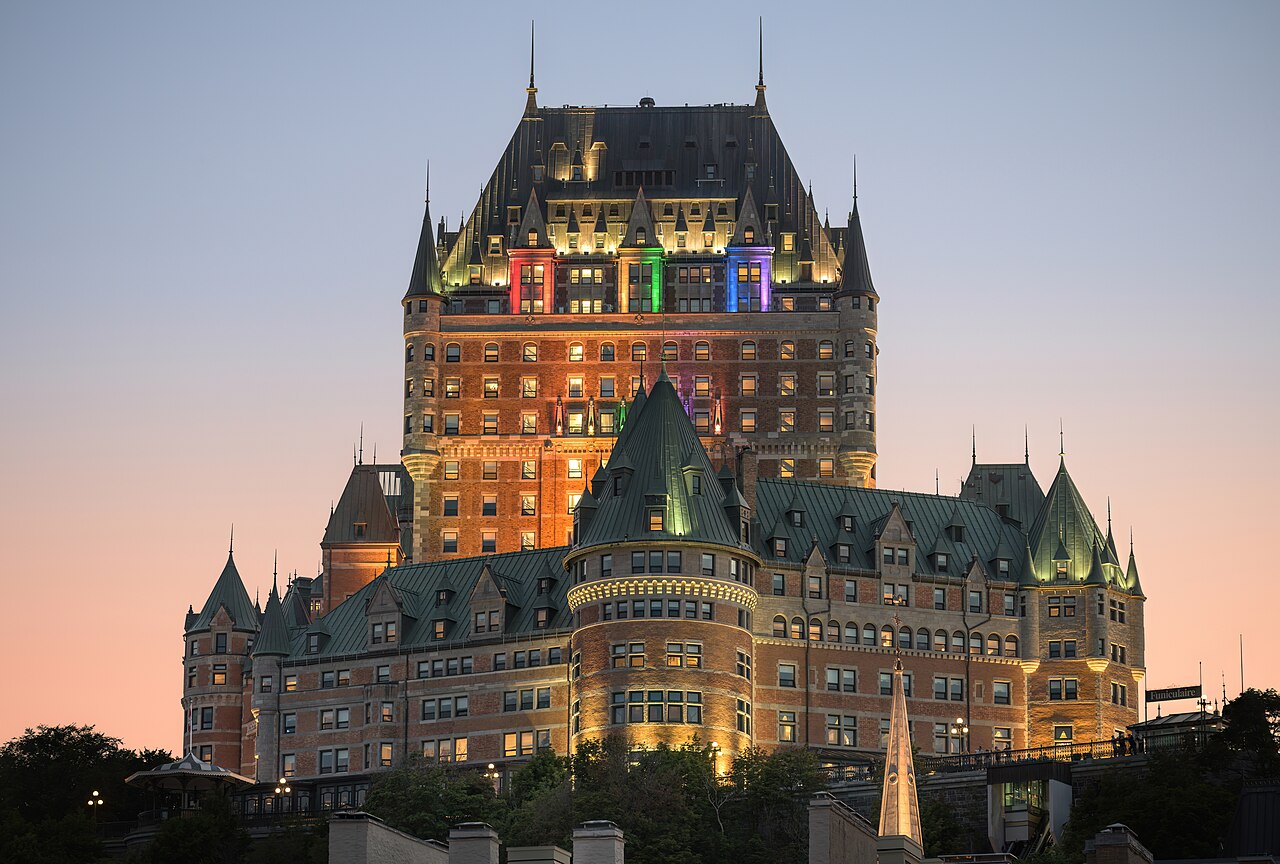
In late September the light comes in low over the St. Lawrence where the river narrows below Cap Diamant, and the Upper Town's stone facades hold the day's warmth after the Lower Town streets have fallen into cliff shadow.
The easily missed detail
Carnival entry runs on the Effigy, a pass that is mandatory for everyone aged 13 and over — and it is sold at a presale price of $29 plus taxes only until January 17. Arrive in February without one and you pay more at the gate for the same sites.
A practical rhythm
- Morning — Walk the Upper Town first, while the light is on the river and the lanes are quiet.
- Midday — Drop to the Lower Town for lunch; the cliff puts its streets in shade early, so they suit the warm middle of the day in summer and a shorter stop in winter.
- Evening — In Carnival weeks the parades and the ice palace run after dark, so keep evenings unscheduled in February.
What could complicate the plan
Cold is a hard constraint, not a mood: January's coldest night in an average year reaches −21°F (−29°C), and December alone brings about 76 cm (30 inches) of snow, so a December trip needs real winter footwear and flexible timing around storms. Carnival week fills hotels across the old town, so February dates need booking well ahead.
What to do next
Once the month is chosen, pair this with the Quebec City things-to-do question in this group to match the Citadelle ceremonies and the falls to your season.
Sources
- Environment and Climate Change Canada — monthly temperature, precipitation and snowfall averages
- Destination Québec cité — 2027 Carnival dates, Effigy pass requirement and presale price
- UNESCO World Heritage Centre — Historic District of Old Québec, inscription year and criteria