Queenstown / New Zealand When to visit
When should I visit Queenstown, New Zealand, for the best experience?
The short answer
Queenstown has two bests, not one — August for the deepest snow, and late February into March for warm days on the lake under bare golden hills — so the right month is decided by whether your holiday is built around the ski fields or around the water.
The answer, with local context
The winter town comes first, because Queenstown built its second identity on snow. Four ski areas sit within an hour's drive, and the closest, Coronet Peak, is a piece of national history: opened in 1947 with a single rope tow, it was New Zealand's first commercial ski field, 10 miles (16 km) and twenty minutes from the town center. Its season runs from mid-June to early October — in 2026, June 13 to October 4 — held together by serious engineering: NZSki describes its snowmaking, some 229 guns, as the largest system in the Southern Hemisphere, on a mountain that receives about 6.5 feet (2 m) of natural snow a year. Across the basin, The Remarkables ski area — opened in 1985, with about 950 acres (385 ha) of terrain — runs a week longer, into mid-October.
The snow's peak is not the season's start. The ski operators' own guidance puts the most reliable natural snow from late July through August, and Coronet Peak adds the region's signature trick: night skiing under floodlights on Wednesdays and Fridays, and some Saturdays, from July to mid-September, running until 9 p.m. — a ski day that can stretch from an 8 a.m. first tracks lift to a floodlit final run thirteen hours later. September is the connoisseur's month: longer days, softer snow, spring conditions and the school-holiday crowds gone.
The summer town is the mirror image. From December the lake district tips into its long, dry-season light: the roadsides toward Glenorchy color with wild Russell lupins from November, in drifts of pink and purple against the blue lake; the town's terraces fill; and the Earnslaw steams to Walter Peak in shirtsleeve weather. Spring adds one wild card in the nor'wester — the warm foehn wind that pours over the Alps, spikes the temperature in an afternoon and roughens the lake — and autumn answers with still, clear weeks in April when the basin's poplars turn. February and March sit between the extremes: summer fully established, the December–January holiday crush gone, every track and boat running.
Picture the place
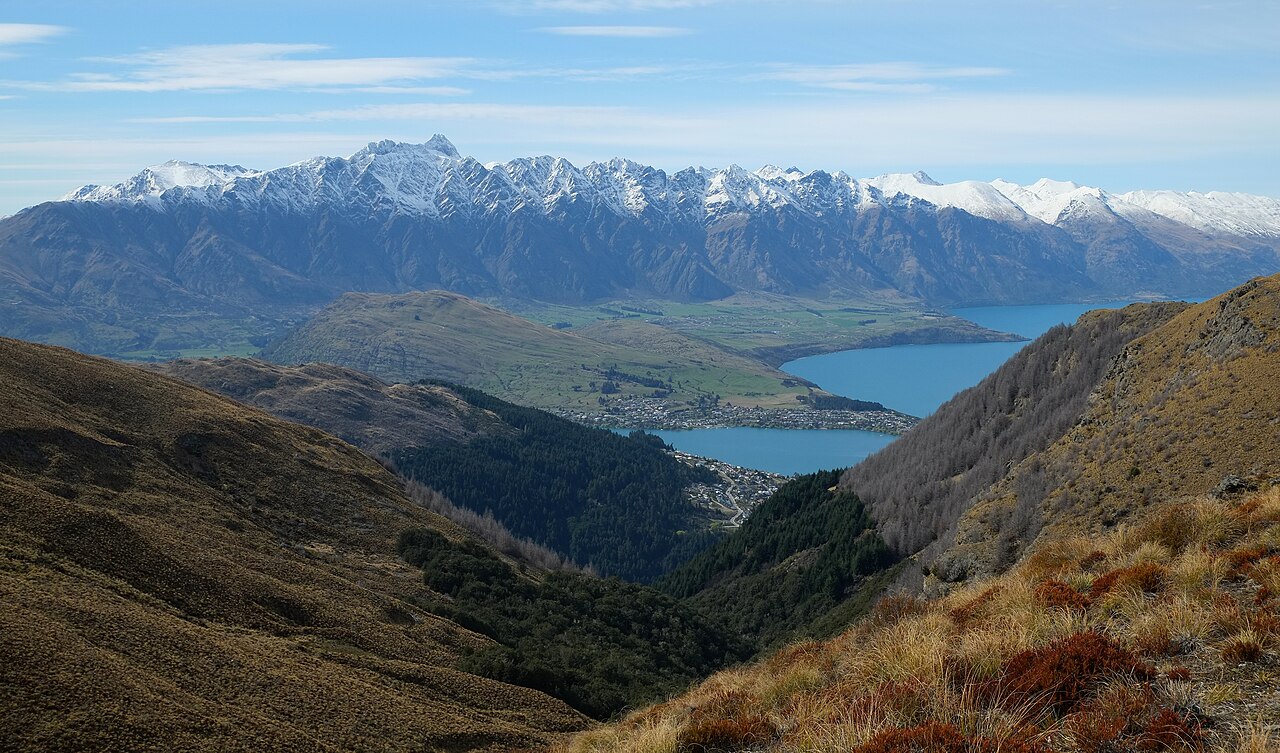
On a February evening the lake goes bronze under a sky that stays lit past nine, stand-up paddleboards drift off the Frankton Arm, and the Remarkables — bare of snow now, all grey schist and tussock — stand over a town eating dinner outdoors as if winter were a rumour.
The easily missed detail
Night skiing is the season's hidden bargain and its best light. Coronet Peak's floodlit runs operate on Wednesday and Friday evenings through the heart of winter, when the day crowds have left, the snow firms up in the cold, and the lights of Queenstown glitter below the runs — a full ski session that costs an evening, not a day, and leaves the daylight hours for the lake.
A practical rhythm
- Morning — In winter, first tracks at Coronet Peak from 8 a.m. puts you on corduroy an hour before the general lifts; in summer, mornings are the lake's glass hours for kayaks and the Glenorchy road.
- Midday — The ski fields keep their cafés on the mountain, so a winter day needs no descent; a summer midday belongs in Gibbston, where the cellar doors pour lunch under the vines.
- Evening — Winter evenings are for the floodlights or the town's firesides; summer evenings run so long that dinner on the lakefront is a daylight event well into January.
What could complicate the plan
The ski season's bookends are honest gambles: June openings depend on snowmaking and cold snaps, and early-October skiing is spring slush by afternoon — the fields publish their dates as targets, not promises, and adjust to conditions. July is the peak of every pressure at once: the Australian and New Zealand school holidays overlap, lift queues lengthen, and Queenstown's accommodation reaches its winter maximum. And Fiordland, the town's great day trip, keeps its own counsel in every season — the Milford Road closes for avalanche control at times between June and October, and summer rain can shut the scenic flights that winter cold cannot.
What to do next
Choose the season by its sport: skiers, take late July or August and keep one evening for night skiing; everyone else, take February or March. The days question in this group shows how much of the scenery fits once you've chosen.
Sources
- NZSki (Coronet Peak and The Remarkables) — Coronet Peak's 1947 opening as New Zealand's first commercial ski field, the mid-June to early-October season, night skiing until 9 p.m., and the snowmaking system
- Destination Queenstown — the official guide to the region's four ski areas, their distances from town and their season dates
- Queenstown Lakes District / MetService — the spring nor'wester pattern and the basin's seasonal weather