Quito / Ecuador When to visit
When should I visit Quito, Ecuador, for the best experience?
The short answer
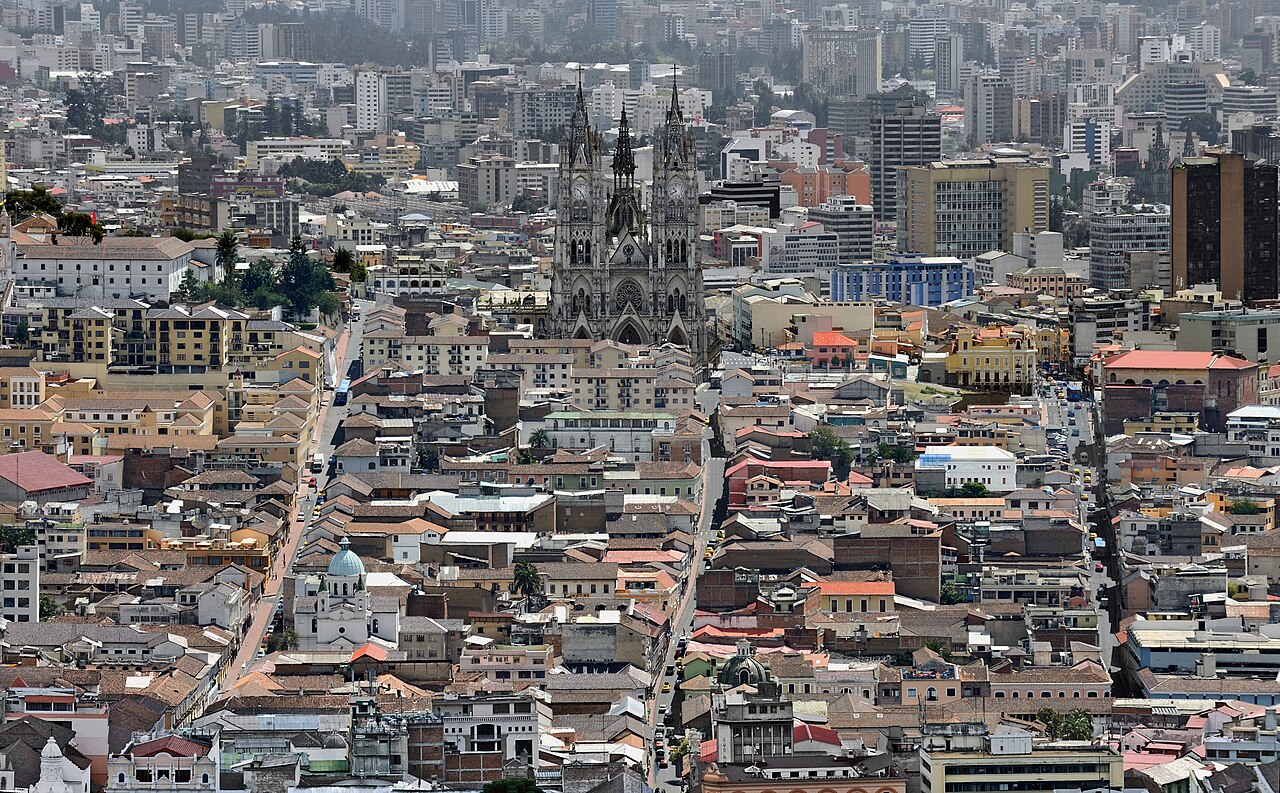
Any month outside Holy Week and the mid-December to mid-January holidays — but plan the first 48 hours around the altitude, not the calendar — Quito sits at 2,850 meters, or 9,350 feet, above sea level.
The answer, with local context
The elevation figure comes from the US International Trade Administration's Ecuador guide, last published 2 September 2025, which also warns that travelers may experience altitude sickness and that people with heart or lung conditions, or sickle cell trait, may face greater risk. Set that against the CDC's Yellow Book 2026 thresholds and Quito's position is clear. The CDC puts any unacclimatized traveler sleeping at 2,450 meters — 8,000 feet — or higher at risk of acute mountain sickness, and bands day-1 risk by sleeping altitude: low below 2,750 meters, medium from 2,750 to 3,400 meters, high above 3,400 meters, assuming a start below 1,200 meters. Quito at 2,850 meters falls in the medium band, and most arrivals come from near sea level by air.
The timings matter more than the risk label. The CDC states that acute mountain sickness symptoms usually begin 2 to 12 hours after arrival, often during or after the first night, that the illness typically resolves within 12 to 48 hours without further ascent and is self-limited over 1 to 3 days, and that symptoms starting after 3 days at altitude without further ascent should not be attributed to it. Acute acclimatization happens over the first 3 to 5 days. Its advice for those first 2 days is specific: avoid alcohol for the first 48 hours, and limit yourself to mild activity over the same period. For scale, the CDC notes that about 25 percent of visitors sleeping above 2,450 meters in Colorado are affected, and that arriving rapidly by plane above 3,400 meters can push rates towards 50 percent.
The calendar advice is simpler. The International Trade Administration recommends avoiding Holy Week, the week before Easter, and the Christmas holiday season from mid-December to mid-January, when much of the country is on vacation. Its stated business hours — 9:00 a.m. to 6:00 p.m. Monday to Friday, with lunch usually around 1:00 p.m. — are the practical shape of an ordinary Quito working day.
Picture the place
The CDC describes periodic breathing — an irregular night-time rhythm — as becoming nearly universal above about 2,700 meters. Quito sits 150 meters above that line, so a broken first night in the city is an expected response to the elevation rather than a sign that something is wrong.
The easily missed detail
Build a slack day into the front of the itinerary, not the back. Because the CDC puts symptom onset at 2 to 12 hours and resolution at 12 to 48 hours, the day most likely to be lost is the first full one — exactly the day most people schedule the walking tour of the historic center. The CDC also notes that prior exposure above 2,750 meters for at least 2 nights within the 14 days before departure is protective, and that spending 2 to 3 nights at around 2,450 to 2,750 meters before going higher helps, which is a reason to treat Quito as the acclimatization stop for anything higher rather than as the place you arrive already adjusted.
A practical rhythm
- Day 1 — Mild activity only and no alcohol, per the CDC's 48-hour guidance; Quito's 2,850 meters puts you in its medium risk band.
- Days 2 to 3 — Most acute mountain sickness resolves within 12 to 48 hours and is self-limited over 1 to 3 days, so the full programme belongs here.
- Days 3 to 5 — Acute acclimatization completes in this window, which is when higher ground becomes reasonable.
What could complicate the plan
The US Department of State's Ecuador advisory, dated 18 August 2026, is Level 2, Exercise increased caution, citing crime, terrorism, unrest and kidnapping, and it names a long list of higher-risk areas that do not include Quito or Pichincha province. Several are Level 4, Do Not Travel: the Nueva Prosperina and Pascuales districts of Guayaquil and all areas south of Portete de Tarqui Avenue there; Huaquillas and Arenillas in El Oro; Quevedo, Quinsaloma and Pueblo Viejo in Los Ríos; Durán in Guayas; Esmeraldas City and everything north of it; and the stretch from north of Esmeraldas City to the Colombian border and east to Carchi. Level 3, Reconsider Travel, covers the rest of Guayaquil north of Portete de Tarqui Avenue, the remainder of El Oro and Los Ríos, areas south of Esmeraldas City, and the provinces of Sucumbíos, Manabí, Santa Elena and Santo Domingo. That reshapes any itinerary that pairs Quito with the coast. The Department also records that a passport must be valid for 6 months beyond arrival, with 1 blank page per entry stamp, and that a visa approved before travel is needed for stays over 90 days in any 12-month period. Two further rules come from the UK Foreign, Commonwealth and Development Office's Ecuador guidance, updated 1 November 2026: anyone entering Ecuador by land or river from Peru or Colombia needs a criminal record certificate covering their last 5 years of residence, apostilled under the Hague Convention and translated into Spanish, a requirement announced on 11 January 2024 and applying immediately, with no equivalent for air arrivals; and visitors to the Galápagos may stay up to 60 days rather than the mainland's 90.
What to do next
The Quito things-to-do answer covers the historic center's World Heritage listing and the Compañía de Jesús; the food answer sets out the CDC's food and water guidance and the practicalities of paying for things in Quito.
Sources
- US International Trade Administration, Ecuador Country Commercial Guide — Quito's elevation in metres and feet, altitude risk groups, business hours and lunch timing, the Holy Week and mid-December to mid-January advice, publication date
- CDC Yellow Book 2026, High-Altitude Travel and Altitude Illness — sleeping-altitude risk threshold and bands, onset and resolution timings, acute acclimatization window, alcohol and exertion limits, incidence figures, periodic-breathing altitude, pre-exposure advice
- US Department of State, Ecuador country information — advisory level, date and reasons, named Level 3 and Level 4 areas, passport validity, blank-page and visa requirements
- UK Foreign, Commonwealth and Development Office, Ecuador entry requirements — the criminal record certificate rule for land and river entry with its announcement date, and the 60-day Galápagos limit