Ragusa / Italy Things to do
What are the most worthwhile things to do in Ragusa on a first visit?
The short answer
Climb to the Duomo di San Giorgio in Ibla, walk the Giardino Ibleo to the old Gothic portal, cross the gorge on foot to Ragusa Superiore's cathedral, and drive out to the Castello di Donnafugata — Ragusa is a tale of two cities, and the first visit is the walk between them.
The answer, with local context
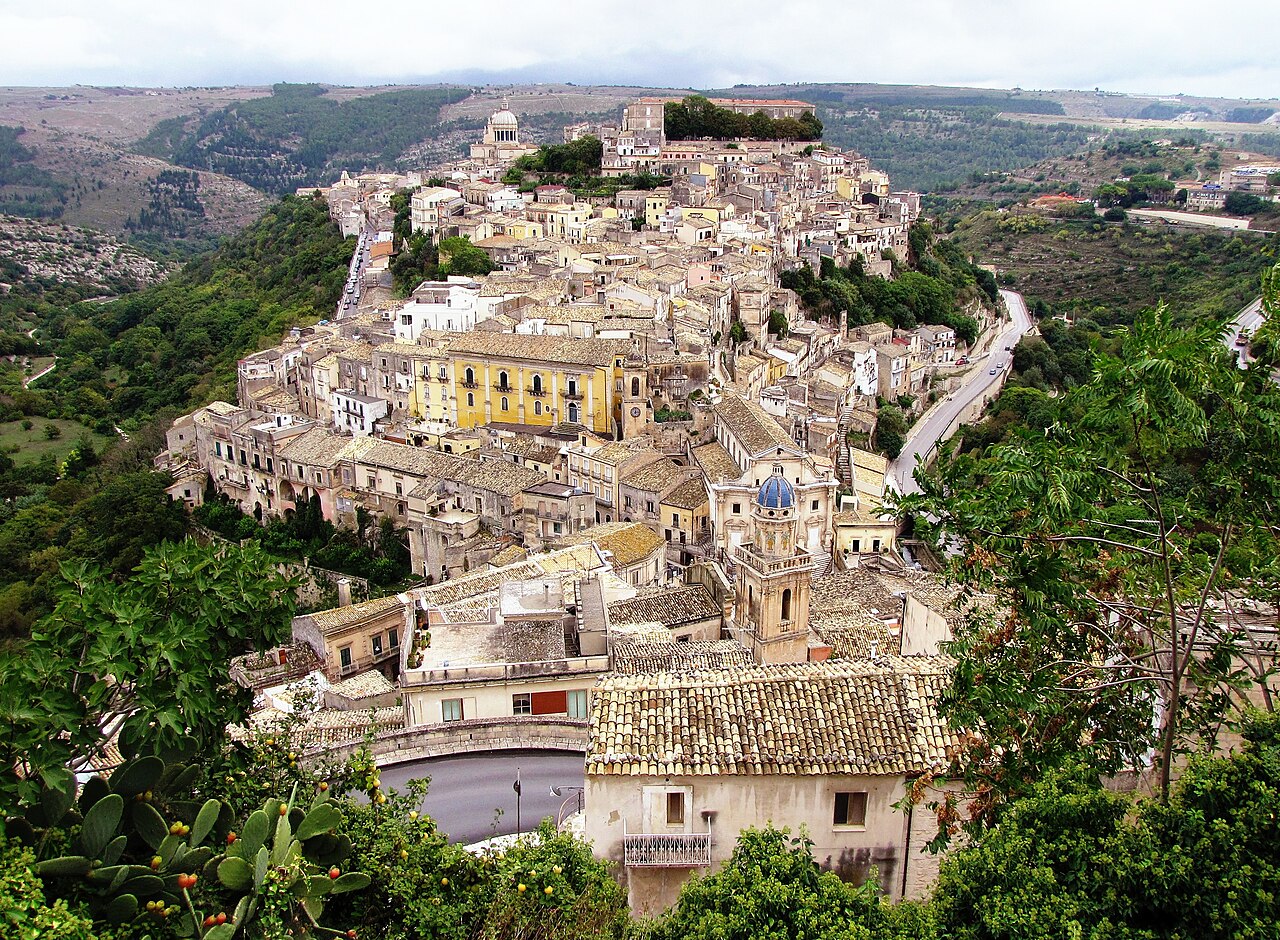
Everything in Ragusa descends from one morning: January 11, 1693, when the earthquake destroyed the medieval town. The rebuilding split the citizens — the old nobility raised Ibla again on its ruins in curving Baroque lanes, while the new money built Ragusa Superiore on the Patro hill in a rational grid — and the two towns, joined administratively only in 1927 when Ragusa became a provincial capital, remain the visit's twin poles. In Ibla, the masterpiece is the Duomo di San Giorgio: Rosario Gagliardi's great church (built 1738–1775), its convex facade rising like a stage set over a monumental staircase, a neoclassical dome added behind it in the 1820s — the single most theatrical frontage in the Val di Noto (UNESCO 2002), and the image the whole southeast answers to. Around it, Ibla threads palazzi (Arezzo di Trecastagni, La Rocca), the neoclassical Circolo di Conversazione (1850) — the nobles' conversation club, frescoed and mirrored — and lanes that end at the Giardino Ibleo (laid out 1858), the public garden at the old town's tip, where palms and three small churches hang over the Irminio valley. At the garden's edge stands the Portale di San Giorgio, the carved Gothic-Catalan portal that is all the earthquake left of the old San Giorgio — the town's founding relic, holding the saint and the dragon in worn stone.
The crossing is the second sight. The gorge of the Vallata Santa Domenica, spanned by three bridges (the Ponte Vecchio of 1837, the Ponte Nuovo of the 1930s, the high Ponte Giovanni XXIII of 1964), separates the towns, and the pedestrian way down is the church of Santa Maria delle Scale — named for its stairs, 242 steps between the cities — whose terrace is the classic viewpoint back over Ibla's dome and tiled roofs. Above, Ragusa Superiore keeps its own pride: the Cathedral of San Giovanni Battista (1694–1777), a Baroque giant on its raised terrace, and the Museo Archeologico Ibleo's Greek and prehistoric finds from the Hyblaean hills. Television has given the twin towns a second fame: the Montalbano series filmed across Ibla, Scicli and Modica for two decades (1999–2021) — the duomo's steps are Vigàta's cathedral square in all but name, and the locations are walked daily by the show's pilgrims.
The excursion completes the circuit: fifteen kilometers out, the Castello di Donnafugata is not a fortress but an eclectic 19th-century summer palace — 122 rooms of frescoed salons, a stone labyrinth in its park, and a name Lampedusa borrowed (the novel's Donnafugata is a different place wearing this one's music). Back in Ibla for the evening, the town performs its last act for free: the passeggiata up the Corso to Piazza Duomo as the stone turns rose, dinner in a palace courtyard, and the dome lit over the gorge on the walk to bed. Give the pair of towns one full day on foot, Donnafugata a morning, and the coast (Marina di Ragusa, the Montalbano beaches of Sampieri and Donnalucata) a second day if the season allows.
Picture the place
The terrace of Santa Maria delle Scale at dusk: Ibla across the gorge like a ship of lit windows, the dome above it, and the two towns' church bells answering each other over the dark.
The easily missed detail
Read the duomo's facade as an architect's signature under pressure: Gagliardi never saw it finished — he died in 1762 with the church mid-build, and the facade's upper order and the great dome (1820s, by the master builder Carmelo Cultraro, working from another's drawings) belong to later hands, which is why the church reads as two centuries in one view, Baroque theater in front and neoclassical engineering behind. The locals' detail is humbler: the Circolo di Conversazione beside the duomo still functions as a private club — its frescoed salon, glimpsed through the door on festa days, is Ibla's drawing room kept in amber since 1850.
A practical rhythm
- Ibla in the morning, Superiore at dusk — The duomo and gardens in the cool; the crossing stairs and the upper cathedral as the light turns
- Walk the middle — The 242 steps of Santa Maria delle Scale are the visit's spine; taxis and buses exist for the return if knees object
- Donnafugata by opening — The castle's park and labyrinth are a morning's pleasure; by noon the heat owns the stone
What could complicate the plan
The twin towns punish lazy logistics: sights split across a gorge, several Ibla palazzi open only for exhibitions or by appointment, and the cathedral hours part around the midday closure like everywhere in the southeast. The Montalbano geography is fiction — Vigàta and Montelusa are invented, and the "commissariato" is a set of locations across three towns — so fans should map the real Ibla, Scicli and Modica rather than hunt for street signs that never existed. Summer heat radiates off Ibla's stone lanes by 11; the siesta hours are for the long, Ragusa-style lunch, not the stairs.
What to do next
Start tomorrow at the Giardino Ibleo and walk up to the duomo, cross by the Scale at golden hour, and put Donnafugata on the first morning with a car.
Sources
- UNESCO World Heritage List — Late Baroque Towns of the Val di Noto (2002): Ragusa Ibla and Ragusa Superiore; Gagliardi's Duomo di San Giorgio (1738–1775)
- Comune di Ragusa — the Giardino Ibleo (1858), the Portale di San Giorgio, the bridges of the Vallata Santa Domenica and Santa Maria delle Scale
- Castello di Donnafugata (Comune di Ragusa) — the 19th-century palace of 122 rooms and its park labyrinth
- Museo Archeologico Ibleo, Ragusa — the Hyblaean collections from the Greek colonies to the necropolises