Reykjavík / Iceland When to visit
When should I visit Reykjavík, Iceland, for the best experience?
The short answer
June for daylight and dryness, or late September through March for aurora — Reykjavík's station normals give July a mean of 53.1°F (11.7°C) and June the driest month at 1.71 inches, while winter is what the Icelandic Met Office's aurora forecast is built for.
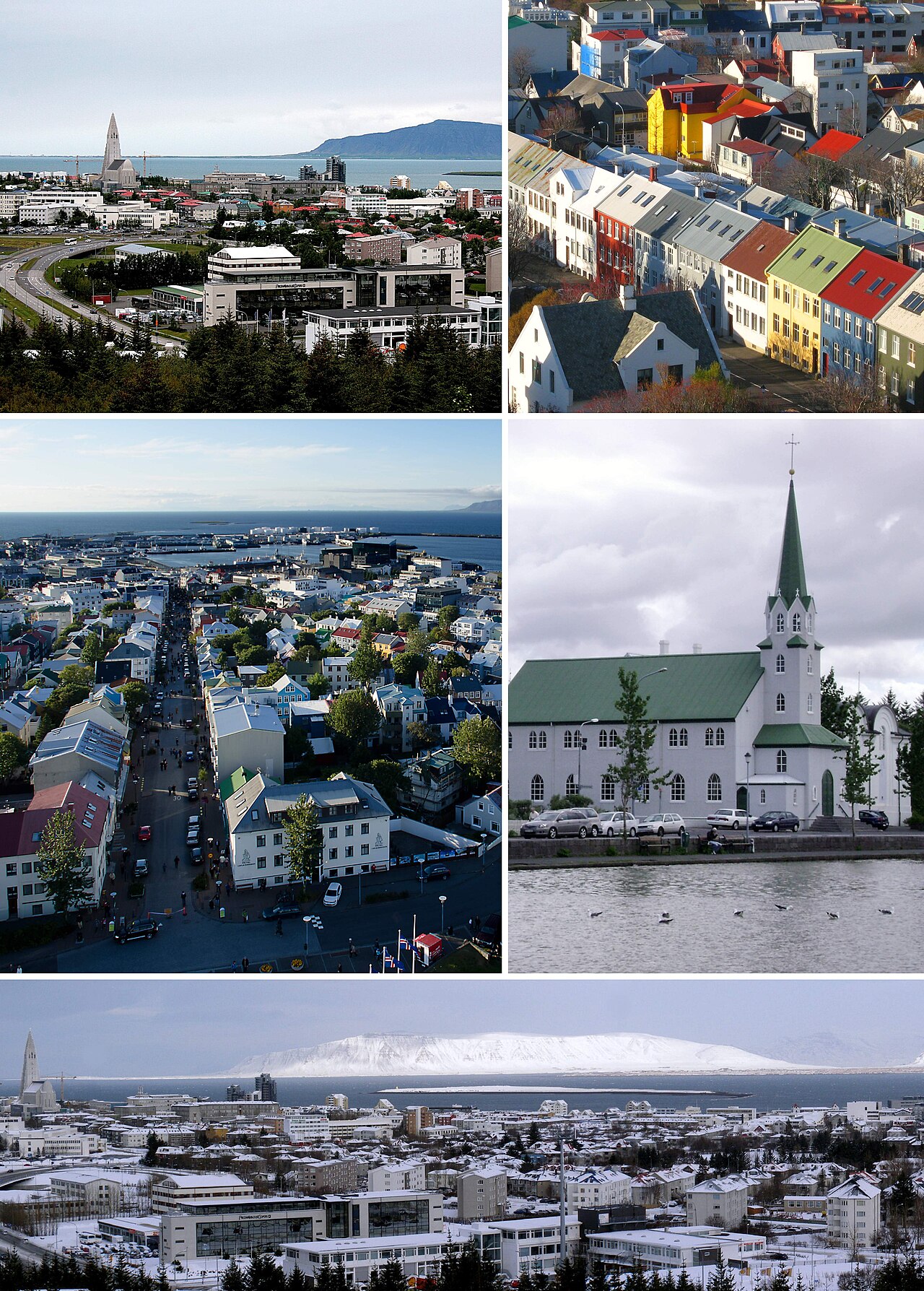
The answer, with local context
Reykjavík's climate is remarkable for how little it moves. The station at 64.13°N, 21.9°W, 54 meters above sea level, carries monthly means of 33.3°F (0.7°C) in January, 33.1°F (0.6°C) in February, 44.1°F (6.7°C) in May, 49.8°F (9.9°C) in June, 53.1°F (11.7°C) in July, 52.0°F (11.1°C) in August and 47.3°F (8.5°C) in September. The spread between the coldest and warmest month is roughly twenty degrees Fahrenheit — a narrower annual range than most places at that latitude, and the reason summer here never gets hot and winter rarely gets severe.
Precipitation is the better discriminator. June is the driest month at 1.71 inches (43.4 mm), followed by July at 1.99 inches and May at 2.05 inches. December is the wettest at 3.81 inches (96.8 mm), with February at 3.57 inches and January at 3.43 inches. The dry season and the long-daylight season are the same season, which makes early summer the straightforward answer for anyone who wants to be outdoors.
If the aurora is the reason for the trip, the Icelandic Met Office publishes the tool that actually matters. Its forecast shows expected auroral activity at midnight on a scale from 0 to 9, overlaid on a cloud-cover map of Iceland where green areas are cloudy and white areas clear, and the Office combines that cloud information with sunlight and moonlight data. The same page gives sunset, darkness, sunrise and moonrise times for Reykjavík. The Met Office notes that even grade 2, described as low activity, can be beautiful — so a modest number is not a reason to stay in.
Daylight swings so hard that the city's buildings are scheduled around it. Hallgrímskirkja publishes a summer schedule of 09:00 to 20:00 from 20 May to 31 August and a winter one of 10:00 to 17:00 from 1 September to 19 May — a three-hour contraction that tracks the light rather than demand.
Picture the place
In June the city gets just 1.71 inches of rain across the month and the sky never fully darkens, so the hours when a landmark like Hallgrímskirkja would normally be floodlit simply do not arrive.
The easily missed detail
Darkness, not aurora activity, is the binding constraint in the shoulder seasons. The Met Office's forecast page supplies Reykjavík's darkness times alongside the activity scale precisely because a grade 5 night in late May is unviewable. That is why the aurora window closes in spring long before the solar activity does, and why late September is a better bet than mid-August at the same geomagnetic reading.
A practical rhythm
- June — The driest month on the record at 1.71 inches and a mean of 49.8°F (9.9°C), with the city's landmarks on their extended 09:00-to-20:00 summer hours.
- Late September — A mean of 47.3°F (8.5°C), real darkness returning, and the Met Office's 0-to-9 forecast becoming useful again.
- December and January — Wettest and near-freezing, 3.81 and 3.43 inches respectively, with cloud cover the thing to watch rather than temperature.
What could complicate the plan
Cloud, not cold, ruins aurora trips — which is why the Met Office pairs its activity scale with a cloud map at all, and why a multi-night stay beats a single-night gamble. Winter also shortens access: Hallgrímskirkja drops to 10:00–17:00 from 1 September, so sightseeing and aurora-watching compete for a small number of usable hours. And the city's wettest three months, December through February, each exceed three and a half inches, so waterproofing is a planning assumption rather than a precaution.
What to do next
The Reykjavík things-to-do question in this group covers the museums, the tower and the municipal pools that fill the hours when the weather decides against you.
Sources
- Japan Meteorological Agency, Tokyo Climate Center (ClimatView) — Reykjavík station monthly temperature and precipitation normals, station coordinates and elevation
- Icelandic Meteorological Office — aurora activity scale, cloud-cover map, darkness and moonlight data for Reykjavík
- Hallgrímskirkja — published summer and winter opening schedules