Reykjavík / Iceland Food and drink
Where should I eat in Reykjavík, and which local food or drink is worth trying?
The short answer
Icelandic lamb, which carries protected designation of origin status under the name Íslenskt lambakjöt — registered in the fresh meat category, it is the one Icelandic product whose quality claim is backed by a legal specification rather than a menu.
The answer, with local context
The designation sits in product category 1.1, fresh meat and offal, and appears on the UK government's protected food and drink names register with a registration date of 4 December 2024 under that scheme. What a PDO means in practice is that the name cannot travel: lamb sold as Íslenskt lambakjöt comes from Iceland's own system of summer mountain grazing, and a restaurant using the term is making a verifiable claim.
Fish is the other half of the city's cooking, and the scale of the industry explains why it is cheap relative to everything else on an Icelandic bill. Statistics Iceland reported a total national catch of about 1,077 thousand tonnes in 2014, worth roughly 136 billion ISK, down 11 percent in value on the previous year, with cod mainly frozen at land-based factories. Fresh cod, haddock and Arctic char turn up on menus across the city center, and the harbor-side kitchens are closest to the landings.
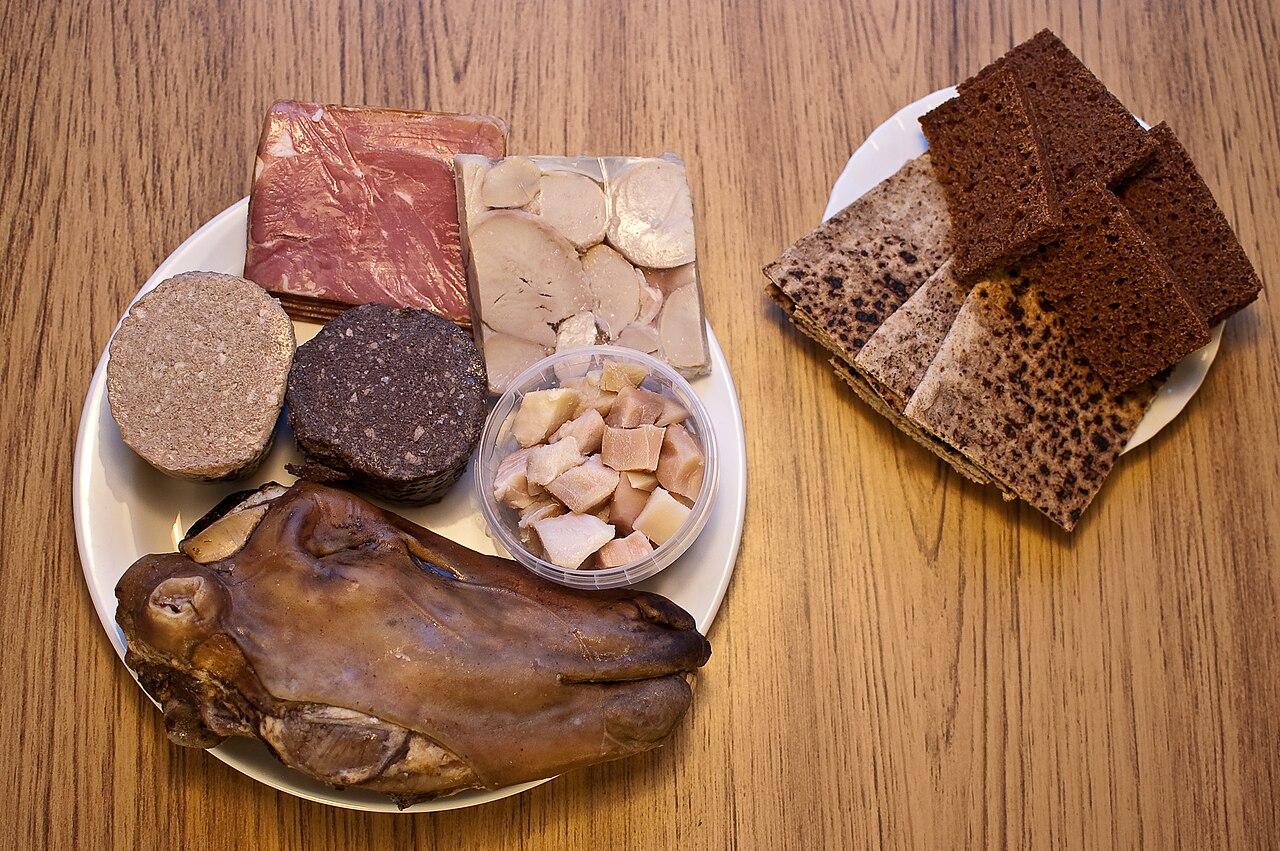
The traditional preserved foods are a separate category and belong to þorramatur, the midwinter spread: hangikjöt, smoked lamb; lifrarpylsa and blóðmör, liver sausage and blood pudding; svið, singed sheep's head; hákarl, fermented shark; and the breads that come with them, rúgbrauð and flatbrauð. These are preservation methods from a country without grain or orchards, not novelty items, and the most approachable of them — hangikjöt and rúgbrauð — are everyday food rather than a dare.
Skyr, the strained cultured dairy product, is the one Icelandic staple visitors tend to recognize already, and it is sold everywhere from supermarkets to breakfast buffets.
The easily missed detail
Reykjavík's growing season is the reason the traditional larder looks the way it does. The station normals give July a mean of 53.1°F and September 47.3°F (8.5°C) — too cool and too short for cereals or tree fruit at any scale. Smoking, fermenting, drying and souring were not stylistic choices; they were the only storage available, and that is why the protected product is lamb and not a crop.
A practical rhythm
- Breakfast — Skyr and rúgbrauð, the dense dark rye, are the standard start and cost a fraction of a sit-down meal.
- Lunch — The harbor kitchens are where the fresh catch lands; cod and haddock are the value options in a city where almost nothing else is.
- Dinner — If one splurge, make it the PDO lamb; the designation is specific enough to be worth paying for.
What could complicate the plan
The catch figures are from 2014, and Iceland's fisheries volumes move year to year, so treat them as scale rather than current output. Several þorramatur items — hákarl and svið in particular — are strongly flavored and seasonal in their traditional context, and a restaurant offering them in July is serving a sampler rather than a seasonal dish. Iceland is also expensive across the board, and a PDO lamb main in a city-center dining room is priced accordingly.
What to do next
The Reykjavík when-to-visit question in this group gives the month-by-month temperature and rainfall picture behind that short growing season.
Sources
- UK Government, protected food and drink names register — PDO designation, product category and registration date for Icelandic Lamb
- Statistics Iceland — total catch tonnage, catch value and year-on-year change
- Japan Meteorological Agency, Tokyo Climate Center (ClimatView) — Reykjavík July and September temperature normals