San Marino country guide Trip planning
How can I plan a memorable first trip to San Marino without rushing?
The short answer
Sleep in the republic for 2–3 nights instead of day-tripping from Rimini — that single decision converts a besieged postcard into a small country: towers at dawn, museums at leisure, the castelli by car, and evenings in an old town that the last bus leaves to its 33,600 residents.
The answer, with local context
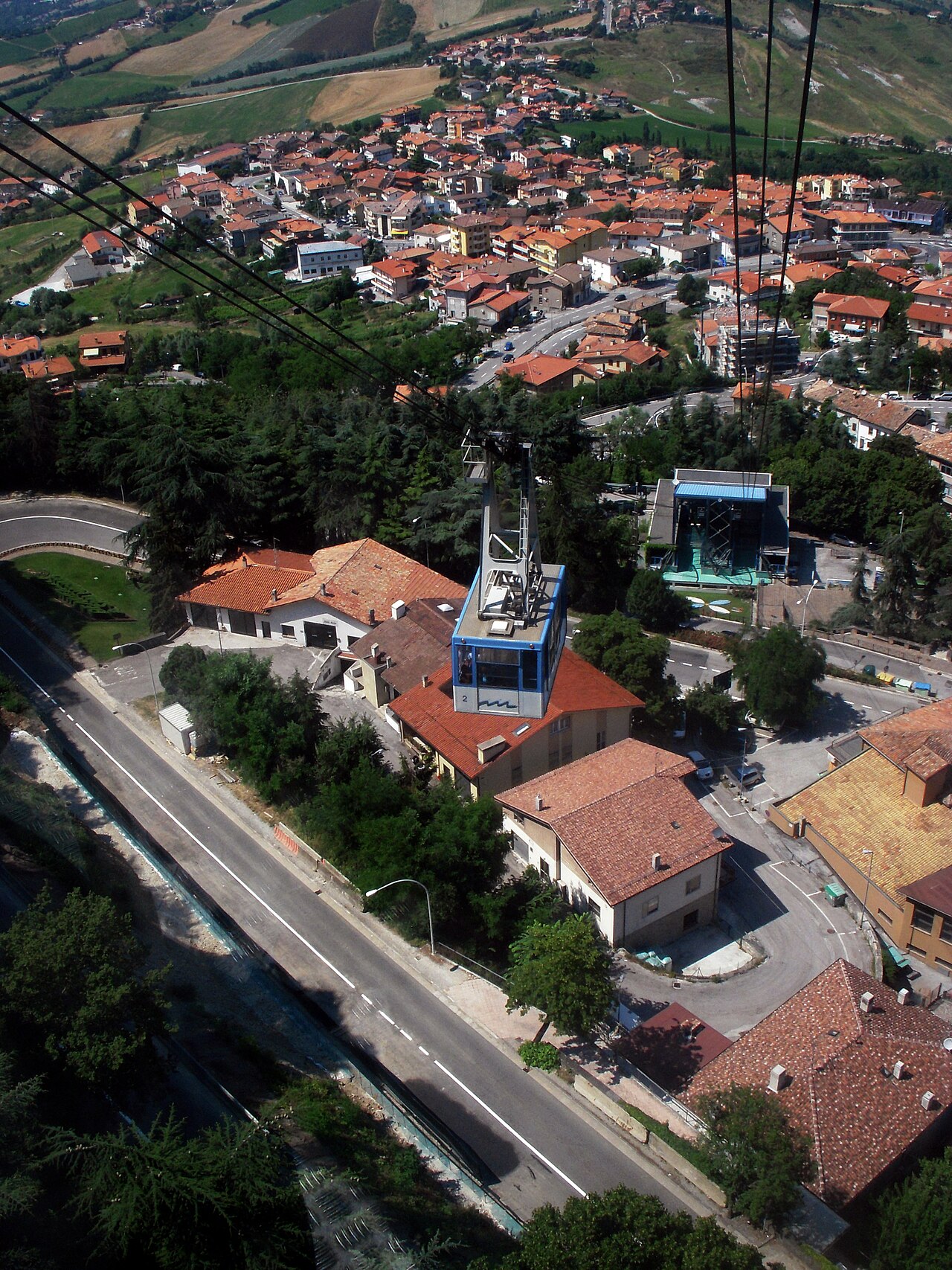
The access geometry first. San Marino has no airport and no railway: everyone arrives through Italy, and the U.S. Department of State's own summary notes the open border (no passport control), the euro and a size about 1/3 of Washington, D.C. Rimini, 25 km away, is the gateway — its station and Federico Fellini Airport feed the Bonelli bus (about 55 minutes, frequent, to the Città's gates) and the SS72 road for drivers, who then use the ring of paid car parks below the walls. Inside the republic the distances are miniature — the Città to Borgo Maggiore is a 2-minute cable car ride (€4 one way, €7 return per the published tariffs) or a short drive; the whole state, Città to Montegiardino, is under 15 km end to end — so the plan is about tempo, not transport. 2–3 nights arrange themselves: arrival afternoon for the passport stamp (€5 at the tourist office — a souvenir visa in a real passport, the microstate's beloved ritual), the walls at sunset, and dinner after the crowds; day 1 for the towers at opening, the ridge walk, the State Museum and Palazzo Pubblico on the €11 State Museums pass (valid 10 days, 7 venues — designed for exactly this pace); day 2 for the cable car down to Borgo Maggiore, the Stamp and Coin Museum, the old railway walk, and a castelli loop by car or bus.
The entry formalities are Italy's. Because there is no border post, a U.S. citizen's San Marino stay rides on their Schengen entry: visa-free 90 days in any 180 through Italy, passport valid 3 months beyond departure — and days on Titano count inside that allowance, since you can only reach the republic through Schengen territory. The republic itself asks nothing at the gate, stamps nothing officially, and runs on the euro (its own euro coins are legal tender and instant collectibles). This simplicity is the planning gift: San Marino bolts onto a Romagna trip — Rimini's beaches and Roman arches, Ravenna's mosaics 50 km up the coast — without a single additional formality, and the unhurried version pairs 3 nights on the mountain with 2–3 on the coast or in Ravenna.
Slowness is the republic's luxury good. Overnight guests own the Città at its 2 best hours — the dawn, when the ridge can stand above a sea of cloud with the Adriatic beyond, and the evening, when the lanes empty and the swallows work the tower tops. The calendar offers fixed points to build around: September 3's foundation feast, the April 1 and October 1 investitures of the Captains Regent, late July's Medieval Days, Thursday's market in the Borgo. Time it to any 1 of them, give the museums their full pass, and take the castelli at farm tempo, and the smallest republic on the itinerary becomes the part of the trip that gets described at length when people come home.
Picture the place
7 a.m. from Guaita's ramparts, before the first bus: cloud filling the valleys to the brim, the tower alone in sunlight, and the Adriatic a strip of hammered silver at the edge of the world.
The easily missed detail
The 10-day validity of the State Museums pass changes the maths of a short stay: at €11 for 7 venues it is cheaper than the towers-only ticket pattern most day-trippers fall into (€9 for 2 towers), and it lets the Palazzo Pubblico be revisited on the day the Council is not sitting — the pass is the unhurried traveler's instrument, bought on day 1. The second detail is the stamp's location: the tourist office that issues the €5 souvenir visa sits in Piazza Garibaldi inside the Città, and it keeps office hours — arrive on the last bus of the day and the ritual waits until tomorrow.
A practical rhythm
- 2–3 nights in the Città — The overnight stay treated as the trip's core decision, made before flights
- Pass on day 1, towers at opening — The €11 State Museums pass bought first; Guaita and Cesta walked before the Rimini buses land
- 1 day down the mountain — Borgo Maggiore, the railway walk and the castelli given a full day of their own
What could complicate the plan
The republic's choke point is its single gateway: a delayed flight into Rimini or a missed last bus up the SS72 strands the evening in Italy, and Sunday and holiday bus timetables thin out — check the Bonelli schedule for your exact day. The Città is a pedestrianised hill town of stairs and cobbles: luggage has wheels but the lanes have gradients, and hotels inside the walls involve a climb from the car parks or gates. State venues run feast-day and ceremony hours (the Palazzo shuts for Council sittings and the investitures), and Titano weather can erase the views the trip was timed for — the overnight stay is also your insurance, since 3 dawns beat 1. Finally, everything Sammarinese is small-scale: the best restaurants and the Città's characterful hotels book out around September 3 and the Medieval Days, so the feast-day trip is reserved early or not at all.
What to do next
Book the Città hotel first, the Rimini flights second, and the €11 pass on arrival — then let the republic set the pace.
Sources
- U.S. Department of State, Italy travel information — San Marino's open border, euro currency and size; U.S. entry via Italy's Schengen rules
- San Marino State Museums — the €11 pass (10 days, 7 venues) and the towers-only ticket
- San Marino Tourism Board — the Rimini bus link, cable car tariffs (€4 one way, €7 return) and the €5 souvenir passport stamp at the tourist office
- Rimini transport operators / Bonelli Bus — the Rimini–San Marino service (about 55 minutes)