San Miguel de Allende / Mexico Things to do
What are the most worthwhile things to do in San Miguel de Allende on a first visit?
The short answer
Stand in the Jardín before the pink parish church, drive 14 km north to the painted sanctuary of Atotonilco, and give half a day to the Otomí pyramid at Cañada de la Virgen — the three stops that explain why this town exists.
The answer, with local context
Start with the designation itself. In 2008 UNESCO inscribed the "Protective Town of San Miguel and the Sanctuary of Jesús Nazareno de Atotonilco" under criteria (ii) and (iv), covering a 43-hectare historic center laid out from the 16th century. The settlement began as an Indigenous village in 1542 and was refounded as a Spanish town in 1555 to guard the Royal Inland Road that carried silver south, which is why a town of this size holds mansions and churches out of proportion to its population.
The church on the Jardín is the emblem. The parish church of San Miguel Arcángel was built in the late 17th century, but the façade everyone photographs dates only to 1880–1890, when Zeferino Gutiérrez, an Indigenous master mason with no training as an architect, rebuilt it in pink cantera stone quarried from the slopes of the extinct Palo Huérfano volcano, modelling his towers on postcards of European Gothic cathedrals. The town around it took its second name in 1826, honouring Ignacio Allende, the independence leader born here.
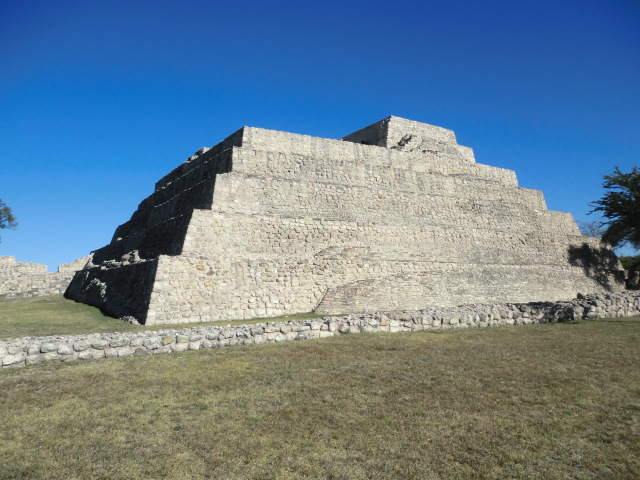
Atotonilco, 14 km north, is the other half of the inscription. Father Luis Felipe Neri de Alfaro blessed its first stone on May 3, 1740, and the main church rose by 1748; inside, the Indigenous painter Miguel Antonio Martínez de Pocasangre spent some 30 years covering the nave and its seven chapels with Mexican Baroque murals. State and INAH accounts record that in September 1810 Hidalgo's insurgents took their banner of the Virgin of Guadalupe from this sanctuary. The pyramid at Cañada de la Virgen, west of town, is older than everything else here by a millennium: an Otomí ceremonial center occupied from about 540 to 1050 AD, whose House of the Thirteen Heavens rises over 49 feet (15 m) and whose alignments to the Sun, Moon and Venus INAH archaeoastronomy studies have documented. It opened to the public only on February 15, 2011, and entry stays controlled because the federal site sits inside a private hacienda. For green space, El Charco del Ingenio protects 170 acres (67 hectares) of canyon and cactus garden above the town, a community initiative begun in 1990 and registered with SEMARNAT as a wildlife conservation unit.
Picture the place
Inside Atotonilco there is almost no bare plaster: the vaults over the nave carry the Passion scene by scene in reds, blacks and gold, with Father Alfaro's verses lettered between the figures, so the ceiling reads like an illuminated book held open above your head.
The easily missed detail
Gutiérrez directed the parish façade without drawings. Local accounts describe him arriving each morning and sketching that day's section in the dirt with a stick for his crew to follow — the most famous church front in Mexico was designed one day at a time, at ground level, by a stonemason.
A practical rhythm
- Morning — Walk El Charco del Ingenio's canyon trails before the sun tops the rim, then come back down into town.
- Midday — Do the Jardín, the parish church and the gallery rooms of Fábrica La Aurora, a former textile mill, while the light is harsh outside.
- Afternoon — Drive out to Atotonilco for the murals; keep Cañada de la Virgen for a separate morning, when its controlled entry starts.
What could complicate the plan
Atotonilco is a working pilgrimage sanctuary, not a museum: retreat groups fill it for weeks of the year, some chapels close, and photography and dress are governed by the sanctuary's rules. Cañada de la Virgen keeps short hours with entry ending in the early afternoon, and because access crosses private land, independent wandering beyond the guided route is not possible.
What to do next
Eat after the Jardín — the food question in this group covers the miners' enchiladas and the market streets a few blocks from the parish church.
Sources
- UNESCO World Heritage Committee, Decision 32 COM 8B.44 — inscription of the Protective Town of San Miguel and the Sanctuary of Atotonilco under criteria (ii) and (iv)
- UNESCO / ICOMOS Advisory Body Evaluation No. 1274 — 43.26-hectare centre, 1542 and 1555 foundations, Atotonilco 14 km north
- INAH (Instituto Nacional de Antropología e Historia) — Cañada de la Virgen occupation dates, House of the Thirteen Heavens and archaeoastronomy; Atotonilco's founder, muralist and 1810 banner account
- El Charco del Ingenio A.C — the reserve's 67 hectares, 1990 community initiative and SEMARNAT registration