San Miguel de Allende / Mexico When to visit
When should I visit San Miguel de Allende, Mexico, for the best experience?
The short answer
In the dry months from October to April — warm afternoons around 72–79°F (22–26°C), almost no rain, and the town's two great street festivals fall at either end of that window.
The answer, with local context
Altitude runs this town's calendar. San Miguel sits at 6,266 feet (1,910 m) on the central Mexican plateau, and its semi-arid climate swings more between noon and midnight than between seasons: January, the coolest month, averages a high of 72°F (22°C) and a low of 43°F (6°C), a drop of nearly 30 degrees inside a single day. May is the warmest month, reaching 86°F (30°C) before the rains arrive and cool the plateau down.
Rain, not temperature, is what divides the year. About 24 inches (600 mm) fall annually, and nearly all of it lands between June and September — July, the wettest month, takes roughly 4.7 inches (120 mm), while December through March each record under 0.6 inches (15 mm). The wet-season storms are theatrical but brief, building through the afternoon and breaking in the late afternoon or early evening, which leaves the mornings clear and the hills green.
Two festival windows reward deliberate timing. The patronal feast of St. Michael the Archangel falls on September 29, when the town honours its patron and namesake with days of processions and fireworks — though it lands at the tail of the rains. Day of the Dead, on November 1–2, arrives just as the dry season sets in, and Holy Week brings processions through the historic center and pilgrim crowds to the sanctuary at Atotonilco, in the last week of Lent.
Picture the place
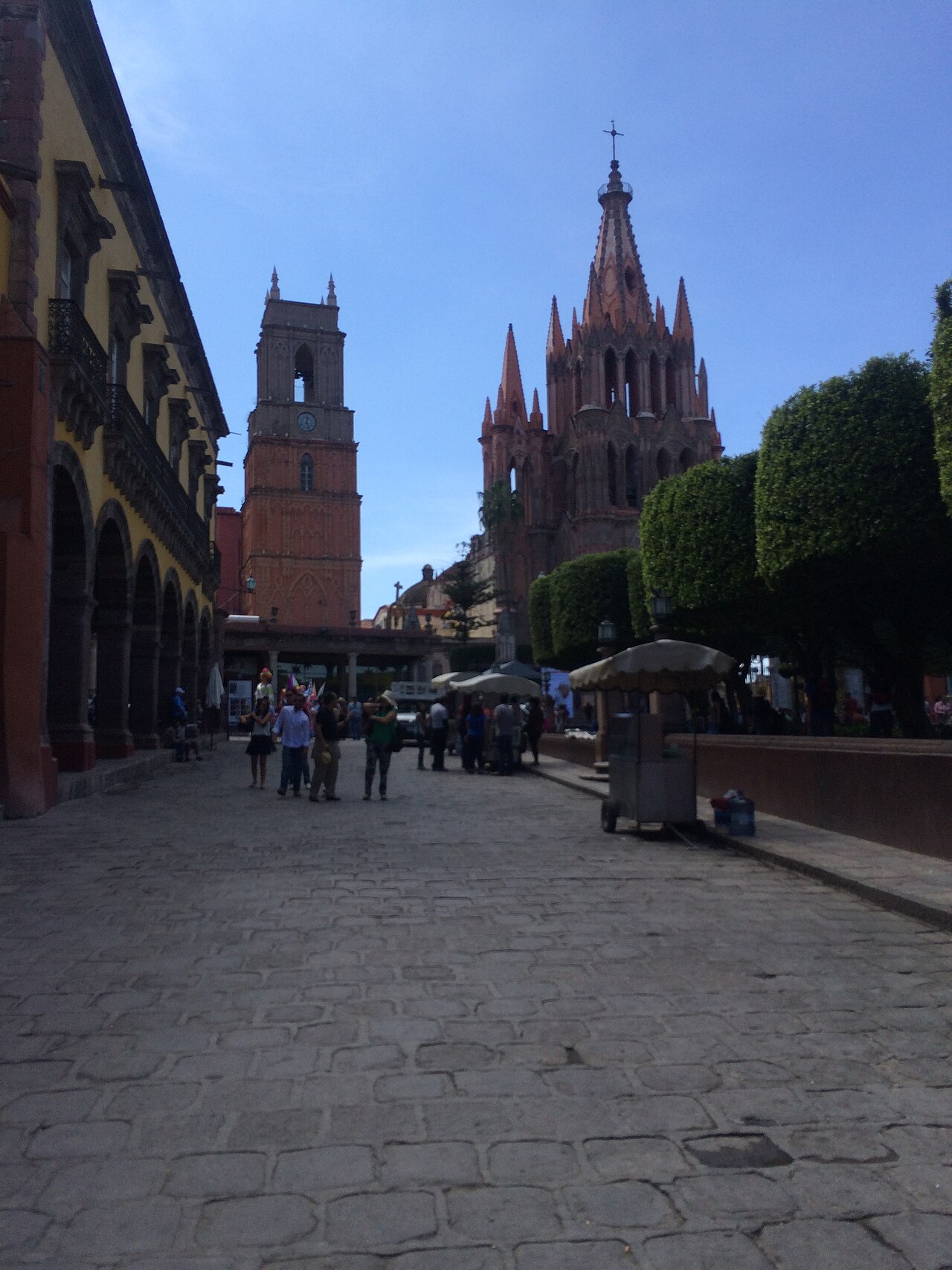
In August the cobbles of the centro shine black after the evening storm, the puddles in the Jardín Principal hold a pink reflection of the parish church towers, and the sierra behind the town has gone a green it never shows in April.
The easily missed detail
May, not July or August, is the hottest month. Visitors who dodge the summer expecting heat and arrive in May expecting mild spring weather have it backwards — the first June storms knock the temperature down, so the year's real scorch happens in the last dry weeks of spring.
A practical rhythm
- Morning — Sightsee first in any season; in the wet months the streets are dry and the sky is clear until mid-afternoon.
- Midday — Move into the galleries, churches and courtyard cafés when the high-altitude sun is at its strongest.
- Evening — Take the Jardín at dusk, when the day's heat drops fast and the whole town comes out to walk.
What could complicate the plan
December and January nights fall into the low 40s°F (around 6°C) and many colonial houses have no central heating, so a room that was perfect at noon can be cold at 3 a.m. September splits the difference awkwardly: the patronal festival is the town's biggest week, but it still rains on roughly half its afternoons.
What to do next
Once the month is chosen, the things-to-do question in this group sequences the parish church, Atotonilco and the pyramid at Cañada de la Virgen.
Sources
- Servicio Meteorológico Nacional (CONAGUA) — climate normals for San Miguel de Allende: monthly highs, lows and rainfall concentration June–September
- Secretaría de Turismo del Estado de Guanajuato — festival calendar: Fiesta de San Miguel (September 29) and Day of the Dead observances
- UNESCO World Heritage Centre — the inscribed historic centre as the setting for Holy Week processions and Atotonilco pilgrimage