Sao Tome and Principe country guide Places and experiences
What should a first-time traveler see in Sao Tome and Principe beyond the obvious highlights?
The short answer
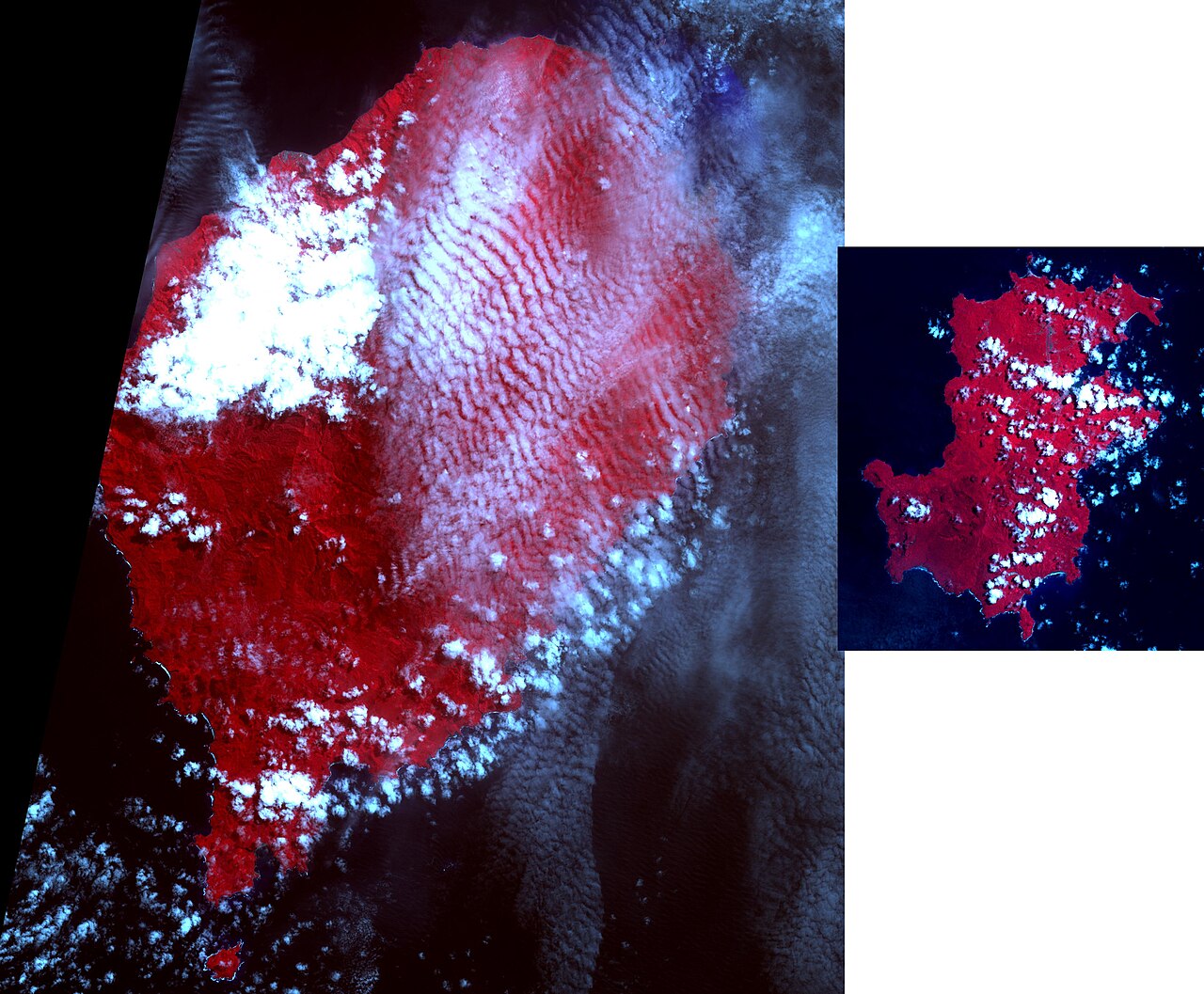
Príncipe, the smaller island — a UNESCO World Biosphere Reserve whose marine and coastal protected area is recorded at 172.42 square kilometers, with a Natural Park created by Law 7/2006 and a summit, Pico do Príncipe, at 948 meters.
The answer, with local context
Almost every first itinerary stays on São Tomé. The case for crossing to Príncipe is that it is a separately designated conservation landscape. UNESCO recognizes the island as a World Biosphere Reserve, and the UNEP-WCMC protected-areas register records "The Island of Príncipe" under a marine and coastal protected-areas designation with a reported area of 172.42 square kilometers. Peer-reviewed geoheritage work on the island documents a Natural Park of Príncipe created by Law 7/2006, identifies Pico do Príncipe at 948 meters above sea level as the island's highest point, and describes Papagaio Peak as a volcanic peak of phonolitic origin standing 680 meters high inside that park.
That gives the archipelago two distinct volcanic landscapes rather than one. On São Tomé, the Ôbo Natural Park covers 235 square kilometers and Pico Cão Grande rises 663 meters as an exhumed phonolitic chimney of the Volcanic Complex of Ribeira Afonso, roughly 3 million years old. On Príncipe, the equivalent forms sit inside a biosphere reserve with its own legal park. Both islands are products of the Cameron Line, and the phonolitic spires that define their skylines are the hard cores of older volcanoes left standing after the softer rock around them eroded away.
Getting between them is a flight. The US International Trade Administration records that STP Airways operates domestic services between the two main islands, and that international routes connect Lisbon — flown by TAP and STP Airways — along with Libreville, Luanda and Accra. Portuguese is the official language and English is not widely spoken, so the second island is also the point at which a visitor's reliance on arranged guiding increases.
Picture the place
Papagaio Peak and Pico do Príncipe stand over a small island of closed forest and short rivers, and with the high point at 948 meters the ground climbs from shoreline to cloud forest without ever running far inland.
The easily missed detail
Príncipe's protected status is layered rather than singular: a UNESCO biosphere designation, a national Natural Park created by Law 7/2006 and a marine and coastal protected area recorded at 172.42 square kilometers. Those are different instruments with different boundaries, and the marine component is the part most visitors overlook. The 15-day visa-free allowance applies to the whole trip, so adding Príncipe means spending part of a fixed permission on a domestic flight.
A practical rhythm
- São Tomé — The larger island carries the 235-square-kilometer Ôbo Natural Park and the 663-meter Pico Cão Grande.
- Príncipe — The smaller island is a UNESCO World Biosphere Reserve with a Natural Park created in 2006 and a 948-meter summit.
- Between them — Book the STP Airways domestic hop early; it is the only quick link between the two.
What could complicate the plan
The 15-day visa-free limit is the structural constraint on a two-island plan, and a 20-euro fee is collected on arrival. Malaria is endemic and medical facilities are limited, which matters more on the smaller island than the larger one. Neither park publishes visiting hours or fees in the sources available, so access to the interiors is arranged locally rather than booked. Domestic flight schedules should be verified with the carrier rather than assumed, and the ITA guide that lists them is dated 2022.
What to do next
The São Tomé and Príncipe when-to-visit question covers the entry fee and Pico Cão Grande's geology; the trip-planning question sets out flights, hours and health requirements.
Sources
- UNEP-WCMC Protected Planet, The Island of Príncipe — marine and coastal protected-areas designation and reported area of 172.42 km²
- Neto and Henriques, "Geoheritage of the Príncipe UNESCO World Biosphere Reserve (West Africa): Selected Geosites," Geoheritage 15, article 118, 2023 — UNESCO biosphere designation, Natural Park of Príncipe created by Law 7/2006, Pico do Príncipe at 948 m, Papagaio Peak at 680 m and phonolitic
- Henriques and Neto, "Geoheritage at the Equator: Selected Geosites of São Tomé Island (Cameron Line, Central Africa)," Sustainability 7(1), 2015 — Ôbo Natural Park at 235 km², Pico Cão Grande at 663 m, Volcanic Complex of Ribeira Afonso, Cameron Line setting
- US International Trade Administration, Country Commercial Guide — STP Airways domestic flights, international routes, official language, malaria and medical facilities
- UK Foreign, Commonwealth and Development Office — 15-day visa-free stay and 20-euro arrival fee