Seattle / United States Food and drink
Where should I eat in Seattle, and which local food or drink is worth trying?
The short answer
Eat a teriyaki plate for lunch, salmon in season for dinner, and graze Pike Place Market in between — Seattle's defining meal is a takeout box invented here in 1976.
The answer, with local context
Seattle-style teriyaki is this city's own fast food. Toshihiro Kasahara opened Toshi's Teriyaki in Lower Queen Anne in March 1976 with 30 seats and a chicken plate — grilled chicken over rice with salad — priced at $1.85. His sauce broke with Japanese practice by using sugar in place of sweet rice wine, and the format he set, chargrilled meat in a three-compartment takeout box, multiplied until King County counted 107 establishments with "teriyaki" in their names by 1992. The shops remain neighborhood institutions: order at the counter, sauce on the chicken, cabbage salad on the side.
Salmon runs on a calendar set in Alaska. The Copper River fishery near Cordova opens Alaska's season each mid-May — the Alaska Department of Fish and Game set the 2026 opener for 7:00 a.m. on May 22, a single 12-hour drift-gillnet period for sockeye and Chinook — and the first fish are flown south to Seattle menus within about a day, where king and sockeye from that river command the early summer before local and other Alaska runs take over. The stranger local specimen is the geoduck, pronounced "gooey-duck": the world's largest burrowing clam, native to Puget Sound, averaging about 2 pounds, with a WDFW-verified record of 8.16 pounds dug near Discovery Bay in 2000. Its name comes from the Nisqually word gweduc, "dig deep."
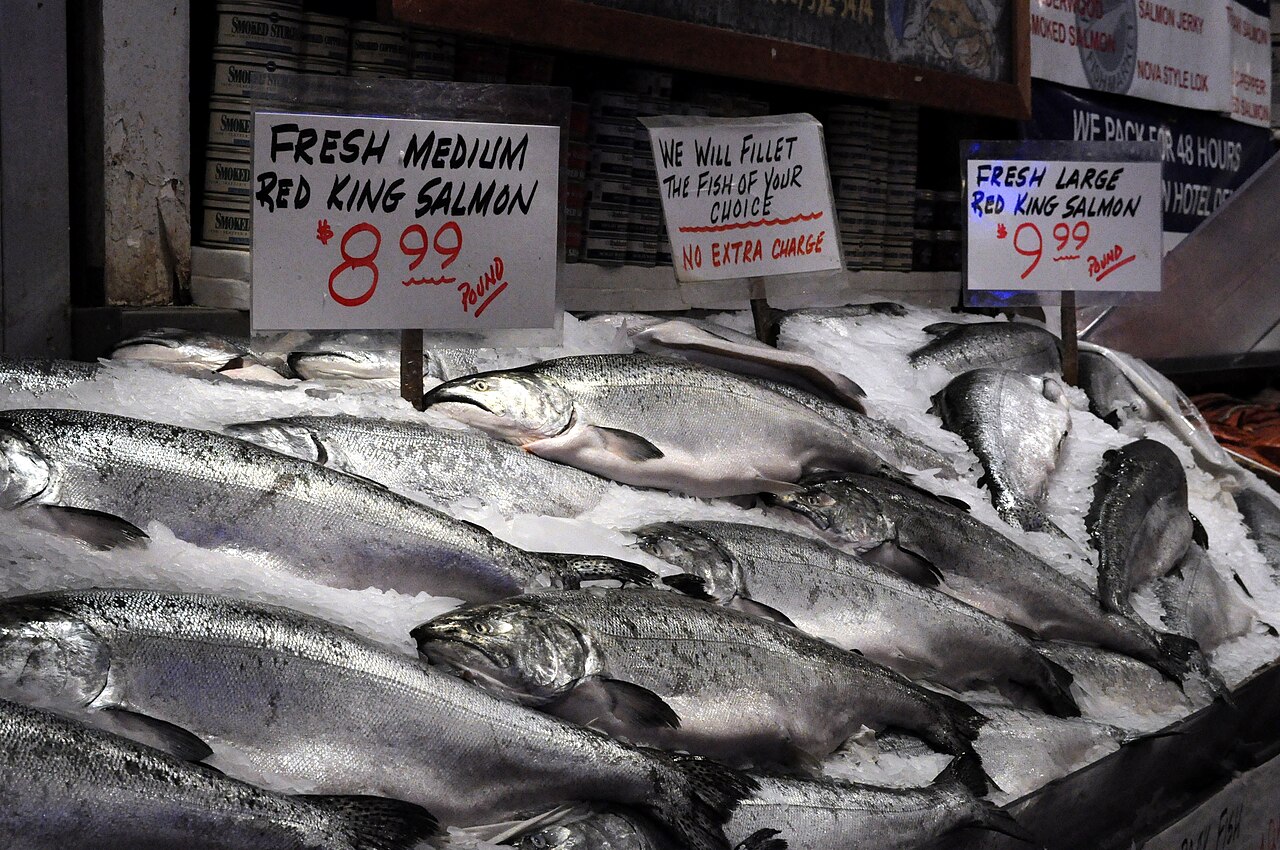
Pike Place Market is where the grazing happens. Three Girls Bakery has baked in the Corner Market since 1912, the first business in Seattle ever licensed to women. Piroshky Piroshky's Russian pastries and Pike Place Chowder both began here, as the Market's charter requires, and the fish stalls sell the same coho and king salmon the restaurants are plating across town.
Picture the place
At a Main Arcade fish stall the coho lie in rows on crushed ice, silver skin up, gills red, price cards speared into the ice beside them — the display is built fresh every morning and dismantled every night.
The easily missed detail
Seattle's coffee story does not start with Starbucks. The Market had a coffee bar in 1908, on the site where Lowell's restaurant now stands — 63 years before the first Starbucks opened a few doors away. This city was drinking espresso-counter coffee before it was a company town for it.
A practical rhythm
- Breakfast — A piroshky and coffee inside the Market before the arcade crowds build.
- Lunch — A chicken teriyaki plate at a counter shop in Lower Queen Anne, a short walk from where Toshi's began.
- Dinner — Salmon, ordered by river and run in season — Copper River fish in late May and June, Puget Sound and other Alaska fish after.
What could complicate the plan
Copper River king salmon is a matter of weeks, not a season, and the early fish carry opening prices to match the ceremony; once that run passes, menus move on without changing the dish's name. Geoduck, despite being dug from home waters, appears on surprisingly few Seattle menus, since most of the harvest leaves the state — finding it usually means a Chinese seafood house or a raw bar that lists it as a special.
What to do next
Time the trip with the when-to-visit answer in this group: the driest sightseeing weeks and the salmon calendar overlap in early summer, but not for long.
Sources
- HistoryLink — Kasahara's March 1976 opening, the $1.85 plate and the 1992 county count
- Alaska Department of Fish and Game — Copper River District opener announcements: season timing, 12-hour first period, sockeye and Chinook
- Washington Department of Fish and Wildlife — geoduck size, Puget Sound abundance and the record specimen
- Pike Place Market Preservation & Development Authority — Three Girls Bakery (1912), the Market's 1908 coffee bar and businesses founded in the Market