Siracusa / Italy When to visit
When should I visit Siracusa, Italy, for the best experience?
The short answer
Mid-May to early July, when Siracusa's Greek theater performs again — the INDA classical drama season stages Greek tragedy at sunset in the fifth-century-BC cavea, the sea is already swimmable, and the August furnace has not yet arrived.
The answer, with local context
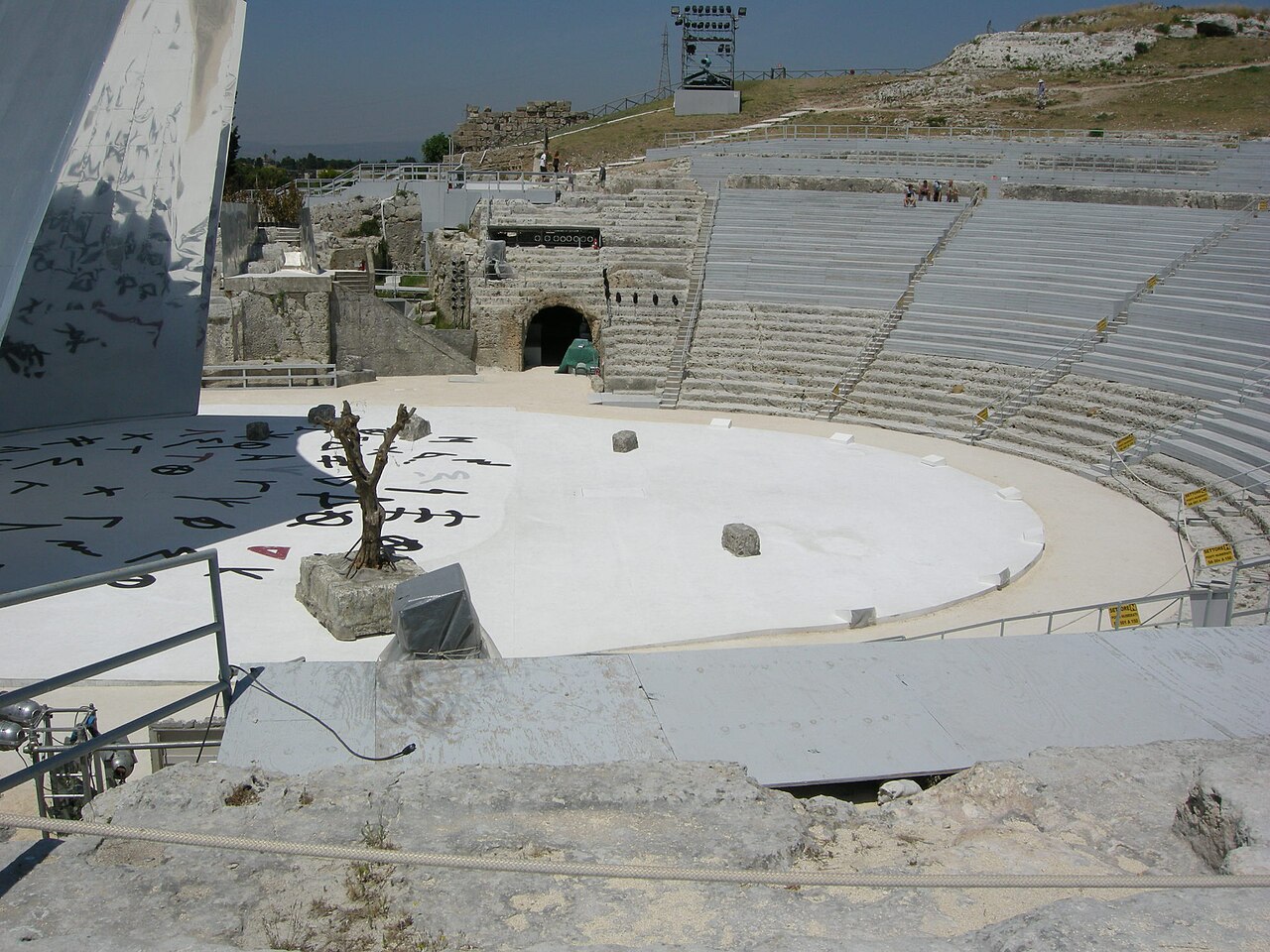
Siracusa owns something no other Sicilian city can sell: a working ancient theater. The Greek theater in the Neapolis — carved from the Temenites hill in the fifth century BC, among the largest theatres of the ancient world (its cavea holds some 15,000) — is not a ruin with a fence but a stage under contract: since 1914 the Fondazione INDA (Istituto Nazionale del Dramma Antico) has mounted a season of Greek tragedy and comedy here, running from mid-May into early July. Performances begin in daylight and end in darkness, the chorus in the orchestra, the Ionian on the horizon — Euripides and Sophocles in the city where Aeschylus himself staged work and died down the coast at Gela. Getting this into your trip is the whole point of Siracusa's calendar; the theater in performance is a different monument from the theater in the morning.
The season is meteorologically shrewd besides: May–June gives 75–86°F (24–30°C) — swimming weather at the Plemmirio and the Ortygia bathing platforms, granita weather at noon — without July–August's 90°F (32°C+) siege heat that turns the Neapolis quarries into ovens by midday. Ortygia, the island old town, is at its social peak: the market in full cry, the Lungomare passeggiata running late, restaurants' tables spilling onto the lanes — and the cruise-and-coach pressure of August still a rumour. Prices run high-season but not summit-season; the INDA tickets are the booking that matters.
Autumn (mid-September–October) is the thoughtful second: the sea at its warmest, the theater dark but the Parco Archeologico walkable at noon, the city handed back to its people — Siracusa in October is one of the Mediterranean's great civilised bargains. Spring proper (April) is gentler but misses the theater. Winter is mild (50s–60s), honest and cheap, with the caveat that the city's outdoor genius sleeps. So: anchor on the INDA weeks — a Friday and Saturday night pair if the programme allows (tragedies alternate with comedy across the run) — and let the archaeology, the island and the sea fill the long days between two sunsets.
Picture the place
The cavea at dusk in June: 15,000 people hushed as the chorus files into the orchestra, the stone still radiating the day's heat, and the first bat crossing the sky where the skene stood.
The easily missed detail
The INDA season's buried fact is its antiquity of practice, not just of place: the foundation has staged the classics here since 1914 (interrupted only by wars), making this the oldest continuously-renewing Greek-drama festival in the world — and the productions are new each year, with Italy's major directors and actors, in modern Italian translation with the text's violence intact. The second timing grace: the theater performances run on the light. Curtain times are set so the tragedy's catastrophe lands in true darkness — the programme is a sundial, and a cloudy evening genuinely changes the show.
A practical rhythm
- Two performances, not one — A tragedy and a comedy across consecutive evenings is the season's intended shape; book both when the INDA programme opens (winter)
- Archaeology at 9 a.m. — The Neapolis quarries and theater in the cool, then Ortygia's shade and the sea from noon
- Stay on the island — Ortygia is the evening city; sleep there and the theater nights end in a ten-minute lamplit walk
What could complicate the plan
The INDA programme sells the famous productions fast (the season's dates and casts are set months ahead; the theater's capacity is large but the best cavea blocks are finite), and Greek tragedy in Italian — no surtitles in the ancient manner — asks a plot briefing beforehand (read the play's summary at lunch; the choruses reward it). Heat still rules the days: the Latomie are shadeless by noon even in June. August is the anti-verdict: the theater silent, the park an oven, Ortygia at siege density. And note that Siracusa's calendar splits its gifts — Festa di Santa Lucia (December 13, the patron's feast, with the silver statue processed from the cathedral) is the winter city's great day, if your trip must be cold.
What to do next
Wait for the INDA programme, book a tragedy-comedy pair for a June weekend, and build the stay on Ortygia around the two sunsets.
Sources
- Fondazione INDA (Istituto Nazionale del Dramma Antico) — the classical drama season at the Greek theatre of Syracuse, staged since 1914, running mid-May to early July
- UNESCO World Heritage List — Syracuse and the Rocky Necropolis of Pantalica (inscribed 2005): the Neapolis monuments and Ortygia
- Parco Archeologico della Neapolis (Regione Siciliana) — the Greek theatre (fifth century BC, capacity some 15,000) and the Latomia del Paradiso
- Servizio Meteorologico dell'Aeronautica Militare — Siracusa's May–June and summer temperature pattern