South Africa country guide Food and drink
What local dishes should I try in South Africa, and where should I look for them?
The short answer
Bobotie, bunny chow, potjiekos, snoek and umngqusho cover the country's four main food traditions — and the one South African product with a protected name in Europe is rooibos, registered by the European Commission and published in the Official Journal of the European Union on 31 May 2021, the first African food to receive that status.
The answer, with local context
The rooibos registration is not a marketing line; it is a boundary. Only rooibos cultivated or wild-harvested in designated local municipalities of the Western and Northern Cape may be sold under the name, and the South African Rooibos Council puts the industry's agricultural workforce at around 8,000. The plant grows in the Cederberg and on the Bokkeveld plateaus north of Cape Town, inside the fynbos vegetation that UNESCO recognized when it inscribed the Cape Floral Region Protected Areas in 2004. Drinking rooibos in the Cederberg is drinking something that legally cannot come from anywhere else.
Cape Malay cooking is the tradition most visitors meet first, and bobotie is its signature — spiced minced meat under a baked savoury custard, usually with chutney and yellow rice, sweet and warm rather than hot. It belongs to Cape Town and the Winelands rather than to the country as a whole.
Durban's food is Indian South African and distinct again. Bunny chow is a hollowed-out quarter or half loaf filled with curry, eaten with the torn bread; it was created in Durban and is still at its most itself there. Inland, umngqusho — samp and beans, slow-cooked — is Xhosa home cooking from the Eastern Cape, and chakalaka is the spiced vegetable relish that accompanies pap at braais nationwide.
The coast divides by current. The cold Atlantic side yields snoek, usually braaied or smoked, and West Coast crayfish; the warmer Indian Ocean side gives line fish and prawns. Boerewors, biltong and droëwors are the preserved-meat tradition that crosses all of it, and potjiekos is the cast-iron pot stew cooked slowly over coals.
Wine is a regional matter, not a national one. The Winelands around Stellenbosch, Paarl and Franschhoek sit within an hour of Cape Town, and South Africa's Wine of Origin scheme ties label claims to demarcated districts and wards — which is why a bottle naming a ward tells you something a bottle naming the country does not.
Picture the place
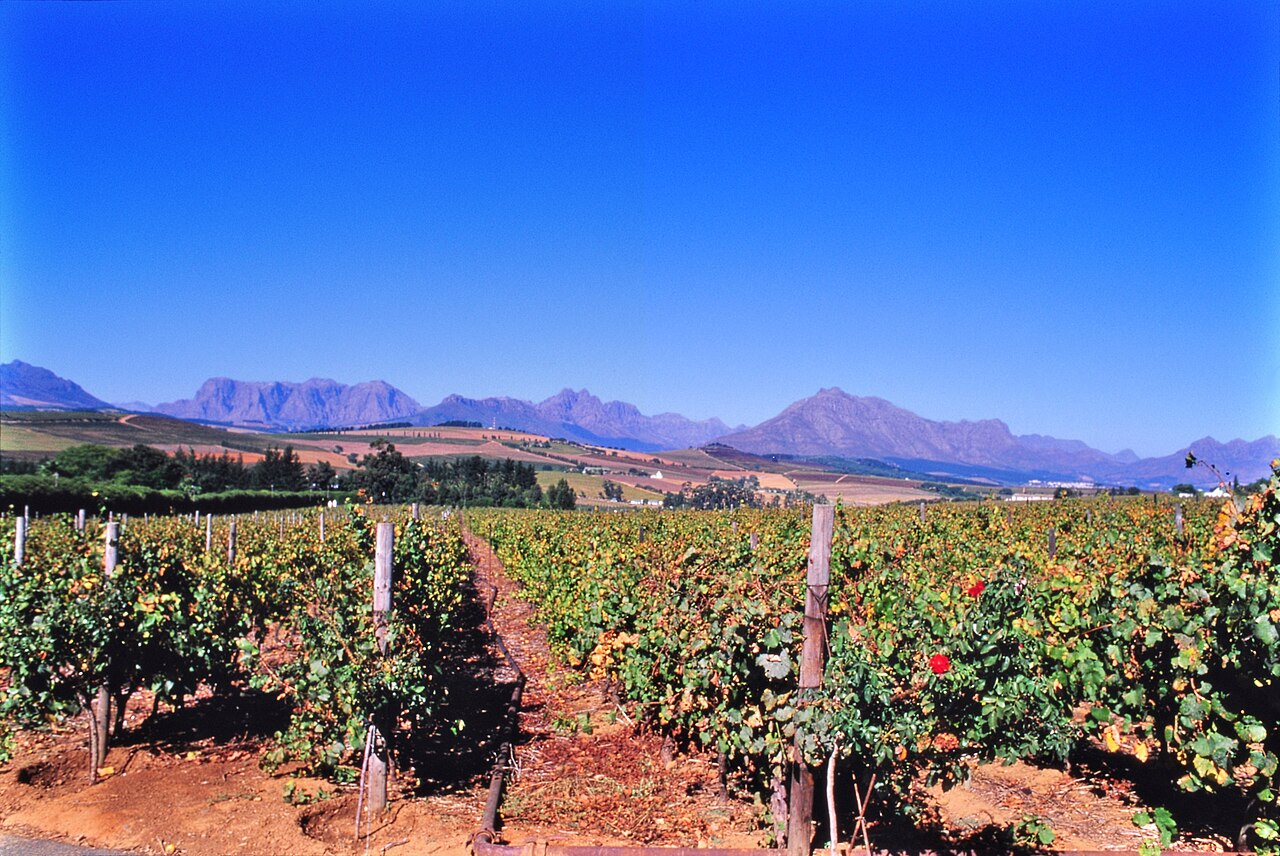
The Stellenbosch vineyards run in blocks up the lower slopes of granite mountains, with the rows set across the contour and the bare rock of the peaks closing the view behind them. Harvest falls in February and March, in the dry end of the Western Cape's winter-rainfall year.
The easily missed detail
Rooibos and honeybush are both fynbos plants and both grow in the same Cape mountain systems, but only rooibos carries the European protected name secured in 2021. The EU scheme distinguishes a Protected Designation of Origin, where every production, processing and preparation step must happen in the origin area, from a Protected Geographical Indication, where at least one of those stages must. That distinction is the reason a packet labelled rooibos cannot be blended from elsewhere and still carry the name.
A practical rhythm
- Cape Town and the Winelands — Bobotie, snoek and Wine of Origin bottles tied to a named district or ward.
- Durban — Bunny chow, from a quarter loaf rather than a plate, which is how the dish was built.
- Anywhere, any weekend — A braai: boerewors, pap and chakalaka, which is the country's actual national meal.
What could complicate the plan
Travelers arriving from a yellow fever risk country must show a valid yellow card vaccination certificate, with the vaccine received 10 days before arrival — a border matter, but one that stops a trip before any of this food is reached. An advisory issued on 27 May 2025 keeps the country at Level 2 on the US Department of State's scale, Exercise Increased Caution. Wine-tasting days need a designated driver or a tour, since the Winelands are an hour from Cape Town by road. Rooibos sold outside South Africa is frequently blended, so the protected name is worth checking on the packet rather than assuming.
What to do next
The places-and-experiences question in this group covers the Cape Floral Region and the inland landscapes where several of these dishes originate. For the months that suit a Winelands visit, see the when-to-visit question.
Sources
- South African Government News Agency — European Commission registration, publication in the Official Journal on 31 May 2021, first African food, designated municipalities, workforce figure
- UNESCO World Heritage Centre, States Parties statistics — Cape Floral Region Protected Areas inscribed in 2004
- US Department of State, South Africa country information — yellow fever vaccination certificate requirement
- US Department of State, South Africa travel advisory — advisory level and date
- South African Wine of Origin scheme — demarcation of districts and wards used in label claims