South Sudan country guide Food and drink
What local dishes should I try in South Sudan, and where should I look for them?
The short answer
Sorghum and maize, with Nile fish — FAO names sorghum and maize as South Sudan's main cereals, and the Sudd's Ramsar record credits the wetland with supporting endemic fish species.
The answer, with local context
The cereal year splits in 2, and that shapes what is on a table in any given month. FAO's South Sudan brief of 7 September 2026 records a first-season maize and sorghum harvest concluding in August 2026 in the southern areas, where the rainy season runs April to November, with second-season planting finishing that September for harvest in late 2026 or early 2027. In northern and central areas, on a May-to-October season, short-cycle sorghum and maize were being harvested to October 2026 and long-cycle sorghum was due from November 2026 through January 2027. A visitor in September is between harvests; one in January is at the end of a long-cycle sorghum harvest in the north.
Fish is the other pillar, and the geography behind it is extraordinary. The Sudd is designated as Ramsar Site 1622 at 5,700,000 ha, listed on 5 June 2006 along the lower Bahr el Jebel section of the White Nile. Its information sheet describes open water, submerged and floating vegetation and seasonally flooded woodland, and records that the site supports endemic fish species alongside endemic birds, mammals and plants. A wetland of 5.7 million hectares on the White Nile is a fishery as much as a wildlife site, and river fish is what the communities inside and around it eat.
The honest context is scarcity. FAO assessed about 7.8 million people — 55% of the total population — in IPC Phase 3 or worse during the April-to-July 2026 lean season, with severe acute food insecurity reaching about 65% of the population in Unity, Jonglei and Upper Nile states and about 73,000 people in IPC Phase 5, of whom 24,000 were in Upper Nile and 49,000 in Jonglei. First-season 2026 output was estimated below average.
Picture the place
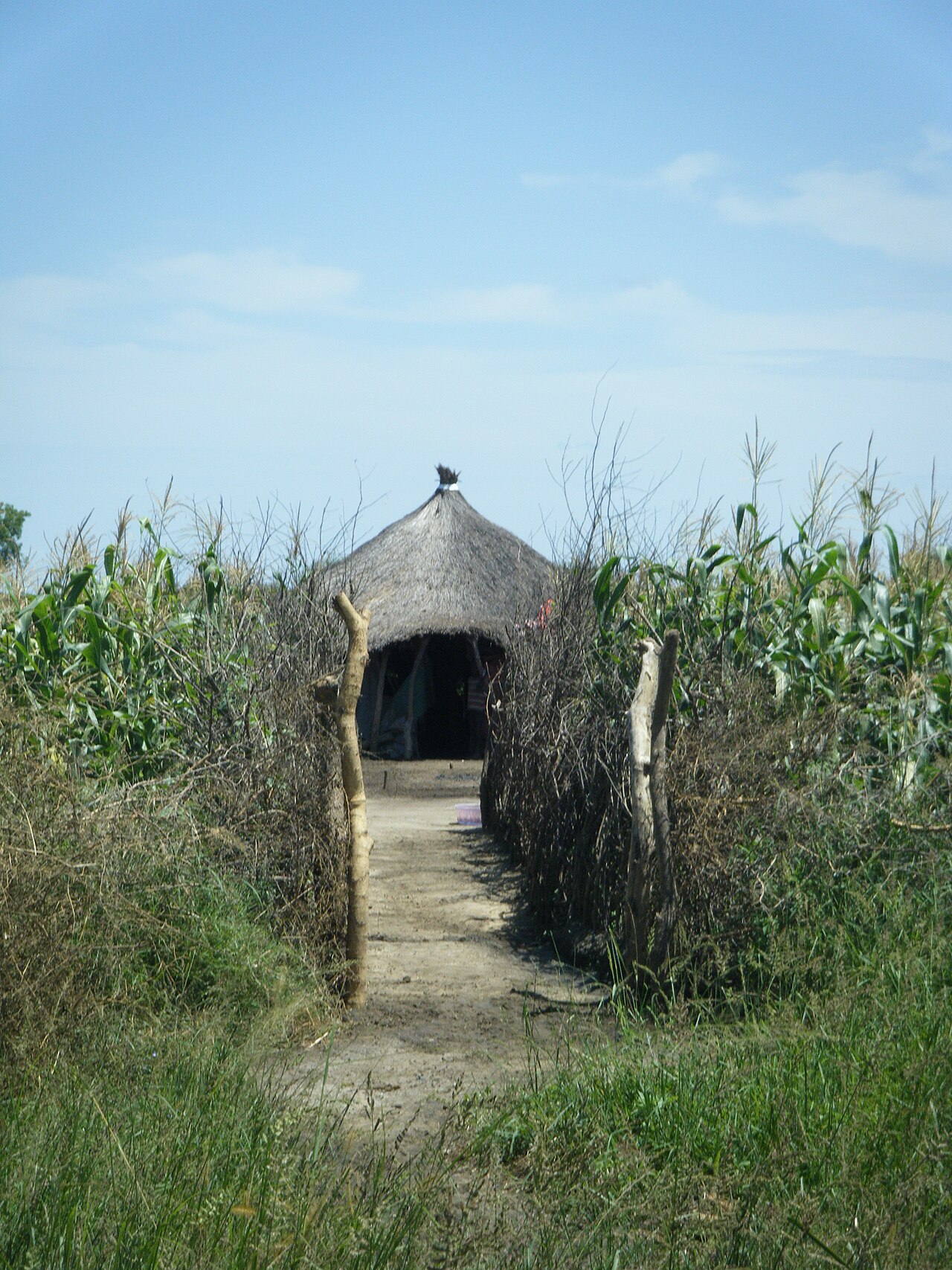
The 2 food systems sit side by side. Sorghum and maize come off rain-fed ground on a calendar that differs by a month or two between the south and the center and north. The fish come from a wetland so large that its designated area runs to 5,700,000 ha, where the water level rather than the clock sets when and where fishing happens.
The easily missed detail
Wildlife in South Sudan is a food question as much as a conservation one, and the June 2024 survey of the Boma Badingilo Jonglei Landscape made the link explicit: it warned that unmanaged exploitation could threaten both the migration patterns and the livelihoods that depend on them, and recorded commercial poaching at a scale African Parks said it had never previously witnessed. Against a migratory total of 5,896,373 animals across 4 species, the same survey found substantial declines in sedentary species including elephant, warthog, cheetah, hippo and buffalo compared with 1980s studies. Bushmeat in South Sudan is not a culinary curiosity; it is the pressure point.
A practical rhythm
- South, around Juba — The April-to-November season means a first harvest concluding in August.
- North and center — Short-cycle sorghum and maize come in through October, long-cycle sorghum from November.
- Sudd fringes — River fish, from a wetland designated at 5,700,000 ha, is the staple protein.
What could complicate the plan
The FCDO advises against all travel to South Sudan, and in a country where 55% of the population was assessed in crisis-or-worse food insecurity during the 2026 lean season, a traveler's consumption draws on a strained supply. FAO identified a risk of famine under plausible worst-case conditions in Luakpiny/Nasir and Ulang counties in Upper Nile and Nyirol and Akobo counties in Jonglei. On entry, a visa covers transit as well as arrival, proof of yellow fever vaccination must be carried, the passport needs an expiry date at least 6 months after arrival and at least 2 blank pages, and police registration becomes compulsory once a stay reaches the 5-day mark. The Ramsar record for the Sudd also notes the site's own pressures, which bear directly on its fishery.
What to do next
The South Sudan places answer gives the Sudd's full designation detail and the Boma-Badingilo survey figures. For the rainy-season months and the arrival sequence, see the South Sudan when-to-visit question.
Sources
- FAO GIEWS Country Brief, South Sudan, 7 September 2026 — sorghum and maize as the main cereals, the two regional season calendars and harvest months, and the IPC Phase 3, Phase 5 and famine-risk findings
- Ramsar Sites Information Service, Sudd, Site no. 1622 — the 5 June 2006 designation, 5,700,000 ha, the Bahr el Jebel location, habitat description and endemic fish
- African Parks with the Ministry of Wildlife Conservation and Tourism of South Sudan, Boma Badingilo Jonglei Landscape aerial survey, announced 25 June 2024 — the migratory total, the livelihood and poaching warnings and the sedentary-species decline
- UK Foreign, Commonwealth and Development Office, South Sudan travel advice and entry requirements — the against-all-travel advice, visa, yellow fever, passport and 5-day registration rules