Stockholm / Sweden Things to do
What are the most worthwhile things to do in Stockholm on a first visit?
The short answer
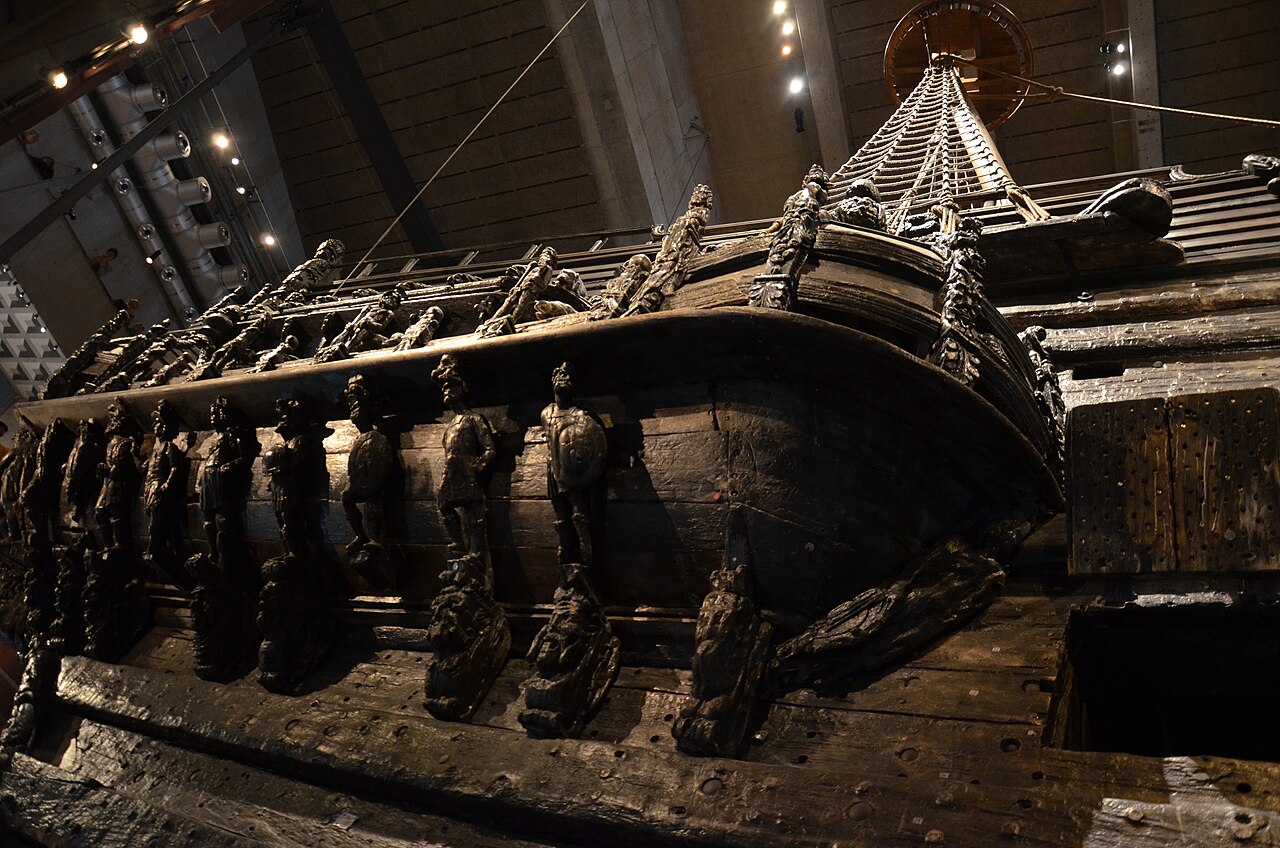
Walk Gamla Stan's medieval lanes from Stortorget to the Royal Palace, stand under the Vasa's carved stern on Djurgården, boat out to Drottningholm's theater, and ride the art-filled metro — Stockholm in four moves, with an archipelago ferry as the fifth.
The answer, with local context
Start where the city did, in 1252: Gamla Stan, the old town on its island, one of Europe's largest preserved medieval centres. Stortorget, its main square, holds the old stock exchange (now the Nobel Prize Museum and the Swedish Academy), the painted merchant houses, and a dark footnote — the Stockholm Bloodbath of November 1520, when Christian II of Denmark executed some 80 Swedish nobles and clergy here. The lanes reward slowness: Mårten Trotzigs gränd, the narrowest alley at 35 inches (90 cm) wide; the Iron Square's old bank; and the Royal Palace, one of the world's largest still-used royal palaces (over 600 rooms), whose apartments, treasury and Royal Armoury fill half a day, changing of the guard at midday. Storkyrkan, the city's cathedral (consecrated 1306), keeps St George and the Dragon (1489) and the Parhelion painting of 1535 — Stockholm's oldest cityscape — inside.
One bridge away, Djurgården holds the single greatest sight: the Vasa. The warship — 226 feet (69 m) of carved oak swagger — heeled and sank on her maiden voyage on August 10, 1628, twenty minutes out, and was raised in 1961 after 333 years in the harbor mud, 98% of her original fabric intact. The Vasa Museum built around her (Sweden's most-visited museum) is the first-visit non-negotiable: allow two hours, take the free guided tour, and climb the galleries to the stern's carved gods. Djurgården then fans out: Skansen (1891, the world's oldest open-air museum, ~150 historic buildings and the Nordic zoo), the Nordic Museum's cathedral of Swedish life, the ABBA Museum and Gröna Lund's harbor-side rides (an amusement park since 1883) — pick one after the ship, not all four.
The water writes the rest of the itinerary. Drottningholm, an hour by boat from the City Hall quay, is the royal family's residence and a UNESCO site (1991): a 17th-century palace, a Chinese Pavilion, and the Court Theatre of 1766 — among the world's best-preserved 18th-century theatres, its original stage machinery and painted flats still working on summer opera nights. The archipelago is the other direction: some 30,000 islands beginning at Fjäderholmarna (25 minutes, the taster) and widening to Vaxholm's fortress town and Sandhamn's sailing harbor for the full-day version; in June the Waxholm boats run them like buses. Back ashore, the metro is the underground gallery: over 90 of the Tunnelbana's 100 stations carry art (Solna Centrum's red cave, Kungsträdgården's garden of ruins) across a 68-mile (110 km) system — a normal travelcard turns it into the cheapest museum in Europe. Finish where the Nobel banquet does: the City Hall (1923), Ragnar Östberg's brick icon, its Golden Hall glittering with 18 million mosaic tiles and its tower (348 feet — 106 m) giving the first visit its farewell view.
Picture the place
The Vasa Museum's great hall: a ship the height of a seven-storey building breathing cold oak and tar, visitors hushed on the galleries like congregations in a wooden cathedral.
The easily missed detail
The Vasa's failure is the exhibit: the museum does not hide that the ship was a design disaster — too narrow, too top-heavy with guns, stability-tested in front of the admiral and launched anyway — and the face of the lesson stands in the harbor: she sank within sight of the palace, in water so cold and brackish that the shipworm could not eat her, which is the only reason she survives. The above-ground twin detail is on Gamla Stan's lanes: look for the cannon barrel set into the wall at the corner of Stora Nygatan — the "cannon corner" that protected the building from carriage wheels — the old town's traffic engineering preserved in iron.
A practical rhythm
- Vasa at opening or at dinner hour — Sweden's busiest museum empties at the day's edges; the guided tour is included, take it
- Djurgården by tram 7 or the ferry — The island stacks Skansen, the Nordic Museum and ABBA: choose two, save the rest for the return trip
- Drottningholm by boat, home by bus — The 1900s steamship out is half the pleasure; the bus home beats the return crowd
What could complicate the plan
Stockholm's geography taxes the unwary: the sights are strung across islands and the day's plan must respect the water (the palace, Djurgården and Drottningholm are three different directions from any bed). The Vasa's popularity is a capacity fact, not a warning label — midday June queues are real; the museum's timed summer system rewards the planner. Drottningholm's theater performs on limited summer dates and sells out (the palace tours run regardless), and the archipelago's charm inverts in bad weather — hold the island day flexible. The City Hall is a working building (civic ceremonies close halls without notice), and Sweden's cashless habit is total: cards and apps everywhere, cash nearly nowhere.
What to do next
Give Gamla Stan tomorrow morning, the Vasa at opening the day after, and the Drottningholm boat to the sunniest afternoon of the stay.
Sources
- Vasa Museum (Statens maritima och transporthistoriska museer) — the ship's sinking (August 10, 1628), the 1961 salvage, 98% original fabric and visitor records
- UNESCO World Heritage List — the Royal Domain of Drottningholm (1991), its palace and the 1766 Court Theatre
- The Royal Court of Sweden — the Royal Palace (600+ rooms), Storkyrkan and the Stockholm Bloodbath's square (1520)
- SL (Stockholm Public Transport) — the Tunnelbana art programme (90+ of 100 stations) and the archipelago boat network