Sudan country guide Places and experiences
What should a first-time traveler see in Sudan beyond the obvious highlights?
The short answer
Gebel Barkal and the Sites of the Napatan Region, inscribed on the World Heritage List in 2003 by decision 27COM 8C.31 — 1 of only 3 Sudanese properties on the list, and the one that is not Meroe.
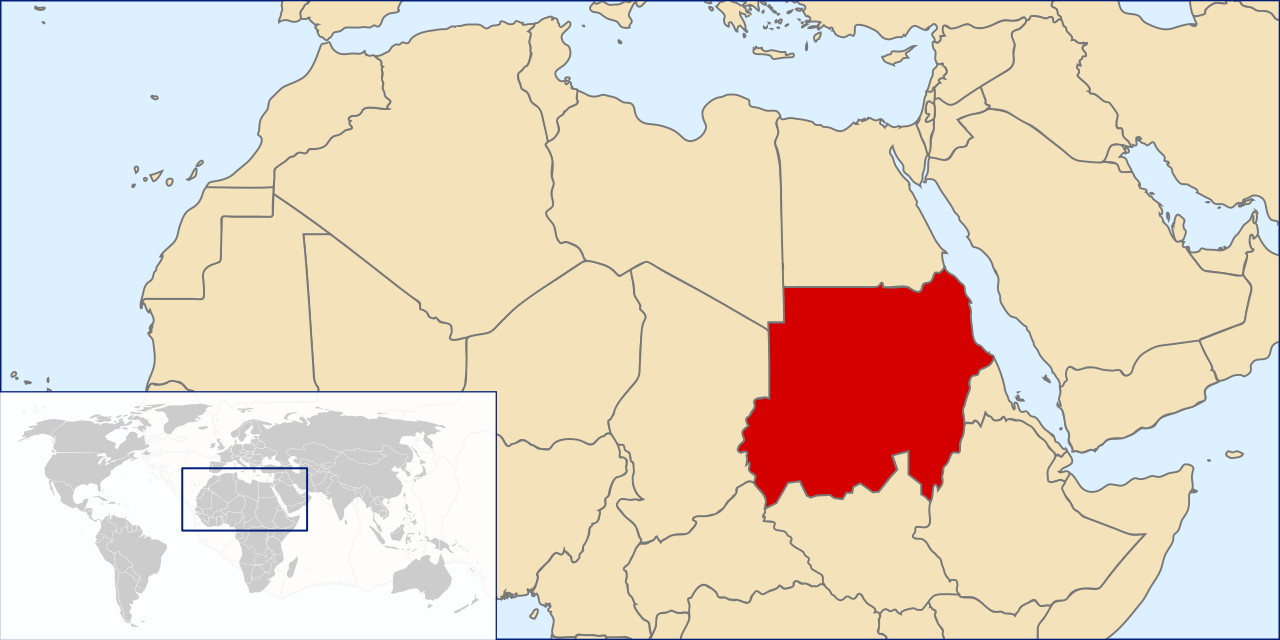
The answer, with local context
UNESCO's States Parties record for Sudan lists 3 inscribed properties: the Archaeological Sites of the Island of Meroe, Gebel Barkal and the Sites of the Napatan Region, and Sanganeb Marine National Park and Dungonab Bay – Mukkawar Island Marine National Park. Gebel Barkal's inscription year is 2003, confirmed on the property's own documents page by Committee decision 27COM 8C.31 from the 27th session. Later decisions on the property run up to 47COM 7B.179 in 2025, which is itself a measure of how much Committee attention Sudanese heritage has required.
The third property is the one almost nobody associates with Sudan at all: a marine site on the Red Sea. Its route onto the list was not straightforward. At its 39th session in 2015, by decision 39 COM 8B.3, the Committee referred the nomination back to Sudan for a revised submission, while taking note of its strong potential to meet natural criteria (vii), (viii), (ix) and (x). It now appears among Sudan's 3 inscribed properties on the States Parties record. Sudan has also been the subject of 16 state-of-conservation reports, which is where the substantive detail on all 3 properties lives.
Both cultural properties are archaeological landscapes along the Nile rather than single monuments. The Meroe inscription covers separate components including the Royal City, Naqa and Musawwarat es Sufra; and UNESCO's 2024 reporting records that mitigation funding of 25,000 euros from the French government was directed at both Sudanese cultural World Heritage properties together — an indication of how closely their management is coupled.
Picture the place
Sudan's heritage sits in 2 entirely different environments. The Napatan and Meroitic sites are desert riverside: sand, Nile terrace and standing stone, where UNESCO's own assessment names sand dunes and flooding as the principal decay agents. The third property is coral reef and bay on the Red Sea, nominated on natural criteria rather than cultural ones.
The easily missed detail
Access to the Red Sea property runs through a permit most visitors do not know exists. The FCDO states plainly that you will not be allowed to leave Red Sea State without a travel permit, that it must be applied for once in country and paid for, and that the requirements, costs and processes vary by destination state. Combine that with the 3-day Aliens Department registration requirement at the Ministry of Interior on arrival — 2 passport photographs and a fee, with a possible fine for registering late — and Sudan's internal movement rules, not its distances, are the real constraint on seeing more than one property.
A practical rhythm
- Nile corridor — Gebel Barkal, inscribed 2003, and the Meroe components sit along the same river axis.
- Red Sea coast — The marine property is the outlier, and reaching it means a permit to leave Red Sea State again.
- Khartoum — The administrative stop where registration and permits are actually processed.
What could complicate the plan
The conflict that began in April 2023 governs everything. The FCDO advises against all travel to parts of Sudan, reports widespread violent crime in Khartoum since the conflict started and a large increase in crime in other cities and areas, and states that humanitarian aid workers and journalists are viewed as legitimate targets. Khartoum and Port Sudan airports are operating limited numbers of international and domestic flights, have both been targeted by drone strikes, and might close temporarily again. Domestic logistics are thin: the US International Trade Administration's Sudan guide, last published 30 July 2022 and therefore predating the conflict, records 2 private domestic airlines reliably serving Khartoum, Port Sudan and other large cities, and notes that no American carrier flies directly to Sudan, with connections through Dubai, Istanbul, Doha, Addis Ababa and Cairo. Those arrangements cannot be assumed to hold. Internally, FAO reported about 8.6 million internally displaced people as of end-July 2026, with insecurity limiting access across Greater Darfur, Greater Kordofan and Blue Nile State.
What to do next
For Meroe's condition, its criteria and the funding behind its conservation, see the Sudan when-to-visit answer. The Sudan trip-planning question sets out visa processing times, the working week and currency practicalities.
Sources
- UNESCO World Heritage Centre, States Parties: Sudan — the 3 inscribed properties by name and the count of 16 state-of-conservation reports
- UNESCO World Heritage Centre, Gebel Barkal and the Sites of the Napatan Region, documents, and Decision 39 COM 8B.3 — the 2003 inscription and decision 27COM 8C.31, the later 47COM 7B.179 decision, and the 2015 referral of the marine nomination with the noted natural criteria
- UK Foreign, Commonwealth and Development Office, Sudan entry requirements and safety and security — the Red Sea State travel permit, the 3-day Aliens Department registration, crime reporting and airport status
- US International Trade Administration, Sudan Country Commercial Guide, Business Travel — domestic airlines, the absence of a direct American carrier and connecting hubs
- FAO GIEWS Country Brief, Sudan, 24 September 2026 — the 8.6 million displacement figure and the access-limited states