Tallinn / Estonia Things to do
What are the most worthwhile things to do in Tallinn on a first visit?
The short answer
Walk the two-storey medieval city — castle-hill Toompea above, Hanseatic Lower Town below — then walk out of the walls entirely: the Seaplane Harbour's submarine, Kalamaja's wooden streets, and Peter the Great's Kadriorg palace by the sea.
The answer, with local context
Tallinn's old town (UNESCO 1997) is the best-preserved medieval city in northern Europe because history kept forgetting it — and it reads in two storeys. The upper town, Toompea, is the castle hill of power: the Danish founded it in 1219 (the Dannebrog legend places the flag's fall from the sky here, in what is now the Danish King's Garden), and its layers stack from the Toompea Castle (the pink baroque parliament building of 1918–22 inside medieval walls, the 150-foot Pikk Hermann flying the Estonian flag since 1989's restoration logic) to the Alexander Nevsky Cathedral (1900, Moscow's onion-domed statement on the hill, political as much as sacred) and the Lutheran Dome Church (St Mary's, the city's oldest church, its walls a forest of carved coats of arms). The Kohtuotsa and Patkuli platforms give the postcards; the lanes in between give the atmosphere.
The Lower Town is the merchants' answer: a Hanseatic grid of guild halls and warehouses around the Town Hall Square, where the Town Hall itself (completed 1404) is the only surviving Gothic town hall in northern Europe, and the Raeapteek opposite has dispensed medicine since 1422 — among Europe's oldest pharmacies still trading (its little museum keeps the dried frogs and unicorn horn of the trade). Climb St Olaf's: the church whose spire, at some 520 feet (159 m) in the 1500s, was reckoned among the tallest structures on earth before lightning humbled it (today a still-vertical 407 feet — 124 m — of climb and view). Walk the wall while you're at it — some 1.2 miles (1.85 km) of the medieval enceinte survives with 26 towers, and the Kiek in de Kök artillery tower (1475) now opens the Bastion Passages, the 17th-century tunnels under the hill. The Niguliste museum-church keeps the treasure: a fragment of Bernt Notke's Danse Macabre (c. 1500), death dancing with pope and peasant alike.
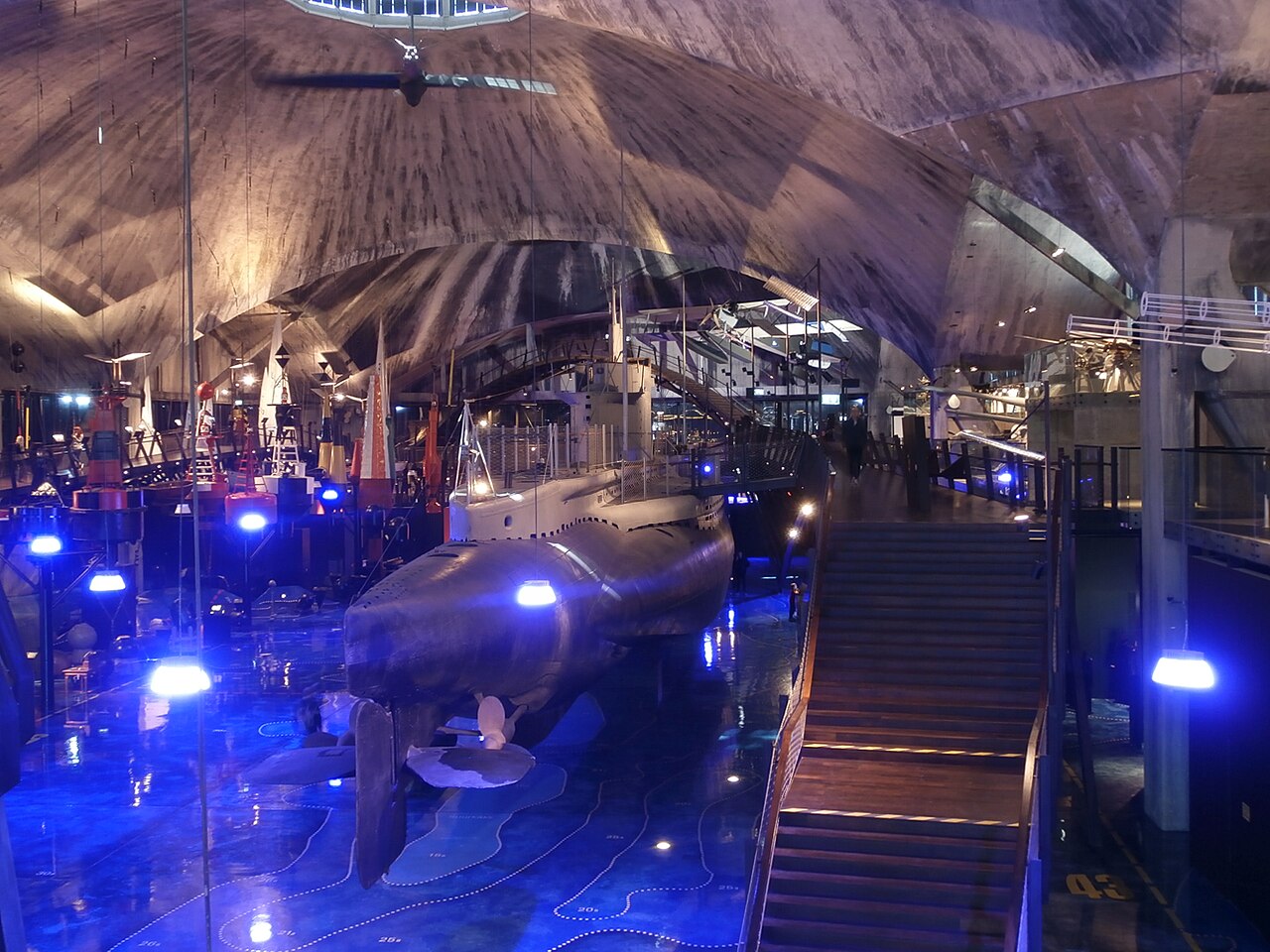
The first visit's second half is the modern city's, and Tallinn rewards it unusually. West along the shore: Kalamaja, the fishermen's and workers' district of painted wooden houses, now the creative quarter (Telliskivi Creative City in the old railway works; Fotografiska's Tallinn outpost), leading to the Seaplane Harbour — the Estonian Maritime Museum inside the 1916–17 seaplane hangars, among the world's first great thin-shell concrete domes, where the submarine Lembit (1936, British-built for the Estonian navy) and the icebreaker Suur Tõll (1914) are the exhibits and the harbor outside holds the rest of the fleet. East along the bay: Kadriorg, Peter the Great's seaside gift to his wife Catherine (palace begun 1718, Petrine baroque by Michetti), its park holding the KUMU — Estonia's national art museum (2006), an award-winning wedge of limestone and glass — and beyond it Pirita, where the 1980 Moscow Olympics sailed their regatta from Tallinn and the ruins of St Bridget's convent (destroyed 1577) brood over the river. One city, four centuries of capitals, all of it walkable or a short tram ride apart.
Picture the place
The Town Hall Square at 9 a.m.: the Gothic hall's arcade in first light, the pharmacy's sign creaking, and a café waiter setting out chairs where Hanseatic councils once staged their punishments.
The easily missed detail
St Olaf's spire holds the tallest claim with a warning inside it: the 159-meter figure was real enough to make the church a Baltic landmark for sailors — and a lightning magnet; the spire burned from strikes repeatedly (1625's fire cut it down), a parable the church tells about itself with becoming honesty. The companion detail is down in the pharmacy: the Raeapteek's 1422 date makes it older than the printing press's arrival in Estonia, and it has traded through Danish, Swedish, Russian, German and Estonian rule on the same square — ask at the counter and they'll show you the oldest tenant records in the little museum room beyond the till.
A practical rhythm
- Upper town down, not up — Start at Toompea's viewpoints, descend the Long Leg (Pikk jalg) gate-tower lane into the Lower Town's lunch
- Wall and tunnels together — Kiek in de Kök plus the Bastion Passages are one ticket and one story; book the tunnels ahead
- One shore per half-day — Kalamaja/Seaplane Harbour west, Kadriorg/KUMU east; the tram stitch between is the rest
What could complicate the plan
Tallinn's old town is a walking city with a vertical problem. The St Olaf's climb is 124 m of narrow spiral with no lift, the Long Leg lane into the Lower Town is a cobbled gradient, and the 1.85 km of surviving wall with its 26 towers is stairs rather than ramps — anyone with a knee or a stroller should plan the viewing platforms and the tram instead. The underground half needs a diary, because the 17th-century bastion tunnels are entered on booked slots that go in the season, which is why they are reserved rather than wandered into. And the latitude decides the rest: this is a northern capital whose December day is short, so a winter first visit belongs to the museums, the tunnels and the painted church, and the shore districts belong to the long light of summer.
What to do next
Walk Toompea at tomorrow's opening quiet, take the Bastion Passages before lunch, and save the Seaplane Harbour's submarine for the grey-sky hour.
Sources
- UNESCO World Heritage List — Historic Centre (Old Town) of Tallinn (1997): Toompea and the Hanseatic Lower Town
- Tallinn City Museum — the Town Hall (1404), the Raeapteek (since 1422) and Kiek in de Kök with the Bastion Passages
- Estonian Maritime Museum — the Seaplane Harbour hangars (1916–17), the submarine Lembit (1936) and the icebreaker Suur Tõll (1914)
- Art Museum of Estonia — Kadriorg Palace (begun 1718) and KUMU (2006) in Kadriorg Park
- St Olaf's Church, Tallinn — the spire's historic height (c. 159 m) and its lightning history