Tallinn / Estonia Food and drink
Where should I eat in Tallinn, and which local food or drink is worth trying?
The short answer
A sprat sandwich and dark rye in the old town, the market-hall lunch at Balti Jaama Turg, Põhjala's craft beer in the Noblessner port — and marzipan at Maiasmokk, the café that has served it since 1864, with a shot of Vana Tallinn to close.
The answer, with local context
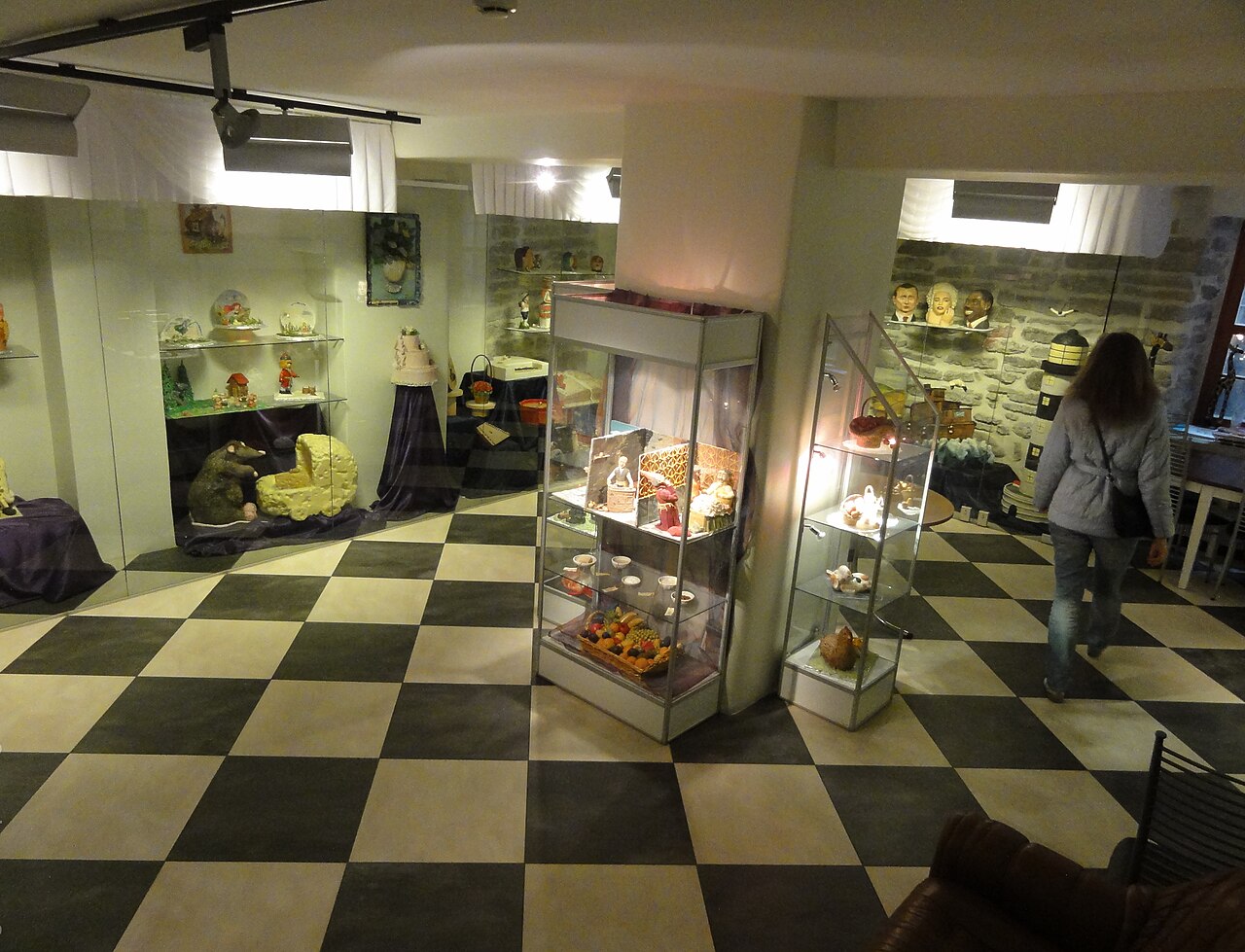
Tallinn's signature bite is small, silver and unapologetic: the kiluvõileib — spiced sprats on dark rye bread with a slice of egg — the sandwich the city has eaten at celebrations for a century (Tallinn's spiced sprats, kilu, were canned here from the 19th century and shipped across an empire). It orders the whole table: Estonia's dark rye leib under everything, sült (jellied meat) and herring in their northern marinades, kohupiim curd in the salads and pies, kama — the roasted grain-flour mix — folded into desserts with berries, and the winter canon (blood sausage, verivorst, with sauerkraut and lingonberry) appearing at Christmas tables. Where to eat it in its native register: the old town's cellar restaurants are the tourist obvious (Olde Hansa, by the Town Hall Square, does the medieval banquet with theater since the 1990s), but the city's own tables tell the better story — Rataskaevu 16 (the beloved old-town bistro whose name is its address), Lee (modern Estonian in a guild-hall garden), and the grand old cafés: Maiasmokk, trading on Pikk street since 1864, where the marzipan (painted figures in the window; Tallinn and Lübeck argue over its invention, and Tallinn has the gallery-museum to argue back) comes with coffee in a room Josephine Baker-era Europe would recognise.
The districts feed the rest of the day. Balti Jaama Turg, the Baltic Station Market (rebuilt 2017 into the city's food engine), compresses Estonia onto three floors — street food above, the fish and meat halls below, the sprats and rye to take home. Kalamaja's Telliskivi quarter (F-hoone, the railway-shed restaurant that started the district's revival, still the default local lunch) and the Noblessner port carry the evening: Põhjala, the craft brewery founded 2011 that put Estonian beer on the world map (its Cellar Series stouts are traded internationally), runs its taproom in the old shipyard; and the city's top tables — the two-starred 180° in Noblessner, the one-starred NOA Chef's Hall over the water at Pirita — cook the New Nordic dialect of the same larder. Fine dining books weeks out; the market hall never asks.
The glass is liqueur-sweet and proud: Vana Tallinn, the rum-based, citrus-and-spice liqueur the Liviko distillery has made since 1960 (its recipe a state-secret-turned-brand), is the national digestif — drunk neat with coffee, over ice cream, or in the coffee itself — while the beer drinker goes Põhjala and the abstainer goes for the kvass and the berry juices (sea-buckthorn, blackcurrant) that fill the market stalls. Take home: a marzipan figure from Maiasmokk's gallery, a tin of Tallinn sprats, and a bottle of Vana Tallinn from the distillery shop — three centuries of the city's sugar, salt and spice in one bag.
Picture the place
Maiasmokk at 4 p.m.: marble tables, a painted marzipan pig in the window, coffee in thin cups, and the Pikk street crowds pressing past the oldest café room in Estonia.
The easily missed detail
The marzipan has a receipt: Tallinn's claim on its invention runs through the Raeapteek's records — marzipan was sold at the Town Hall Pharmacy as a medicine (against heartache, in the period's pharmacology) — and the city's other sweet inheritance is stranger: kama, the prehistoric grain mix, is the flavour Estonians abroad miss most, sold at the market in paper bags and increasingly folded into craft chocolate by the new chocolatiers on Pikk (Anneli Viik's workshop, steps from Maiasmokk). Order the kama dessert wherever Lee or the market kitchens offer it: it is the taste the fancy plates are all secretly quoting.
A practical rhythm
- Sprats at breakfast, once — The kiluvõileib at a café or the market hall: rye, egg, the fish in its spice — the city in one open sandwich
- Market lunch, district dinner — Balti Jaama Turg at noon; Telliskivi or Noblessner after 7, when the locals arrive
- Book the stars, walk the rest — 180° and NOA Chef's Hall reserve out; everything else in this answer queues politely at worst
What could complicate the plan
The market this answer leans on has fixed hours, and they are not late ones: the station market trades 09:00 to 19:00 Monday to Saturday and closes at 17:00 on Sunday, so it is a lunch and shopping stop rather than a dinner plan, and the sprats and rye to carry home have to be bought in daylight. The starred rooms are the opposite problem, booking weeks out in a city whose fine-dining scene is genuinely small, so the 2-star and 1-star tables are decided before arrival or not at all. And the old town's cellar restaurants are where theater and cooking diverge most: the medieval-banquet format is entertaining and is not how Estonia eats, so it belongs on a list of shows rather than a list of meals.
What to do next
Take the marzipan coffee at Maiasmokk tomorrow, the market-hall lunch at the station, and a Põhjala tasting flight in Noblessner to finish the day.
Sources
- Maiasmokk / Kalev (AS Kalev) — Estonia's oldest café (1864) and the Tallinn marzipan tradition and gallery
- Liviko — Vana Tallinn liqueur (made since 1960) and the distillery's Tallinn story
- Balti Jaama Turg — the Baltic Station Market (rebuilt 2017) and its food halls
- Põhjala Brewing — the craft brewery (founded 2011) and its Noblessner taproom
- Michelin Guide Estonia — 180° (two stars, Noblessner) and NOA Chef's Hall (one star, Pirita)
- Visit Estonia (Estonian national tourism board) — (retrieved November 5, 2026)