Tonga country guide Food and drink
What local dishes should I try in Tonga, and where should I look for them?
The short answer
Lu pulu (corned beef and taro leaves in coconut cream), 'ota ika (lime-and-coconut raw fish), the 'umu's full earth-oven register and a Sunday feast by invitation: Tongan food is Polynesian abundance engineered for celebration, and its capital is the family 'umu pit, not a restaurant.
The answer, with local context
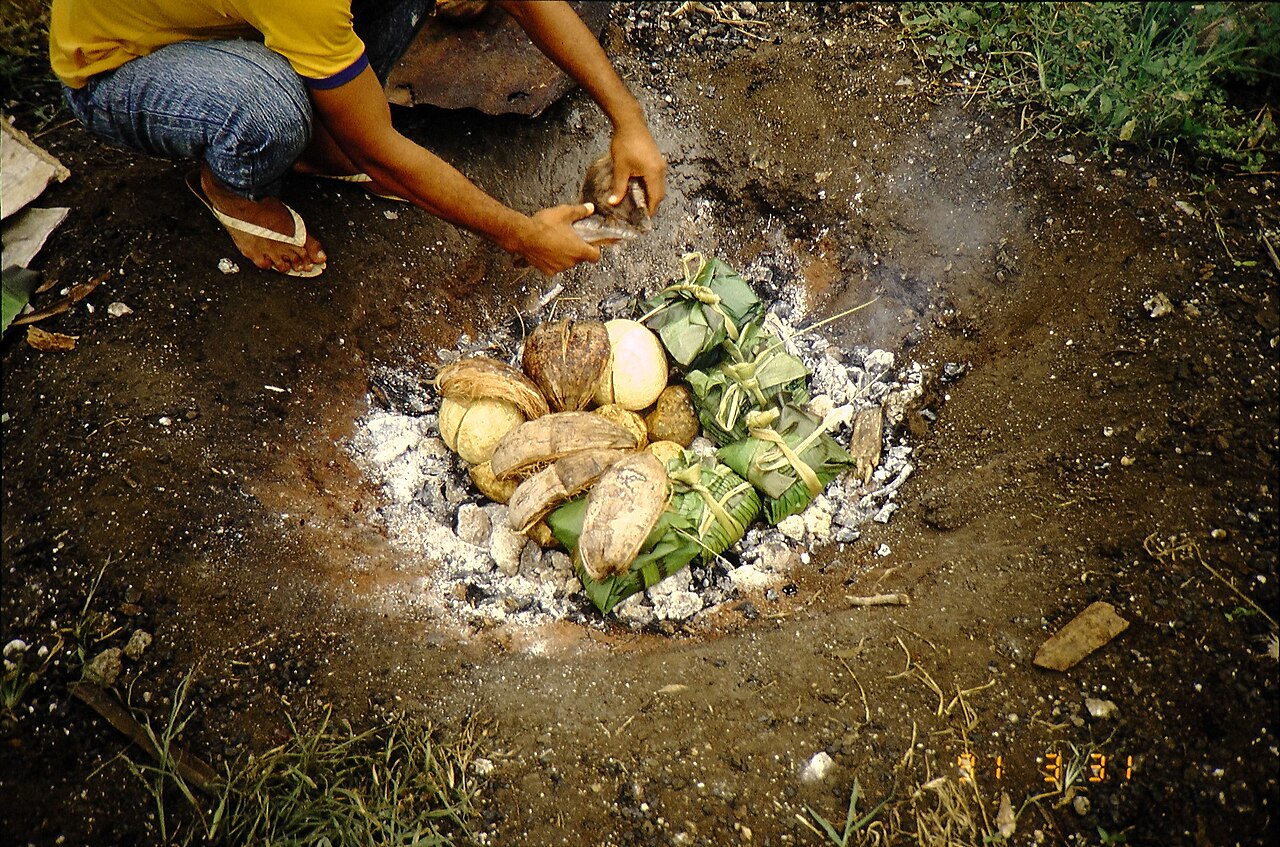
The Tongan table is built from the 'umu — the earth oven where stones, leaves and time turn the garden's output into a feast: whole pig (puaka toho, the prestige dish), taro, yam (ufi), sweet potato, breadfruit and cassava, all emerging leaf-wrapped and smoke-kissed. Its signature preparation is lu: taro leaves wrapped around a filling and baked in coconut cream — lu pulu (with corned beef, the beloved imported staple elevated into the national comfort dish), lu sipi (lamb), lu moa (chicken) and lu ika (fish) — rich, green and coconut-deep. Beside it sits 'ota ika, raw fish cured in lime and dressed with coconut cream, chilli and onion (Tonga's ceviche, and the plate that tests a kitchen), and the ocean's wider register: grilled reef fish and lobster in season, octopus in coconut (feke), horse (lahi — yes, horse is eaten and prized, sold at roadside stalls and markets), and faikakai (dumplings in caramelised coconut syrup) for the sweet close. Kava anchors the social end: Tonga's kava ceremony (the royal kava ceremony, taumafa kava, is the kingdom's highest ritual; the everyday faikava circle is its democratic form), where the drink — earthy, tongue-numbing — is served from the tanoa bowl in strict order of rank, and an invitation to sit is an honour to accept gracefully. Fruit is the daily abundance: mangoes in summer, watermelon and pineapple in Vava'u, and 'otai — the watermelon-coconut-pineapple drink — as the islands' refreshment.
Where to eat works on 3 levels. The market level: Talamahu Market in Nuku'alofa (food stalls with lu plates, 'ota ika, manioke (cassava) preparations, roasted peanuts and seasonal fruit), the roadside stalls along the airport road selling cooked roots and horse, and Neiafu's Utakalongalu Market in Vava'u (smaller, fisher-direct, best early). The restaurant level is honest and short: in Nuku'alofa, the cafés along Taufa'ahau Road and the waterfront (the billfish-and-re sort of places serving 'ota ika and grilled fish to the business crowd), Friends Café as the long-running expatriate anchor, and resort kitchens (Fafa Island offshore for a day-trip lunch; in Vava'u the Neiafu waterfront's Mango Café and the yachtie circuit). But the real cuisine is the third level: the feast — a church or village celebration, a wedding, a Sunday to'ona'i-style table (Tonga's Sunday feast after service, cooked Saturday because Sunday cooking is forbidden) — where the 'umu opens to 20 dishes and your job is appetite and gratitude. Homestays and guesthouses are the traveler's bridge to that level: tell your host you would love to help with the 'umu, and you will see the cuisine whole. Food is superb value throughout; imported variety is the limit, and Sunday shuts every kitchen but the feast's.
Picture the place
An 'umu opening on a Saturday afternoon: leaves pulled back in a rush of steam, the lu parcels glossy with coconut cream, a whole pig crackling at the center, and half the village already holding plates.
The easily missed detail
Corned beef is not a failure of tradition — it is the tradition's modern chapter: tinned corned beef (kapa pulu) arrived as trade goods, became feast currency and gift wealth, and lu pulu is now the dish Tongans abroad cook to taste home. Judging it as inauthentic misses the point of a living cuisine, and lu pulu done well (young leaves, long baking, good coconut) is a masterclass. The second detail is the coconut's labour: the cream in every lu is hand-grated and squeezed the same morning in feast kitchens, the grated flesh worked through coconut-fibre strainers — which is why a feast for 200 is a work party of 30, and why helping grate is the guest's best sentence of Tongan.
A practical rhythm
- Market lunch in the capital — Talamahu food stalls: lu pulu, 'ota ika and faikakai in 1 sitting
- Saturday 'umu, not Sunday — Feast food is cooked Saturday for Sunday's table; homestay hosts are the way in
- 'Otai and mango season — December–February fruit glut is worth timing a summer trip around
What could complicate the plan
Sunday is the feast-and-famine day: after church, families eat hugely at home while every commercial kitchen closes — the uninvited traveler's Sunday is hotel breakfast and yesterday's market fruit, planned in advance. The health ledger is national news here: Tonga carries among the world's highest obesity and type-2 diabetes rates (a public-health emergency the government taxes and campaigns against, including import duties aimed at fatty meats) — the feast register (mutton flaps, corned beef, sweet drinks) is celebration food, and the daily Tongan home table is lighter (fish, roots, greens) than the visitor's feast sample suggests; eat like a guest at feasts and like a resident between them. Horse and dog appear in the market economy (dog rarely and regionally; horse openly) — know your stall before ordering adventurously, and 'ota ika's raw-fish hygiene is market-standard tropical (fresh morning fish, eaten at lunch, not saved). Water is safe in Nuku'alofa; outer islands use rain tanks (boil-or-bottle in dry months when tanks run low). Kava etiquette: accept the cup with both hands, drink as served, and never treat the circle as a bar — the faikava is a parliament with refreshments.
What to do next
Lunch at Talamahu on day 1 (lu pulu and 'ota ika), and ask your guesthouse host on arrival about helping with a Saturday 'umu.
Sources
- Tongan culinary record — lu preparations (pulu, sipi, moa, ika); 'ota ika; the 'umu earth oven; faikakai; 'otai; the taumafa kava and faikava
- Tonga Tourism Authority — Talamahu Market (Nuku'alofa) and Utakalongalu Market (Neiafu); Sunday feast customs and closure law
- Tonga Ministry of Health / WHO — obesity and diabetes as a national health priority; food import measures
- Market record — horse meat stalls; kapa pulu (corned beef) as feast and gift staple