Trinidad and Tobago country guide When to visit
When is the best time to visit Trinidad and Tobago for Asa Wright area?
The short answer
Mid-January through May — the Trinidad and Tobago Meteorological Service defines the dry season as January to May, and Piarco's driest month is March at 1.60 inches (40.6 mm) against August's 10.05 inches (255.3 mm).
The answer, with local context
The national met service describes a dry season running January to May with moderate to strong low-level winds, warm days and cool nights and mostly showery rainfall, and a wet season from June to December with low wind speeds, hot and humid days and nights, and a marked increase in rain. The hurricane season sits inside the wet half, June to November, peaking August to October. Its 1991–2020 normals for Piarco in Trinidad put September's average daily maximum at 91.4°F (33.0°C) and April's at 91.0°F (32.8°C), with the highest average night minimum shared by May and June at 75.7°F (24.3°C). Nationally the service publishes an annual sunshine average of 2,766 hours.
Those figures matter on a forested hillside. The Asa Wright Nature Centre records that its Spring Hill Estate sits at about 350 m — 1,150 feet — in the Arima Valley, roughly at the center of Trinidad's Northern Range. Elevation takes a little of the edge off a 91°F afternoon, but a montane valley in the June-to-December wet season is a different proposition from the same valley in March.
The center's own history explains why the Arima Valley became a birding destination rather than remaining an estate. It was established in 1967 when funds were raised to purchase Spring Hill, and it operates as a land conservation trust. In 1995 the government granted it a 99-year lease over lands within the Northern Range Forest Reserve, and in 1975 the New York Zoological Society handed over the Simla Field Research Center — the former Verdant Vale Estate that William Beebe had bought in 1949 and renamed.
Picture the place
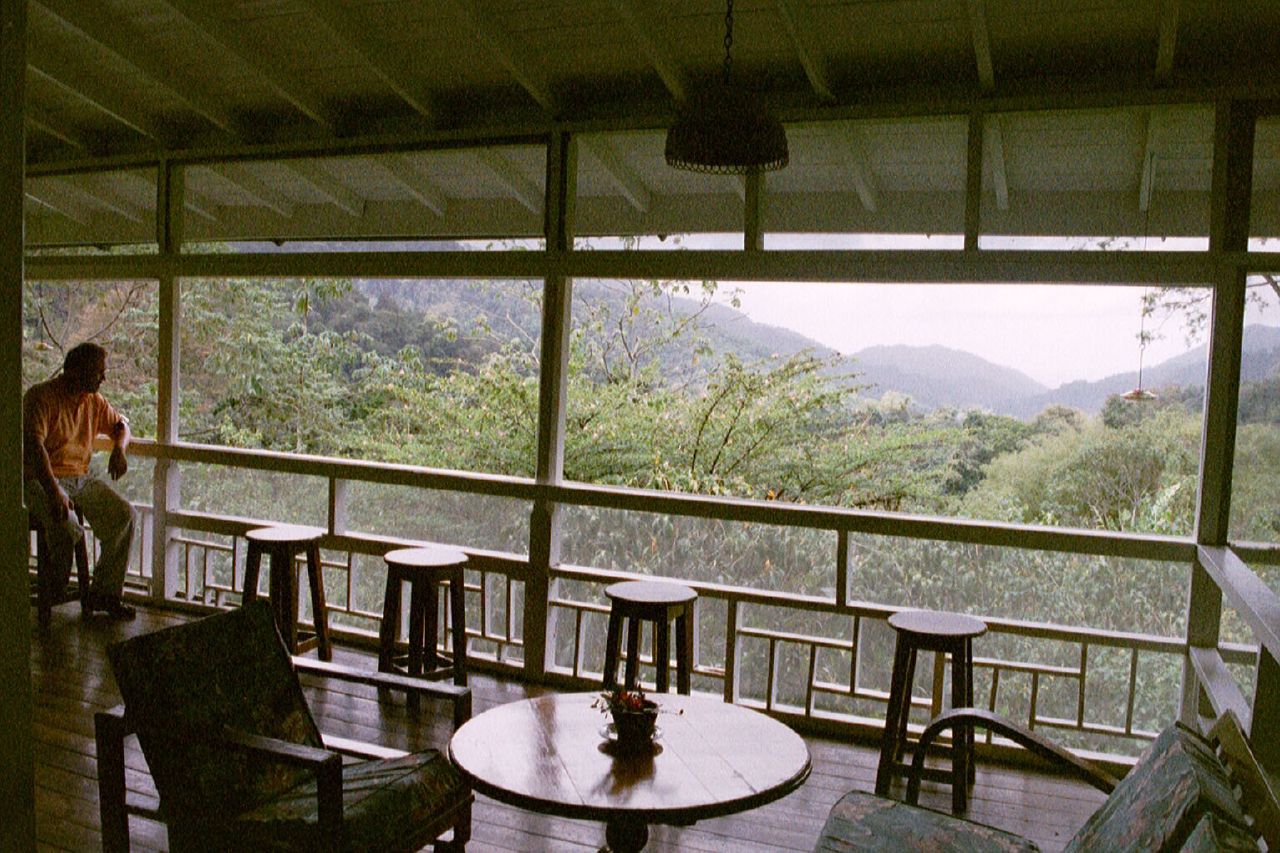
At 1,150 feet the Arima Valley holds its own weather: the Northern Range rises on both sides, cloud sits in the valley on wet-season mornings, and the dry-season trade winds the met service describes as moderate to strong arrive over the ridge rather than along the valley floor. In March, the driest month on the Piarco record at 1.60 inches, forest trails are walkable rather than greasy.
The easily missed detail
The property holds a breeding colony of the nocturnal oilbird, Steatornis caripensis, in Dunston Cave. That is the single thing about the Asa Wright area that is true of almost nowhere else reachable on an ordinary visit — a cave-roosting, echolocating, fruit-eating bird whose colonies are usually deep in inaccessible karst. It is also why access to parts of the property is managed rather than open.
A practical rhythm
- Dawn — The dry season's cool nights, as the met service describes them, make early mornings the comfortable part of a 1,150-foot valley day.
- Midday — September and April both average above 91°F (33.0°C) at Piarco on the 1991–2020 normals; the hottest hours are for shade and the veranda, not the trails.
- Dusk — The oilbird colony in Dunston Cave is nocturnal; the bird's day begins when yours is ending.
What could complicate the plan
The State Department's country information page carries the wording "Reconsider travel to Trinidad and Tobago due to crime", notes a heightened risk of terrorism, and flags increased risk in some areas, with a separate note advising increased caution in rural areas because of health risks — the Northern Range is rural. The same page carries the rule that trips most often: carrying ammunition is illegal on arrival, departure or transit, and even a single bullet or spent casing, including one used in jewelry or a keyring, has led to detention and fines. On the mountain itself, access to the oilbird cave is managed by the trust rather than open to arriving visitors.
What to do next
The Trinidad and Tobago places answer covers the Main Ridge Forest Reserve and Caroni Swamp; the trip-planning answer has the entry rules, the Tobago ferry and the two islands' different rainfall peaks.
Sources
- Trinidad and Tobago Meteorological Service, Climate of Trinidad and Tobago — dry and wet season months, seasonal wind and temperature character, hurricane season and peak months
- Trinidad and Tobago Meteorological Service, Averages and Extremes — 1991–2020 normals period, Piarco September and April average maxima, May and June average minima, March and August rainfall, annual sunshine
- Asa Wright Nature Centre, History — Spring Hill elevation, Arima Valley and Northern Range location, 1967 establishment, land conservation trust status, 99-year lease in 1995, oilbird colony in Dunston Cave, Simla transfer in 1975, Beebe's 1949 purchase
- US Department of State, Trinidad and Tobago country information — advisory wording, terrorism and rural health notes, ammunition rule