Tunisia country guide Trip planning
How can I plan a memorable first trip to Tunisia without rushing?
The short answer
Build it around 2 or 3 bases rather than a loop, and budget for the accommodation levy charged at check-in — 8 Tunisian dinars per person per night at 3-star hotels and 12 at 4- and 5-star, capped at 10 nights and not refundable if you leave early.
The answer, with local context
Entry is comparatively light, and the passport conditions are the part worth checking early. The FCDO's requirement is that the document stay valid for the whole of the stay rather than for a set number of months beyond it, and entry is refused on an invalid travel document or one reported lost or stolen. It also warns that a damaged or torn passport can cause problems on the way out, not only on the way in — which is the sort of thing worth resolving weeks before departure rather than at the airport.
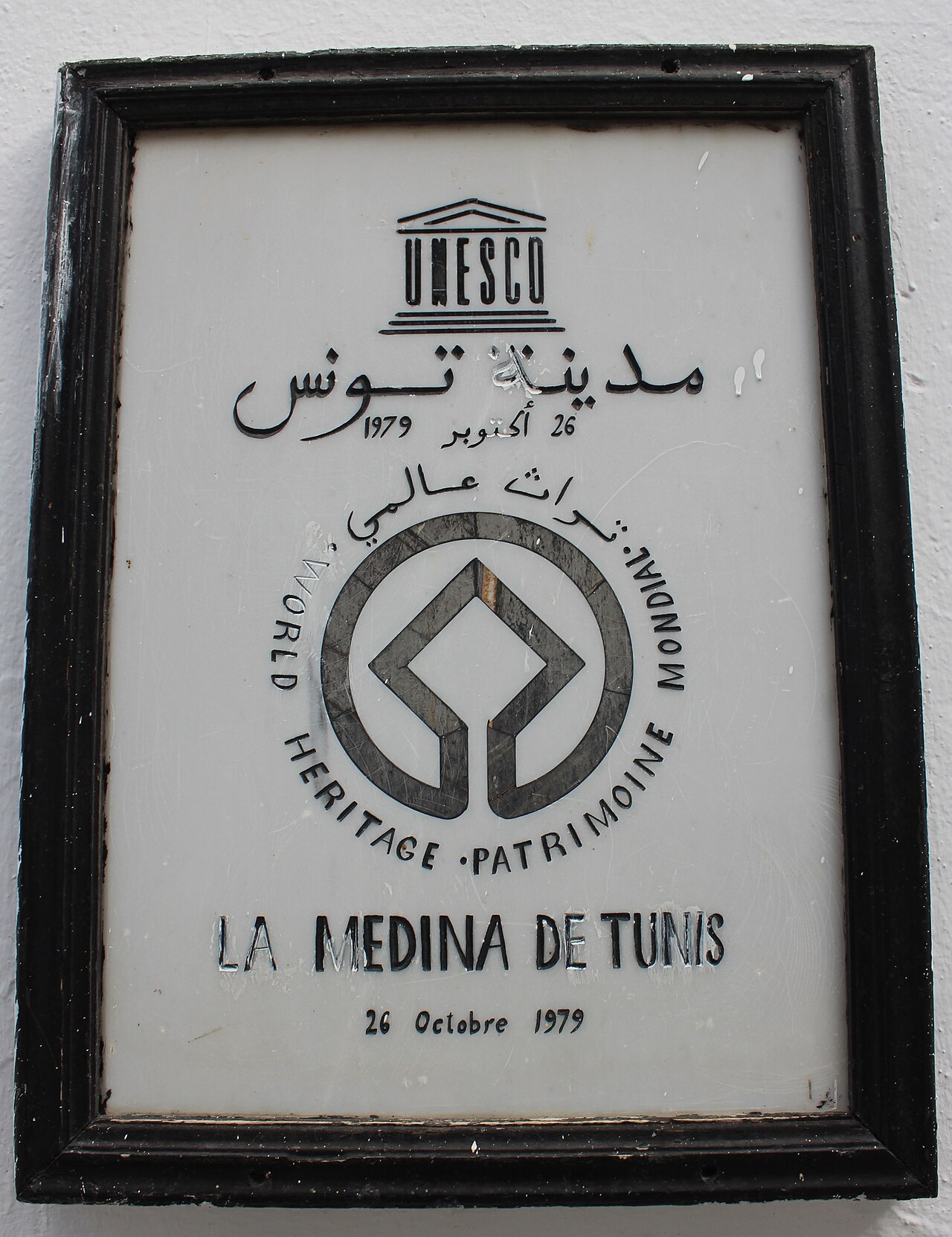
The inscribed sites give the trip its skeleton, and they fall into 2 clusters. The Gulf of Tunis holds Carthage and the Medina of Tunis, both inscribed in 1979, with Kerkuane on Cap Bon from 1985 and Ichkeul from 1980 within reach to the north. The Sahel holds the Amphitheatre of El Jem, also 1979, with the Medina of Sousse and Kairouan both inscribed in 1988. Dougga/Thugga, inscribed in 1997, sits inland to the west. 2 bases cover most of that; 3 cover all of it.
Carthage alone argues against a single rushed day. The property takes in the Byrsa acropolis, the Punic ports, the tophet, necropolises, a theater, an amphitheater, a circus, residential quarters, basilicas, the Antonine Baths and the Malaga cisterns, spread through a suburb whose urban pressure UNESCO says is largely contained by the Carthage–Sidi Bou Said Park.
Picture the place
Carthage's layers are physical. Phoenician foundation in the late 9th century BC, Roman destruction in 146 BC, a Roman city rebuilt on the rubble as the capital of the province of Africa, and then Vandal, Paleochristian and Arab remains on top — all of it on the same hillside above the Gulf, with modern streets running between the excavations.
The easily missed detail
Money is tightly regulated in ways that catch first-time visitors out. Tunisia maintains strict currency controls: foreign currency may need to be declared, declaration documents and official exchange receipts should be kept, and Tunisian dinars may not be taken out of the country at all. Plan to spend down rather than carry currency home. Separately, drones require authorization or will be confiscated until departure, and some smart or recording devices — the FCDO names Ray-Ban Meta smart glasses and walkie-talkies, including toys — may be restricted or seized, which is a real constraint on a photography-led trip.
A practical rhythm
- Base one — The Gulf of Tunis, for Carthage, the Medina of Tunis and a day north to Ichkeul.
- Base two — The Sahel, for Sousse's medina, Kairouan and El Jem.
- Optional third — Inland for Dougga, the 1997 inscription and the furthest of the group from the coast.
What could complicate the plan
The FCDO advises against all travel to parts of Tunisia, so any inland or southern extension has to be set against the regional risk guidance before it is booked, and that is the single biggest limit on an ambitious route. Site management is thinner than the designations imply: IUCN rates protection and management at Ichkeul as "Some Concern," and rates poaching and unsustainable fishing there a Low Threat whose extent inside the property is unknown — so do not expect a staffed national park in the North American sense. British-Tunisian dual nationals should enter and leave Tunisia on the same passport, and British citizens need a valid British passport or a certificate of entitlement to return to the UK.
What to do next
For the seasonal logic behind a Carthage-centered itinerary, read the Tunisia when-to-visit answer; for the sites that justify the inland base, see the Tunisia places-and-experiences answer.
Sources
- UK Foreign, Commonwealth and Development Office, Tunisia entry requirements — passport condition and refusal grounds, hotel tax rates and cap, currency declaration and dinar export ban, drone and device rules, dual nationality and certificate of entitlement, regional travel advice
- UNESCO World Heritage Centre, Archaeological Site of Carthage and the Tunisian World Heritage List — component monuments, chronology, park protection, inscription years for each Tunisian property
- IUCN World Heritage Outlook, Ichkeul National Park — protection and management rating, poaching and fishing threat rating and unknown extent