Tunisia country guide When to visit
When is the best time to visit Tunisia for Carthage?
The short answer
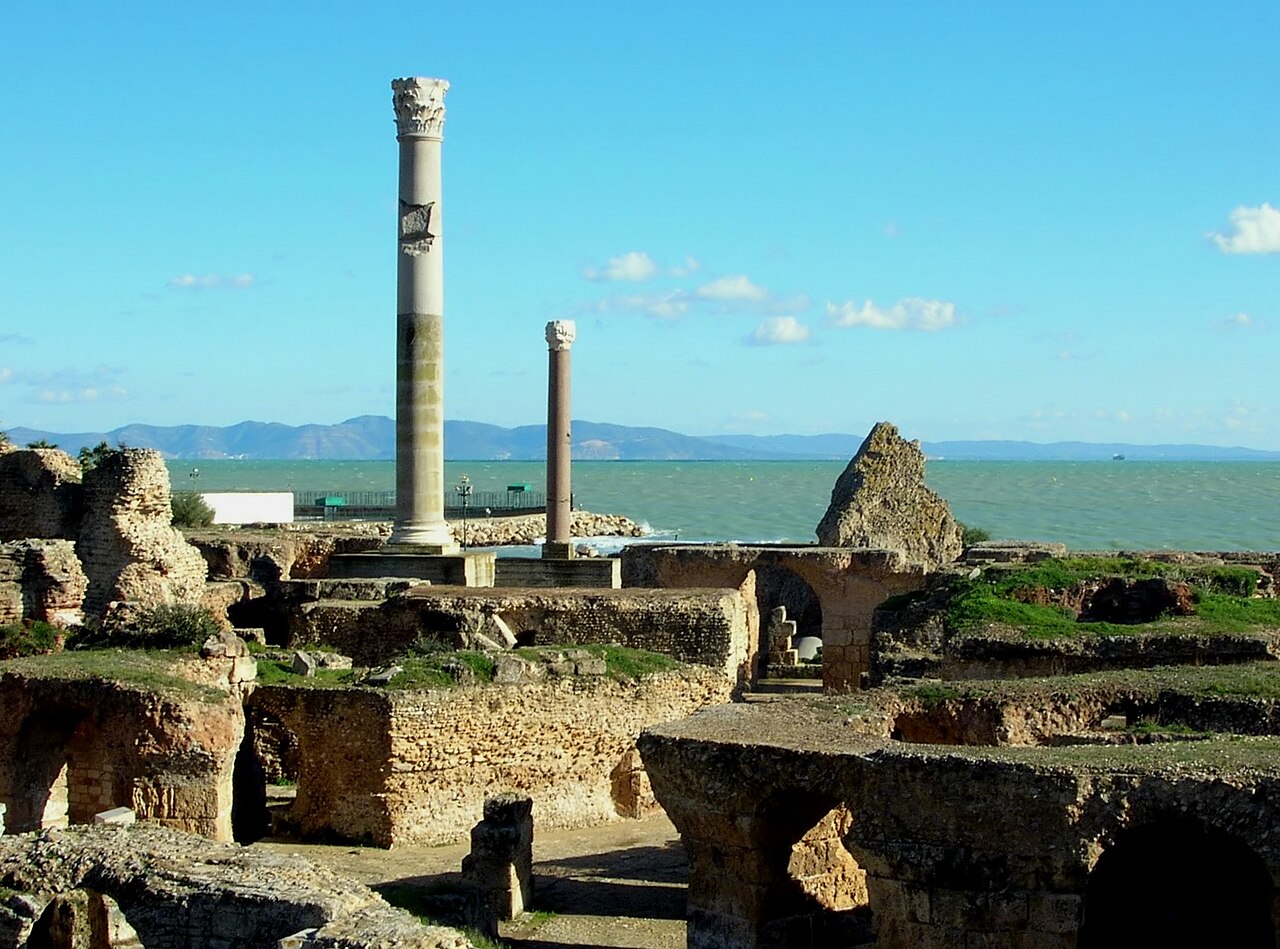
Spring and late autumn, because Carthage is not one building but a scatter of open-air excavations — the Byrsa acropolis, the Punic ports, the tophet, the Antonine Baths, the theater and the circus among them — and walking between them means hours with almost no shade.
The answer, with local context
UNESCO inscribed the Archaeological Site of Carthage in 1979 under criteria (ii), (iii) and (vi): for more than 10 centuries of cultural exchange through its ports and tophet, for its testimony to Phoenico-Punic and Afro-Roman civilization, and for a historic and literary fame attached to Dido, Hannibal, Hannon, Apuleius and Saint Augustine. Founded by Phoenicians on a hill above the Gulf of Tunis in the late 9th century BC, razed by Rome in 146 BC and rebuilt as the capital of the Roman province of Africa, the site layers Punic, Roman, Vandal, Paleochristian and Arab remains across a suburban hillside.
That layout is the practical argument for the shoulder months. There is no single entrance and no one roof. The inscription covers necropolises, residential quarters, basilicas, the Malaga cisterns and an archaeological reserve alongside the headline monuments, and UNESCO notes that early 20th-century urban sprawl partly altered the setting, with continuing pressure now largely held in check by the Carthage–Sidi Bou Said Park. Visiting means repeated short walks through a living suburb rather than one circuit.
Carthage was also one of 3 Tunisian properties inscribed in that first 1979 cohort, alongside the Amphitheatre of El Jem and the Medina of Tunis — so a shoulder-season trip built around the Gulf of Tunis can take in 2 of them without moving hotels.
Picture the place
The hill of Byrsa looks straight down onto the 2 Punic harbors, the circular naval basin and the rectangular commercial one, with the Gulf beyond. The tophet, the ports and the acropolis sit within a short radius of each other, interleaved with modern streets, so the Roman and Punic city is read in fragments between garden walls.
The easily missed detail
Winter has its own reason to come, a few miles up the coast. Ichkeul National Park, inscribed in 1980 under criterion (x), is a wintering ground for waterbirds — but the numbers have collapsed, and knowing that changes expectations. IUCN's assessment records average peak counts of roughly 202,608 birds before the catchment was dammed, between 1968 and 1982, and about 225,000 between 2001 and 2010, against roughly 17,500 between 2010 and 2020. Winter counts fell from 297,617 birds in 2008 to 5,662 in 2020. IUCN rated the site's conservation outlook "Significant concern" in an assessment finalized on 11 October 2025.
A practical rhythm
- Morning — Byrsa first, for the overview of the harbors and the Punic street grid below.
- Midday — The Antonine Baths and the shoreline terraces, where the ruins run down toward the water.
- Late in the day — The tophet and the necropolises, the oldest and quietest parts of the inscribed area.
What could complicate the plan
Entry is straightforward but the paperwork has a trap in it. The FCDO records that full British citizen passport holders may visit without a visa for up to 90 days, and stresses making sure the arrival stamp is actually applied, because officials check length of stay on departure and overstaying without a valid reason draws a fine. Crown Dependency passport holders may need to buy a visa on arrival. Border officers may also ask for contact details, onward or return tickets and proof of accommodation, so a shoulder-season trip assembled loosely as you go is harder to present at the desk than a booked one.
What to do next
The Tunisia places-and-experiences answer covers the other inscribed sites worth building a route around, and the trip-planning answer sets out entry, money and regional access in detail.
Sources
- UNESCO World Heritage Centre, Archaeological Site of Carthage — criteria, inscription decision, foundation and destruction dates, component monuments, integrity statement, 1979 cohort
- IUCN World Heritage Outlook, Ichkeul National Park — inscription year and criterion, waterbird count series, conservation outlook rating and date
- UK Foreign, Commonwealth and Development Office, Tunisia entry requirements — visa-free stay length, arrival stamp and overstay fine, Crown Dependency visa on arrival, documents border officers may request