Vanuatu country guide Food and drink
What local dishes should I try in Vanuatu, and where should I look for them?
The short answer
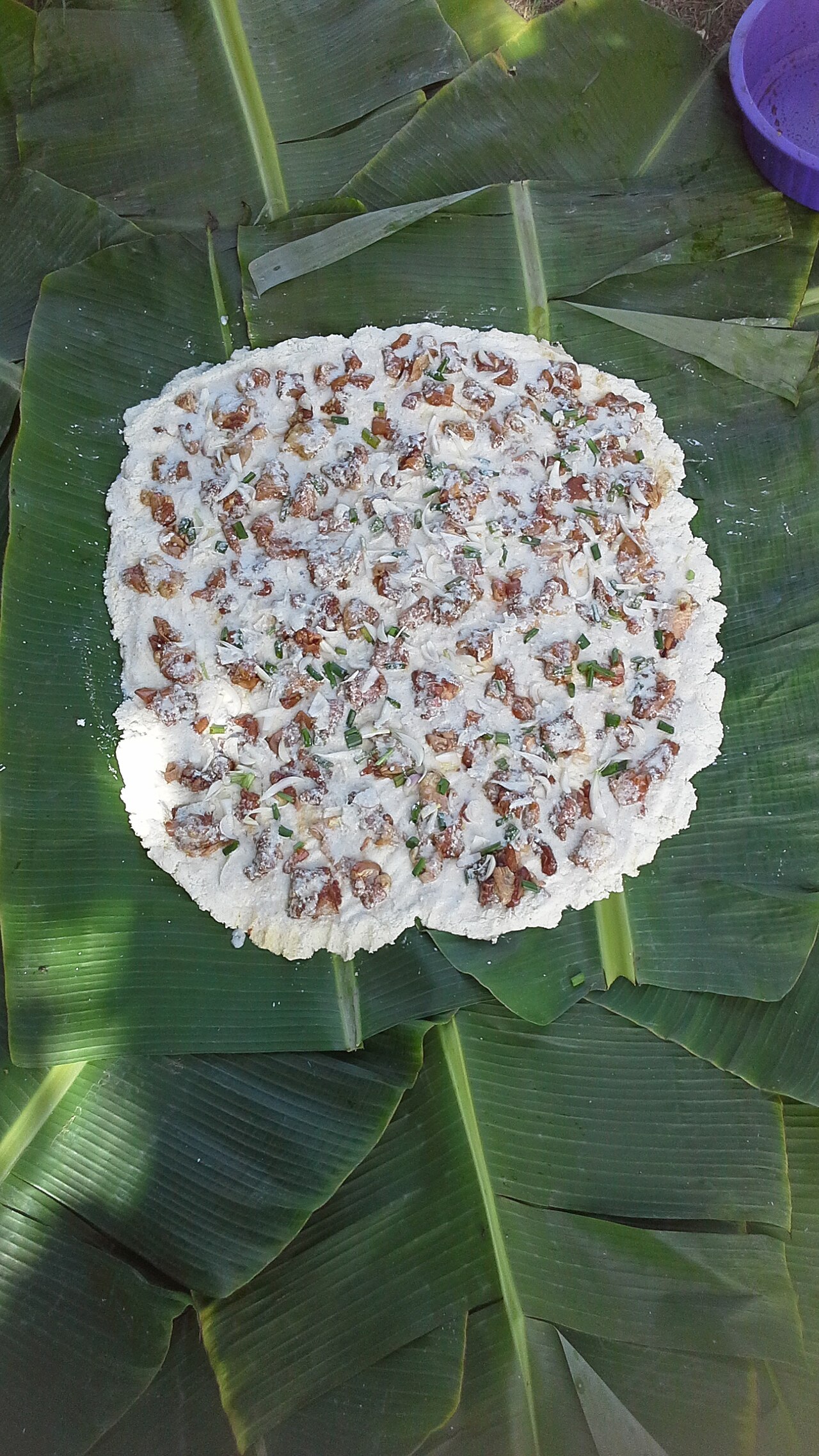
Laplap (the national dish, pounded yam pudding from the earth oven), Santo's grass-fed beef, island cabbage in coconut, and a shell of Pentecost kava at a nakamal at dusk: Vanuatu eats Melanesian at the market and French at the bistro, and both kitchens are excellent.
The answer, with local context
Laplap is the foundation and the ceremony: yam (or cassava, or breadfruit on other islands) pounded for hours into a smooth paste, spread on leaves, layered with island cabbage (aibika) and sometimes pork or chicken, dressed with coconut cream and baked in the earth oven under hot stones until it sets into a dense, delicate pudding — sliced like a cake, eaten warm, and judged ruthlessly by every ni-Vanuatu grandmother. Its family includes tuluk (small laplap parcels wrapped around spiced pork), simboro (grated banana or manioc rolled in island cabbage leaves and poached in coconut milk), nalot (a breadfruit pudding), and the everyday registers of kumala, taro and cooking bananas with reef fish, flying fox (a traditional protein, offered in season and entirely optional for the visitor), and coconut crab — a protected species with closed seasons and licensed sale, so accept it only where it's legal and in season. The second cuisine is the farm: Vanuatu's cattle (a legacy of planter-era herds, grass-fed on Santo and Efate) produce beef of genuine fame in the Pacific — exported proudly, celebrated at home — and Santo beef on a Port Vila grill is a course the islands insist you take. The third cuisine is the condominium's: 74 years of joint Anglo-French rule left baguettes at dawn, French bistros on Vila's harbourfront (omelettes, entrecôte, crème caramel), a coffee culture (Tanna Coffee, grown on volcanic soil, is the bean of record), and the extraordinary Port Vila market — the Mamas' Market House — where hundreds of women sell produce and cooked food nearly around the clock (it is famous for staying open through the night, closing Sundays), laplap stalls included.
The drink is kava, and Vanuatu's is the Pacific's reference standard: noble kava varieties (the country legislated kava quality — the Kava Act bans non-noble "two-day" cultivars from export), drunk fresh-pounded at nakamals — the kastom meeting grounds turned evening bars, unlit, quiet, men historically and mixed crowds in town — by the shell (about 100–150 ml), low-tide or full as you dare, with the etiquette of silence and a small spit's dignity. Vila's nakamal circuit (and the takeaway kava bars) run from 4 p.m.; the effect is sedative and sociable, the hangover nil, the driving afterwards forbidden in spirit and sense. Where to look for everything: the Market House for laplap and island food by day; waterfront bistros for Santo beef with French manners; a village feast (by invitation or arranged cultural tour) for the earth oven whole; and the Tanna coffee factory shop and Efate's farm stalls for the pantry to take home. Water is treated in Vila, tank elsewhere; market hygiene follows the hot-and-fresh rule.
Picture the place
The Market House at 6 p.m.: laplap being unwrapped in clouds of coconut steam, mamas calling prices over pyramids of island cabbage and grapefruit, and half of Port Vila buying dinner under the great roof.
The easily missed detail
Laplap's labour is the flavour: the pounding (traditionally on a wooden board with a heavy pestle, an hour-plus of rhythmic work for 1 pudding) gelatinises the yam in a way no machine matches, and each island's laplap differs — yam on Tanna and Pentecost, manioc versions, breadfruit laplap on some islands — so "I had laplap" is a beginning, and island-hopping is a comparative course. The second detail is the kava ordering system: shells are announced by whistle at some nakamals (1 blow for a small shell, 2 for a large), you drink in the dark quiet in 1 draught, and a spittoon-free floor means the polite spit goes outside — watch the regulars once before your first shell and you'll pass for seasoned.
A practical rhythm
- Market lunch, Vila — Laplap and island cabbage at the Market House stalls, grapefruit for the road
- Beef night — Santo beef at a harbourfront bistro, Tanna coffee to close
- Kava at dusk once — A reputable nakamal, 1 shell low-tide, nowhere to drive after
What could complicate the plan
Earth-oven food is event food: laplap for lunch exists at market stalls daily, but the full feast (pigs, multiple laplaps, the village array) happens for occasions and arranged cultural visits — the traveler who expects a restaurant laplap at 8 p.m. will be served something else entirely. Coconut crab legality is a real compliance point (closed seasons, size limits, permit sellers in Vila; poached crab appears anyway — the visitor's refusal protects the stock better than any patrol). Kava's seduction is pharmacological: it relaxes, numbs and blurs; shells before a volcano drive or a reef swim are a poor plan, alcohol mixing is worse, and pregnant travelers skip it entirely. Market eating follows the two rules of Melanesia (cooked hot, eaten fresh) with the usual ciguatera footnote for big reef predators at village tables (eat the fish the family eats, skip the giant trevally). And Sunday in Vila narrows the board (market closed, much shut) while the islands' church day does the same — Saturday's market haul is the experienced traveler's Sunday insurance, in Vanuatu as across this series.
What to do next
Eat laplap at the Market House on your first Vila day, book the beef bistro for the last, and take 1 kava shell at a good nakamal in between.
Sources
- Vanuatu culinary record — laplap and its variants (tuluk, simboro, nalot); island cabbage; earth-oven feasts; Santo beef; flying fox
- Government of Vanuatu — the Kava Act (noble-variety protection); coconut crab seasons and licensing
- Port Vila record — the Market House (Mamas' market) near-24-hour operation, closed Sundays; Tanna Coffee
- Condominium heritage — French bistros and bakery culture in Port Vila (1906–1980)