Washington DC / United States When to visit
When should I visit Washington DC, United States, for the best experience?
The short answer
Late March to mid-April, timed to the cherry blossoms — peak bloom averages April 4 — with October as the quieter equal if flowers are not the point.
The answer, with local context
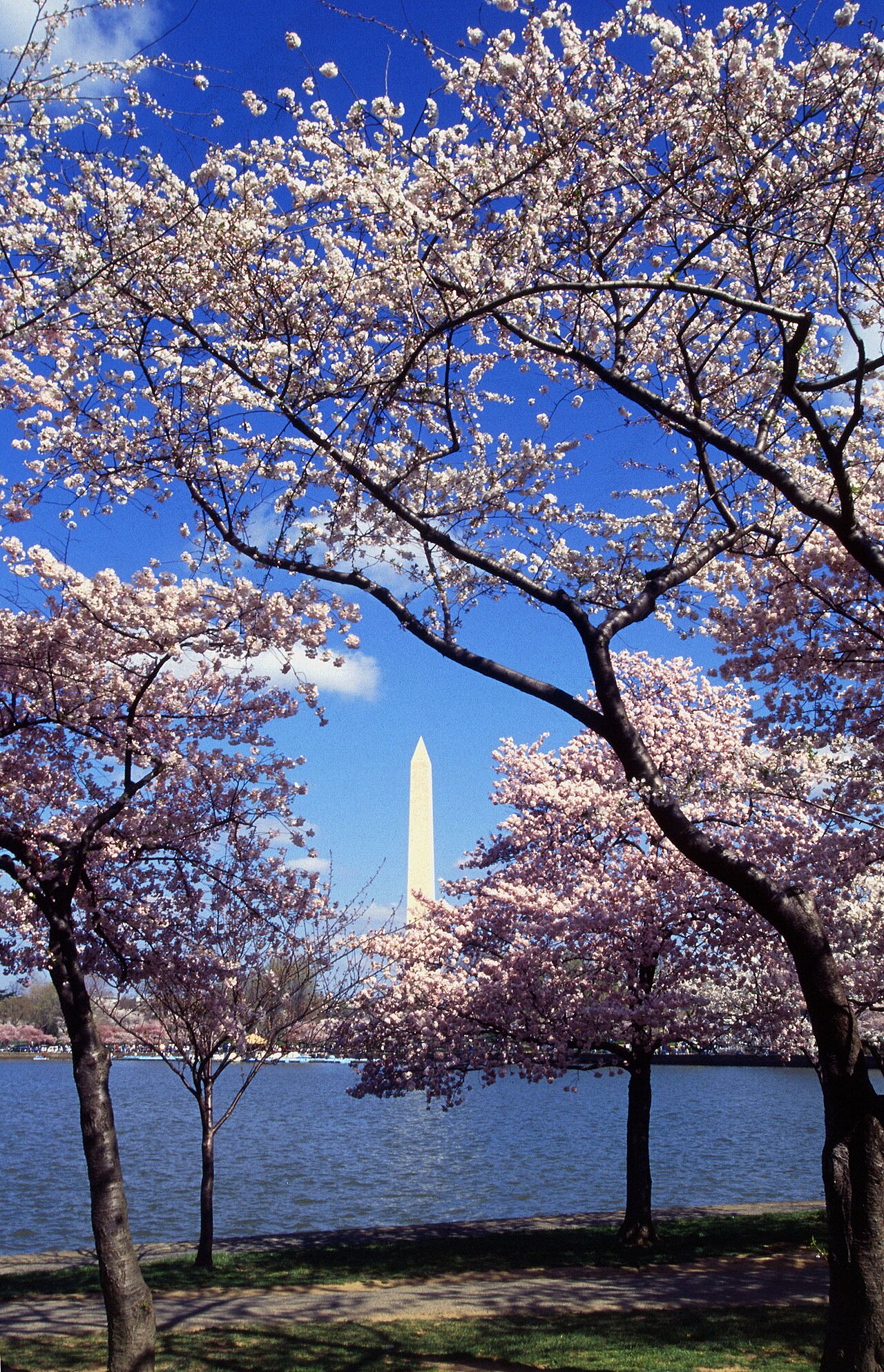
Washington's calendar turns on a single horticultural event. The National Park Service defines peak bloom as the day 70 percent of the Yoshino cherry blossoms around the Tidal Basin are open; it has kept that record since 1921, and the long-run average falls on April 4, with historical extremes from March 15 to April 18. The trees descend from a gift of 3,020 cherry trees sent by Tokyo in 1912, after an earlier shipment of 2,000 diseased trees had to be burned; First Lady Helen Taft and Viscountess Chinda, the Japanese ambassador's wife, planted the first two on the Tidal Basin's north bank on March 27, 1912. Today the Park Service cares for roughly 3,800 flowering cherries, about 70 percent of them Yoshino, and the National Cherry Blossom Festival is scheduled around the expected bloom — March 20 to April 12 in 2026.
The weather case for spring is in NOAA's 1991–2020 normals for Reagan National Airport. April's average high is 68°F (20°C), and October's is nearly identical at 69°F (21°C), which is why the autumn weeks match spring on comfort while losing the festival crowds. What separates the seasons is the extremes: July averages a high of 90°F (32°C) and a low of just 72°F (22°C), a daily mean of 81°F (27°C) with dew points in the mid-60s°F, while January averages 45°F (7°C) by day and 30°F (−1°C) at night.
Rain is the constant rather than the variable. The city averages 41.8 inches (1,062 mm) of precipitation a year over about 118 days, and the wettest months are the summer ones — July at 4.33 inches, June at 4.20 — delivered largely as thunderstorms, against February's citywide low of 2.62 inches. Snow totals a modest 13.7 inches (35 cm) a year.
Picture the place
At peak bloom the Tidal Basin's rim is a continuous pale canopy, petals working loose in any breeze and stippling the black water, with the Jefferson Memorial's dome across the basin and the Washington Monument standing behind the trees to the north.
The easily missed detail
Nobody can tell you the peak date in advance — not even the Park Service. Its horticulturists forecast from bud stages, and the prediction only becomes reliable about ten days out, so a blossom trip booked months ahead is a bet on a two-to-three-week window, not a date. The record itself has become scientific evidence: the US Environmental Protection Agency tracks DC's peak bloom as a climate-change indicator, and the long trend runs earlier.
A practical rhythm
- Morning — Walk the Tidal Basin at first light during bloom week; by ten the paths are a slow-moving crowd.
- Midday — Put the Mall's museums in the middle of a summer day, when the heat and the thunderstorm risk both peak.
- Evening — Do the memorial circuit after dark in any season; the monuments are lit, open and at their best without the tour groups.
What could complicate the plan
A warm February can pull peak bloom into late March, before many visitors arrive, and a cold one can push it past the festival's closing weekend — the trees answer to accumulated warmth, not to the calendar. Summer brings the opposite problem: July combines the year's highest temperatures with its heaviest rainfall, and the Mall offers almost no shade between the museums.
What to do next
Fix the window, then plan the free core of the trip using the things-to-do question in this group — nearly everything in it costs nothing but has to be sequenced.
Sources
- NOAA — 1991–2020 US Climate Normals, Washington Reagan National Airport: monthly temperatures, precipitation and snowfall
- National Park Service — cherry blossom peak bloom definition and records since 1921, the 1912 Tokyo gift of 3,020 trees and today's roughly 3,800 flowering cherries
- US Environmental Protection Agency — DC peak bloom date tracked as a climate-change indicator