Washington DC / United States Food and drink
Where should I eat in Washington DC, and which local food or drink is worth trying?
The short answer
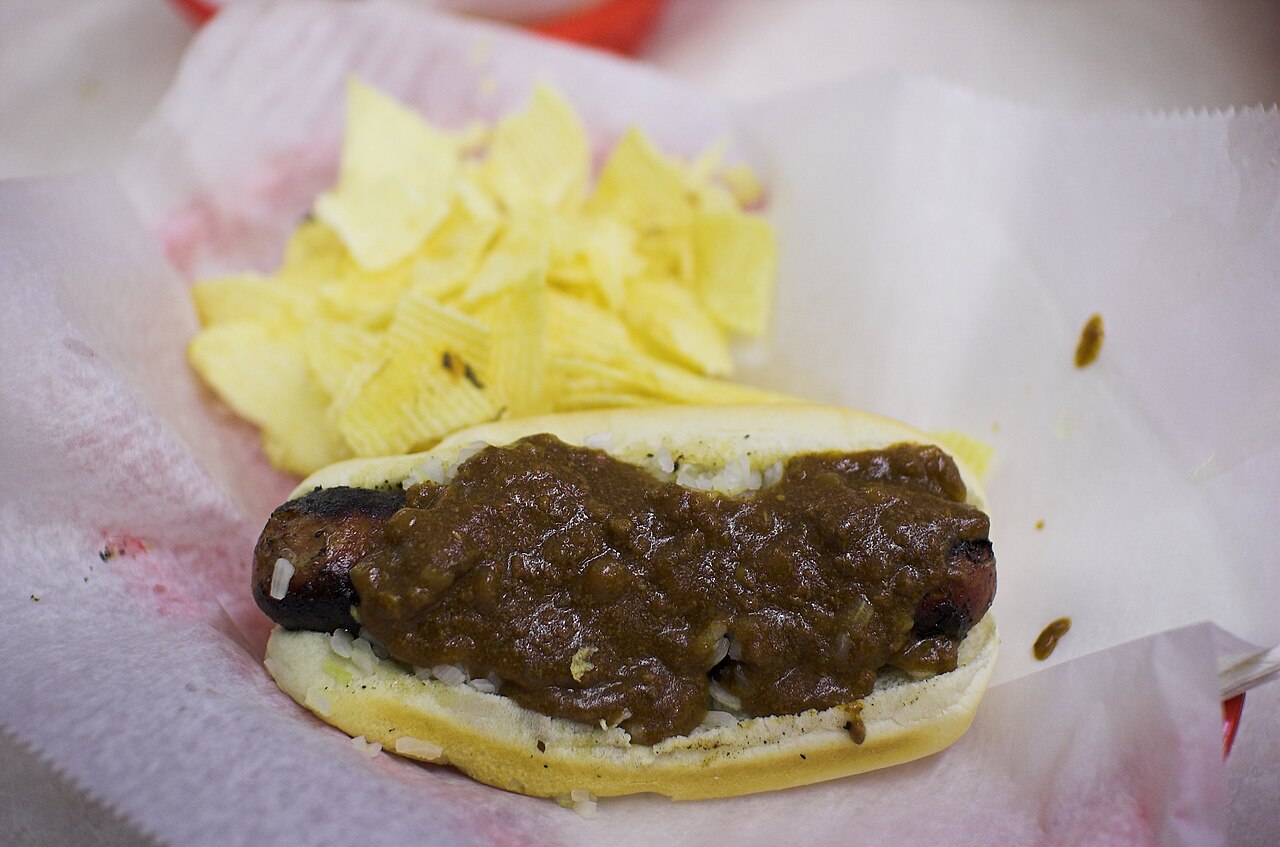
A chili half-smoke at Ben's Chili Bowl on U Street — and, for the fuller picture of how the city eats, chicken wings with mumbo sauce from a carryout and a shared Ethiopian platter on 9th Street.
The answer, with local context
The half-smoke is Washington's own sausage: half pork, half beef, smoked, coarser-ground and spicier than a hot dog, split and griddled, then served in a steamed bun with mustard, onions and chili. Its cathedral is Ben's Chili Bowl at 1213 U Street NW, opened in 1958 when U Street was "Black Broadway," the center of Black Washington's nightlife. The restaurant's history is the neighborhood's: Martin Luther King Jr. ate there, and during the 1968 unrest after his assassination Ben's was allowed to stay open past curfew, feeding police and activists alike. Presidents followed the same counter — Barack Obama among them — and the original's chili recipe remains a family one.
Mumbo sauce is the city's condiment, and it belongs to the carryout, Washington's takeout counter tradition. The sweet, tangy, reddish sauce — ketchup, vinegar, sugar and heat in roughly that spirit — is believed to have first been sold at a now-closed carryout called Wings 'N Things in the 1960s, and it goes over fried chicken wings, fries and egg rolls. Henry's Soul Café on U Street has served wings with mumbo sauce since 1968. Chicago claims the sauce too, and the dispute is part of the dish; what is not disputed is that DC made it a standard, bottled today as Capital City Mambo Sauce across the region's grocery stores.
The third table is Ethiopian, and it is not a niche. The Washington metropolitan area holds the largest Ethiopian community outside Africa: the 2010 US Census counted 30,000 Ethiopian immigrants in the region, 20 percent of the national total, while community organizations put the true figure far higher. Immigration that began in the 1970s settled first in Adams Morgan and then along Shaw's 9th Street, a corridor the DC Council formally honoured as "Little Ethiopia" in 2020; the city signed a Sister City agreement with Addis Ababa in 2013. Dinner there is communal — stews such as doro wat and tibs served on injera, the spongy teff flatbread that works as plate and utensil at once, eaten by hand.
Picture the place
At Ben's counter the half-smokes split and sizzle on the flat grill in a row, buns steaming beside them, and the finished order comes over the counter in a paper boat — sausage blistered at the edges, buried under a ladle of dark chili and diced onion.
The easily missed detail
Mumbo sauce spent decades as a condiment you could not buy. For most of its life it existed only ladled inside carryouts; the bottled version is a recent arrival, which is why older Washingtonians judge a carryout by its sauce the way other cities judge a diner by its coffee.
A practical rhythm
- Lunch — A chili half-smoke at Ben's original U Street counter, eaten at the counter itself if a stool is free.
- Afternoon — Wings with mumbo sauce from a neighborhood carryout — the sauce is the order, the wings are its vehicle.
- Dinner — A shared combination platter at an Ethiopian restaurant on 9th Street in Shaw, ordered communally and eaten with injera.
What could complicate the plan
Ben's draws a line at lunch and on weekend nights, and the counter is a fast-turnover room, not a lingering one — go at an off hour for the unhurried version. Ethiopian platters are built for sharing and eaten by hand, which makes a solo, utensils-expected dinner the wrong format; order a combination platter for the table and tear the injera as it comes.
What to do next
Pair U Street's food with its music history on the same evening out. The timing question in this group covers the seasons that make the walking between these neighborhoods pleasant.
Sources
- Ben's Chili Bowl — the restaurant's 1958 founding on U Street and its chili half-smoke
- Destination DC (washington.org) — Ethiopian Washington: the Little Ethiopia corridor, the Addis Ababa Sister City agreement of 2013 and where to eat
- US Census Bureau — 2010 Census count of 30,000 Ethiopian immigrants in the Washington metropolitan area