Yosemite / United States When to visit
When should I visit Yosemite, United States, for the best experience?
The short answer
Mid-to-late May — the National Park Service's own window for peak waterfalls — paying the standard $35 per vehicle for a seven-day pass, with the caveat that the high country roads may still be a few days from opening.
The answer, with local context
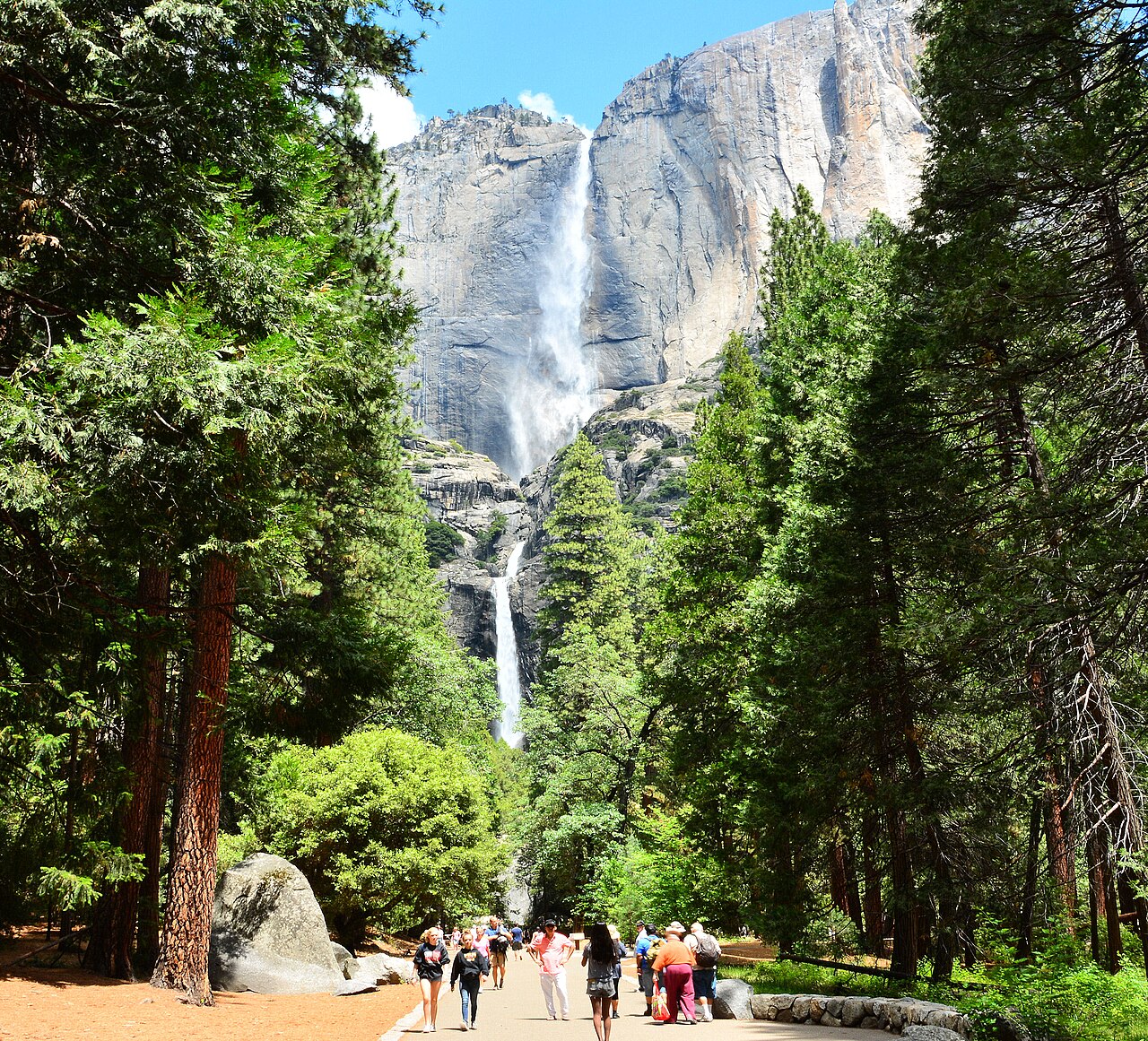
Yosemite's year is governed by snowmelt. The Park Service states that the park's waterfalls are usually at their best in mid-to-late May, when the Sierra snowpack above the Valley rim is melting fastest and peak runoff arrives in May or June. Yosemite Falls, 2,425 feet from rim to floor and the tallest waterfall in North America, is the gauge: thundering in May, it is commonly reduced to a trickle or dry entirely by August, because the creek that feeds it drains a relatively small, high basin with no glacier to sustain it.
What May cannot guarantee is altitude. UNESCO's inscription here covers over 300,000 hectares under criteria (vii) and (viii), and describes a property running from 600 to 4,000 meters — roughly 2,000 to 13,100 feet — so the park holds two seasons at once, with the top of that range still frozen while the Valley floor is in flood. Tioga Road, the park's trans-Sierra highway, is typically open from late May or June until November; plowing begins around April 15 and takes one to two months, and the Park Service says an opening date cannot be predicted even in late spring. In 2026 Tioga Road opened on May 15 and Glacier Point Road on May 9 — an early year. September and October trade the waterfalls for calm: the Half Dome cables stay up until the day after the second Monday in October, the Valley empties, and the high roads remain open until the first serious snow.
The year's rarest ticket costs nothing and lasts minutes. In mid-to-late February, when Horsetail Fall is flowing and the western sky is clear at sunset, the setting sun lights the fall into a ribbon of orange known as the Firefall. Winter otherwise belongs to the Valley floor — snow, chain requirements on the roads, and Badger Pass skiing — while the high country is closed until the plows finish.
Picture the place
From the Valley floor in late May, Yosemite Falls fills its notch in the cliff in three white tiers, the spray from the lower fall drifting across the footbridge, and every meadow along the Merced River stands green and flooded with meltwater.
The easily missed detail
The reservation system visitors planned around for years is gone — for now. The park announced in late December 2025 that 2026 would run with no entrance reservation system at all, not even for the February Firefall, and it replaced permits with traffic management. The binding constraint moved to the parking lots, which on peak days in 2026 were filling by 7:30 to 8:00 in the morning.
A practical rhythm
- Morning — Enter the Valley early and walk to the falls while the light is on the water and the lots still have space.
- Midday — In May, hike the Mist Trail at its wettest; in September, spend the middle of the day on the high roads while they are open and dry.
- Evening — Watch the last light on Half Dome from the Valley meadows — or, in February, join the Horsetail Fall watch at sunset.
What could complicate the plan
Two new costs and one old uncertainty frame any 2026 trip. Since January 1, 2026, non-US residents aged 16 and over pay a $100 per-person surcharge on top of the entrance fee unless they hold the $250 nonresident annual pass. Tioga Road's opening can slip into July in a heavy snow year — it has done so three times since 2015 — and late summer now carries a recurring risk of wildfire smoke drifting into the Valley.
What to do next
Book Valley lodging or a campsite before the flights; in a reservation-free year the room, not the gate, is the scarce resource. The things-to-do question in this group sequences the Valley day itself.
Sources
- National Park Service — Yosemite waterfalls and seasons: peak runoff in May or June, waterfalls at their best in mid-to-late May, Yosemite Falls often dry by August
- National Park Service — Tioga Road and Glacier Point Road: plowing from mid-April, typical opening late May or June, and opening dates the park says cannot be predicted
- Yosemite Conservancy — 2026 visitor guidance: no entrance reservation system in 2026, including for the Horsetail Fall event; $35 seven-day vehicle pass and the $100 nonresident surcharge from January 1, 2026
- UNESCO World Heritage Centre, Yosemite National Park — a property of over 300,000 hectares inscribed under criteria (vii) and (viii), spanning 600 to 4,000 m in elevation